
Representative Cori Bush’s primary defeat last week gave The New York Times an excuse to look at the infrastructure that supported her surprise primary victory in 2020.
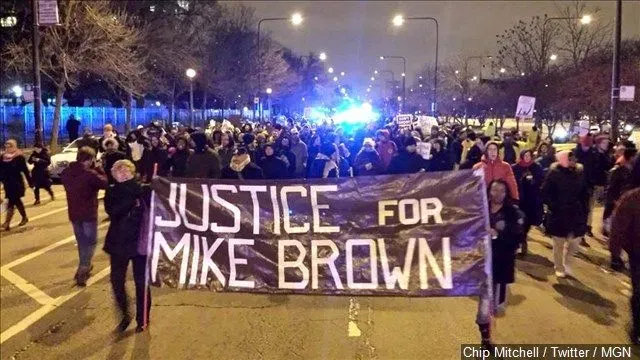
Audra D.S. Burch’s excellent article starts with the police killing of Michael Brown in 2014 and the waves of Black Lives Matter protests that followed. Cori Bush was one of many effective organizers who demonstrated commitment, savvy, and organizing skills in the protests, and one of more than a few who turned their attention to elective office. Burch notes that over the decade that followed, Ferguson elected its first Black mayor, hired its first Black police chief, and St. Louis County elected its first Black prosecutor. Veterans of the protest marches made their way into Boards of Alderman and into citizen action groups. (This, by the way, is nothing new in American politics. Many politicians start a political career in protest politics.)
None of this was visible during the disruptive protests of 2014, but staging those protests built the infrastructure and networks that made a different kind of politics and political leadership possible. People who were willing to come out to the marches were willing to walk the wards in an electoral campaign, and they were far more likely to campaign for those who marched beside them. Activists learned how to organize events, influence government, and manage interviews with the press. Organizer training provided a good foundation for electoral and institutional politics as well.
Cori Bush, who defeated a non-responsive incumbent in 2020, lost in 2024 to Wesley Bell, St. Louis County prosecutor, who also cut his political teeth in the response to Michael Brown’s killing.
Now, here’s the twist: Cori Bush still had citizens willing to walk the wards and knock on doors, but she also had new vulnerabilities, including a federal investigation for misuse of campaign funds. More than that, Bell got more than $8 million for his campaign from AIPAC’s (American Israel Political Affairs Committee) political action committee. Bush’s justice advocacy in Congress included harsh criticism of Israel, and well-funded and well-organized AIPAC made an example of her–and Rep. Jamaal Bowman, who also lost a Democratic primary in a mostly suburban New York district. AIPAC picked incumbents with vulnerabilities who were critical of Israel to send a message to everyone else.
Israel/Palestine is not a particularly salient issue in Ferguson, Missouri, but $8 million is a lot of money to raise a profile and attack an incumbent. Other prominent critics of Israel were able to fend off primary challenges. (Ilhan Omar [Minnesota] held her seats by a margin of 13 points!) But be sure that every Democrat in Congress who considers crossing AIPAC on Israel will know just how much money the group put into taking Cori Bush and Jamaal Bowman out.
There’s a double lesson about the outcomes of protest politics: Sustained mobilization can build the networks, experience, confidence, and skills needed to navigate institutional politics. But those networks need to be nurtured in order to sustain themselves and their champions.


 Politics Outdoors