New nuclear tests are a political test

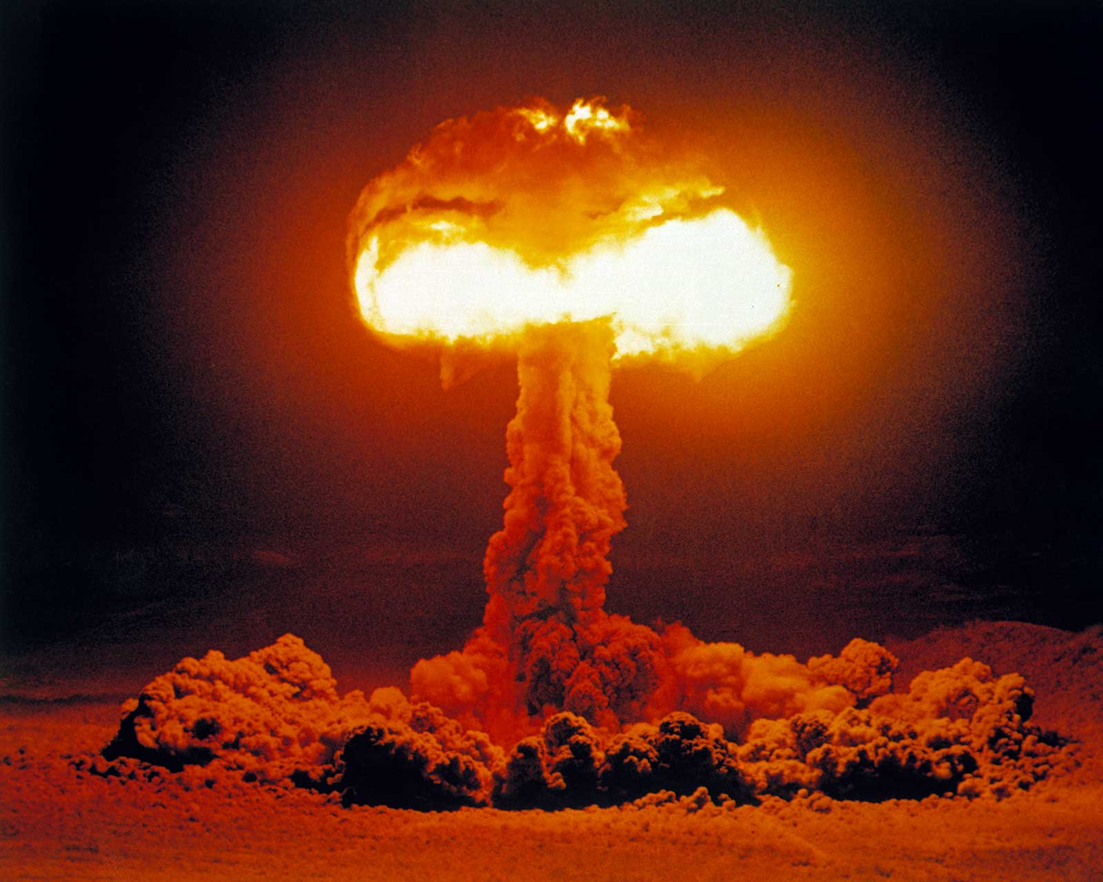
Donald Trump announced that the United States would start testing its nuclear arsenal again–after foregoing nuclear weapons testing since 1992, when the Cold War ended and the Soviet Union fell apart. In doing so, he effectively announced a political challenge to peace activists around the world.

There are many reasons to be concerned about the increased costs and dangers of a new era in nuclear weapons politics, but it’s always hard to get people to pay attention. Since the bombings of Hiroshima and Nagasaki, activists have campaigned on the existential horrors nuclear weapons represent, demanding restraint–or even disarmament. But most of us are very distant from the development and deployment of nuclear weaponry. We’ve seen nuclear weapons and war in books, but not in real life. Think of the contrast with all the other things that animate social protest movements. And antinuclear campaigners have a hard time convincing audiences of less scary alternatives in a scary world.

There is a pattern of protest and policy that’s played out since 1945: someone notices an identifiable threat from the arms race and points to it to lodge larger criticisms. Over the years, these visible threats have included: the dangers of nuclear testing, including radioactive fallout; development of a new and expensive weapons system (the B-1 Bomber or the MX missile); cavalier rhetoric about nuclear war suggesting incompetence in the White House; or conspicuously ineffective civil defense drills to protect populations.

Sometimes these campaigns are boosted by books, movies, or tv shows illustrating the danger. Think of Dr. Strangelove, Failsafe, or The Day After. Some of the movies don’t stand up so well as movies, but recent films have been much better: Oppenheimer and A House of Dynamite are suitably horrifying and worth seeing as movies.

Activists campaign for a simple demand that seems to offer a solution to the near threat and the larger problem (e.g., “Ban the bomb”; “Stop nuclear testing,” “nuclear freeze”). Politicians and experts use public concern to institute some dimension of restraint, often negotiated arms control agreements, which manage public concerns. Testing of nuclear weapons has been a recurrent target for antinuclear campaigners, who have staged demonstrations in the streets of big cities and trespass at testing sites.

[Two time Nobel Prize winner Linus Pauling picketed the White House in 1963, the night before attending a dinner inside for Nobel prize winners (above).]

In this way, movements against nuclear weapons work, exercising influence even though activists don’t get anywhere near what they demand.

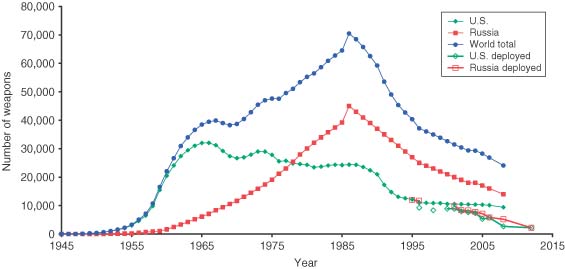
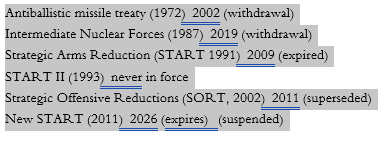
When the Cold War ended, the nuclear danger receded somewhat, and the number of nuclear weapons deployed by the big powers declined substantially. But restraint has been eroding and new nuclear threats have emerged. Arms control agreements have disappeared in a whole variety of ways:
We all know that the Russian invasion of Ukraine and Israel’s conduct of the Gaza War, both awful enough, could be much worse. Russia and Israel have their own nuclear weapons. America’s stalwart support of Israel and erratic alliance with Ukraine have encouraged other nations to try to develop their own nuclear weapons. Ulp.

Long before Trump first took the oath of office, the United States began developing ambitious and expensive plans to modernize its nuclear arsenal. And activists have been trying–with very little success–to reinvigorate public concern. It’s quite likely that a President Bush or Obama or Biden would have ordered some new nuclear testing. It’s extremely unlikely that any of them would have announced it in a fit of pique about China’s expansion of its nuclear forces.

So, Trump has done peace campaigners the favor of drawing public attention to nuclear weapons and signaling that he is not the president most of us would trust to make good decisions about the fate of the earth. The question now is whether people will pay attention and try to do something about it.
Posted in Uncategorized | Tagged , , , , , , , , , , , , , , , , , , , , , | Leave a comment

The 3.5% fallacy

https://www.bbc.com/future/article/20190513-it-only-takes-35-of-people-to-change-the-world

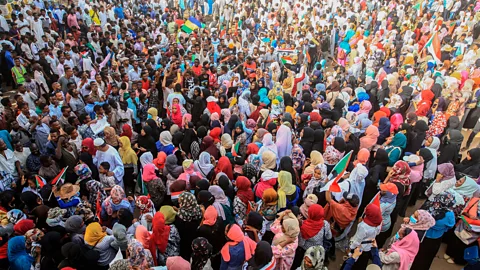
Every media outlet is going to post estimated numbers on the No Kings rallies, and they’re sure to be impressive. Larger than the extremely large June 14 demonstrations will be seen as a sign of the movement growing. Opponents will question the numbers, and then the character of the people who show up. But they’ll be counting and talking too. Numbers matter, but not by themselves.

Organizers have been touting a magic number–or rather percentage: 3.5%. Reaching this magic number, they’ll say, will ensure a victory. It’s encouraging–protest can matter; it’s directive: get out and demonstrate and bring your friends. It’s also wrong.

The availability of numbers for political events a valuable resource, but it can also lead to a distorted scientism that can easily jump conclusions. A critical example of this risk is work that compares the outcomes of contentious large demonstrations across very different contexts. In their important study of non-violent action, Erica Chenoweth and Maria Stephan (2011) considered more than 300 cases of campaigns spread across the world over more than 100 years. Supplementing their large N analysis with detailed case studies, they offer a theory of how non-violent campaigns sometimes succeed. Their insightful book, however, is dependent upon trusting the accounts of very different movements at different times recorded in different languages in different sorts of media.

Looking at their data, Chenoweth and Stephan noted that the “maximalist” campaigns that sought to replace regimes ultimately triumphed when they turned out more than 3.5 percent of the population in non-violent sustained action. Chenoweth promoted the idea in a TED talk. And many activists and pundits found the “3.5 percent rule” encouraging, partly because it provided such a clear focus—get 11 million people to attend protests (for example, see Caroline Gleich; David Robson ).

But think about all the larger questions such a “rule” elides: under what circumstances would such a large faction of the population be able to protest non-violently? Would activists be dependent upon tolerant or incompetent policing—or authorities unwilling or unable to repress? Would they necessarily enjoy very broad public support and available infrastructure from major social institutions? The point is that the application of 3.5+ percent protest is not strictly an independent element that can be deployed without many other elements also in effect—and those factors are also likely to matter, independently. Moreover, how translatable are insights drawn from campaigns against authoritarian governments to reformers seeking policy change in a relatively stable democracy?

Erica Chenoweth has more recently been cautious about 3.5 percent as a rule, acknowledging that it was observed, rather than theorized or tested, and that in newer cases it hasn’t held up. Numbers are attractive because of the generalizations and precision they seem to offer. But the fixation on a constant percentage is a chimera that can lead us to neglect other important factors, like non-public defections from leadership or international pressures.

Turnout at demonstrations is important: it’s a statement about citizens’ positions on issues and the strength of their commitments. But electoral campaigns and kitchen table discussions and public testimony and lawsuits matter too–along with much else. There is no magic number that will change the world through a single event. The demonstrations are important, almost exclamation points in a larger social movement story. The success of No Kings–or any other social movement, will be affected by the numbers that turn out for a demonstration, but even more important will be what those people do the day after and the day after that.

Posted in Uncategorized | Tagged , , , , , , , , , , , , , , , | 4 Comments

Anchoring academic resistance

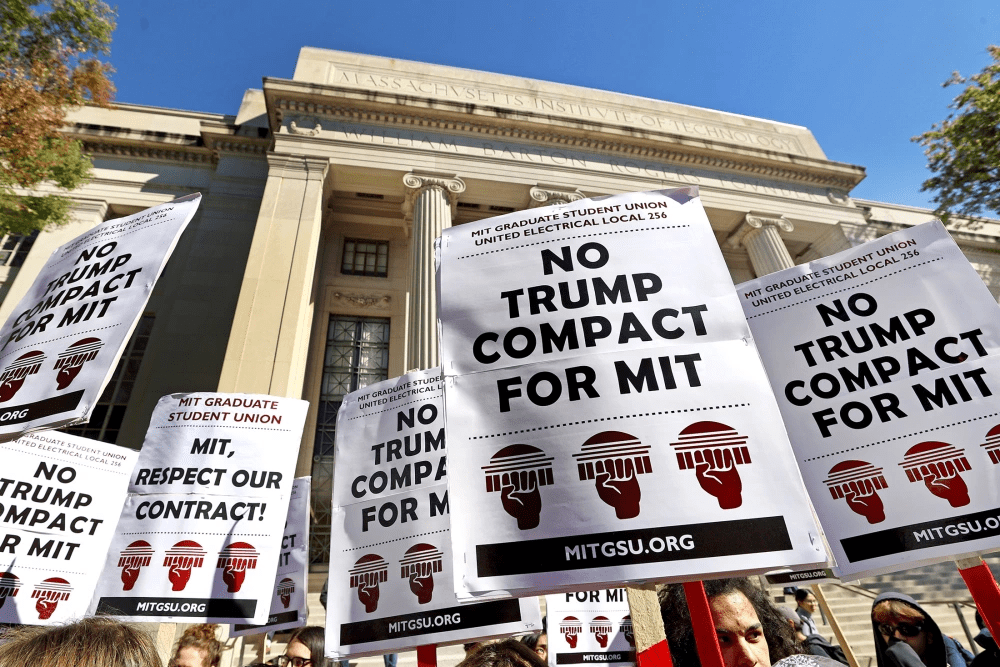
Last week the Massachusetts Institute of Technology (MIT) rejected the “Compact” offered by the Trump Administration, crossing a line into resistance and (implicitly) inviting other universities to follow. In a powerful letter, MIT President Sally Kornbluth, the cell biologist, explained that MIT was committed to science, policy based on data, and merit, and therefore could not sign onto a deal that emphasized political allegiance instead.

(By the way, you’ll want to remember that President Kornbluth testified before Congress about antisemitism on campus with the then-presidents of Harvard and the University of Pennsylvania. Unlike her colleagues, the trustees of Kornbluth’s school supported their president who still has her job.)

But the Compact: Of course, every school is looking out for its own best interest and making independent decisions, but in short order Brown University, the University of Pennsylvania, the University of Southern California and the University of Virginia crossed the same line. Then students and faculty at other schools urged their administrations to reject the deal–even though Trump hadn’t yet offered it. Now, any college president who considers taking the Compact bait will risk damaging their reputation and that of their school.

So what’s the deal with this compact? Initially presented to nine national universities, the Compact offered enhanced access to substantial federal grants to universities that committed to the Trump administration’s dictates. You can read the whole thing here.

The Compact demands that universities implement fundamental changes in core university functions, for example:

  1. Admissions: Every school would require standardized test scores and refuse to consider race, political affiliation, sexual orientation, religion, or gender in admissions decisions–and publish admissions data that shows the different admissions rates along exactly those categories. For national security, schools would commit to keeping the share of international students under 15% of student body.
  2. Campus discussion of politics: Schools must commit to ensuring a diversity of political perspectives in every department. In order to ensure a vibrant marketplace of ideas, schools must ensure that conservative students and ideas are treated with respect.
  3. Campus facilities and activities must reflect and serve both genders and employ language that interprets “‘male,’ ‘female,’ ‘woman,’ and ‘man’ according to reproductive function and biological processes.”
  4. In all hiring decisions, schools must consider only merit, and not “sex, ethnicity, race, national origin, disability, or religion.”
  5. Freeze tuition for five years. Find extra money for students who study science.
  6. End grade inflation.
  7. Prohibit university representatives from taking political positions.

You may leaf through the 10 pages and find ideas you like and others you hate. You will certainly notice some apparent contradictions and double-standards. More significantly, you’ll note that standards for things like political balance or merit aren’t clearly stated. This means that universities would cede judgments about critical issues to some undefined political authority. That’s got to be a NO. And the promised generous federal grants are also undefined. There are just too many good reasons not to trust the Trump Administration.

MIT made it even harder for other schools to sign on.

Just like a college applicant getting the first rejection letters, the Trump administration expanded its definition of dream institutions, offering the Compact to all universities. Surely, some schools, financially pressed and tempted by a payoff will sign on. Other administrators will decide they agree with most of the demands and can work with the Administration on others. Still others, particularly state schools in conservative states, will respond to their political pressures. But every compliant nod will be suspect.

And also:

I’m quoted in a couple of articles on tomorrow’s No Kings demonstrations. Here’s the San Francisco Chronicle and the Chicago Tribune. (I regret that I can’t get you past the paywalls.)

And here’s a quote I like from the Tribune article:

“Protest works but it doesn’t work by itself. It works in concert with a bunch of other political actions…“It’s hard to have this sense of perspective. In order to change the world, in order to bend the moral arc of history … the arc of justice in the right direction, you have to pull really hard.”

Posted in Uncategorized | Tagged , , , , , , , , , , , , , , , , | Leave a comment

Solidarity and higher education

https://www.inquirer.com/education/upenn-union-rally-dei-funding-trump-administration-20250320.html

Virtually everyone starts with a gripe about higher education: costs, grades, debt, jobs, parking, artificial intelligence, natural intelligence, and so and so on. The Trump administration has floated on all the grievances to launch a series of attacks that almost look strategic. And while students and scientists and teachers and administrators and parents are all threatened by these attacks, a coordinated defense has yet to emerge.

Yet American universities share a common vulnerability: dependence on government money. Non-profit status and special rules and rates on endowments are the start. Researchers depend on government grants, atudents depend on means-tested government grants and subsidized loans, and universities depend upon students who, with the help of grants and loans, can pay tuition. Every state subsidizes at least some public universities, providing education to students and jobs to teachers, janitors, accountants, and football coaches. And all of this helps promote science, commerce, and professional sports.

Because universities depend upon public monies, the government can withhold funds if a school is up to activities that violate the law. Mostly, universities have been careful not to do so. The Trump administration claimed violations: schools were antisemitic; schools discriminated on the basis of race–by considering race in admissions; schools were too liberal and indoctrinated youth (Shout out to Socrates….); schools discriminated by allowing transwomen to participate in sports. And so on.

Exploiting the pro-Palestine protests that animated politics on 160 or so college campuses, the Trump administration went hard at higher education, focusing first on Columbia University, and charging antisemitism. (There were certainly antisemitic expressions that came out of and around many of the encampments.)

Now here is where we need to think about interests: Academic administrators make decisions that affect higher education in general, but are ultimately accountable to the Boards of Trustees and funders or their own institutions. Top professional administrators, like college presidents, move from school to school, and promote themselves for the next job by trumpeting their achievements at a particular school, often raising money and moving up in institutional rankings. The Trump administration didn’t have to develop a strong case of legal violations in order to make a powerful threat to the institution, freezing funding for all kinds of campus activities, most notably, medical research. Call it hostage-taking….or extortion.

It worked, at least at the start. Columbia paid $200 million settlement to the US Treasury, and announced a slew of new policies. The awful true story is that it was a good deal for Columbia–at least financially. Columbia paid a ransom to have access to more than $4 billion of research funds, ending negotiation and uncertainty–administrators (led by a new president) hoped. (I’m indebted to Michael Dorf’s analysis on this matter–and he has much more worthwhile to say.) Of course, the government could always come back with new demands.

The University of Pennsylvania, which also dismissed a president, didn’t pay a settlement, but made policy concessions on sports and the interpretation of Title IX than far exceeded any damage done by one transgender swimmer. Then Brown University negotiated payments of some $50 million to local workforce development, and agreed to adopt the Trump Administration’s approach to admissions and to defining Title IX.

These settlements are all awful for higher education in general, but offered apparent safety plays for each individual school.

Then negotiations with Harvard University went on and on and on, with periodic reports about movement toward a settlement–yet to be announced. I suspect the stalled negotiations at least partly reflected increased ambitions from the Trump Administration and Harvard’s new president Allan Garber’s efforts to balance commitments to his institution with his responsibilities to higher education more broadly. Although Harvard is a big and attractive target for the Administration, it’s also extremely well-resourced–loaded with money, skilled and connected attorneys, and visibility.

As the negotiations dragged on, the Trump Administration moved to a new strategy that afforded the chance to go after more than one school at a time; it starts with the Compact.

Posted in Uncategorized | Tagged , , , , , , , , , , , , , , , , , , , , , , , , , | Leave a comment

Thugs, Threats, and Repression

Rutgers University historian Mark Bray has fled the country, relocating with his family to Spain this week. Bray hasn’t been arrested, indicted, or placed on one of Donald Trump’s enemies list; his health and welfare–and that of his family–have been threatened with enough menace and credibility for him to leave a good job, disappointing students who thought they benefitted from his classes. What happened?

Bray wrote a book on Antifa, a marginal and diffuse network that Trump has designated a “domestic terrorism threat.” It’s a pretty good book, which provides a good overview of how activists think of themselves and their goals. In a televised interview after the United the Right rally in Charlottesville, Virginia, Bray also said that sometimes violence is justified. It’s very clear that the Trump Administration, which has been blowing up small boats and sending National Guardsmen to big cities, agrees. It’s also very clear that no one around Trump has actually read Bray’s book, because they won’t find the leaders administrators promised to arrest and the headquarters they’ve promised to raid. Antifa is a very loose grouping of committed individuals who pop up occasionally. If the Trump Administration follows the time-honored strategy of following the money, they’ll never pick up a scent.

But don’t we want professors writing books about all kinds of movements and campaigns? I’ve read books on the Ku Klux Klan and Nazis and abortion-rights and anti-abortion crusaders and all sorts of other movements without joining. I’ve written (and read) about some movements I like and others they don’t, and I keep trying to learn new things and get smarter. I tell students that learning about things you don’t know is a big part of what should happen in college, and that you don’t have to agree with everything you read. I still think getting smarter is good.

Although the Trump Administration has been trying to change what happens on college campuses, there’s no indication that Bray ever appeared on its radar. Rather, Bray was targeted by Turning Point USA, which published a petition calling for him to be fired. Yes, that’s the organization Charlie Kirk founded. But several organizations have posted professor watchlists, identifying dangerous radicals; disclosure: I’ve been told I’m on one of them. Someone found Bray’s home address and contact information, and published them; this is called doxxing. Death threats followed.

Were these threats “credible”? I’m sure most threats don’t lead to anything aside from terror. Imagine looking at your children and trying to figure out whether you should really be scared about an anonymous promise to attack your family?

The threats are a form of repression, not necessarily executed by a government, but by thugs who get caught up in the passions of the moment. Sometimes, government officials rile up those passions; sometimes they pay the thugs.*

When people with unpopular views fear for their lives, democracy is under attack. Violent threats from uncivil society shuts down debate. A decade ago, an abortion rights campaign urged women to “shout your abortion,” intending to show how common the procedure is. Some women who shouted were threatened, limiting the campaign–which nonetheless continues.

It’s our job to keep the public sphere open to all kinds of ideas, including bad ones–and ones we don’t like. We used to say that popular ideas don’t need protection, but in the current environment, it feels like every political stance provokes responses. Pressing advocates to defend their positions is democratic debate; forcing them to defend their personal safety is not.

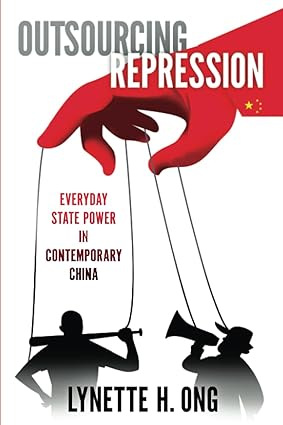
*Lynette Ong wrote an exceptionally good book on how China outsources repression to non-governmental thugs who enforce a kind of discipline on people with grievances.

Posted in Uncategorized | Tagged , , , , , , , , , , , , , | Leave a comment

Jimmy Kimmel, free speech, and turning points

When the Trump episode (epoch?) in American life ends, the brief suspension of a late night talk show host may well mark the turning point when Republicans and conservatives began to abandon this president’s authoritarian aspirations. And why not? It’s a great story.

Proudly thin-skinned, Donald Trump has never warmed to the notion that free speech means political leaders must tolerate criticism, ridicule, and even nasty asides. Most politicians cope by pretending to ignore it all, but the power move is to embrace it–getting in on the joke and coopting the critic. (Gerald Ford, George Bush, and Barack Obama all pulled off this trick.) Trump’s communications strategy–on all the time in all venues–coupled with his hypersensitivity–make him an irresistible target. Add in clownish appearance, conspicuous misinformation, and distinctly unpracticed speaking style and it’s a wonder that late-night comedians talk about anything else.

Trump’s political coalition responded to Jimmy Kimmel’s take on the MAGA movement’s effort to make Charlie Kirk a martyr already primed to take offense. ABC/Disney pulled Kimmel off-air under fire from local affiliates and the chair of the Federal Communication Commission. Alas, this isn’t new. ABC, CBS, and others (including law firms and universities) have settled the nuisance suits Trump launched in hopes of avoiding larger problems with a transparently vindictive administration.

Public response was quick and dramatic. Protesters assembled outside Disney headquarters and theme parks and organized to boycott Disney+ and Hulu streaming services. Politicians and talk show hosts issued statements about free speech and Kimmel. Beyond the customers, notable celebrities signed letters of protest, and suggested–sometimes publicly–that they wouldn’t jump at the chance to work with Disney again. Sarah McLachlan refused to perform or even appear at the Lilith Fair premier in support of Kimmel. She wasn’t alone. Obviously, Disney needs talent AND customers.

This time, the champions of Trump’s victims were joined by conservatives and Republicans who announced their antipathy to Kimmel at the same time. Provocateur Ben Shapiro said government shouldn’t be involved in making business decisions for the networks as did Senator Ted Cruz (R-TX)–the (understandable butt of so much nasty satire–who proclaimed his support for speech free of government interference. Maybe it’s because they’d been to law school, or had a strong principled commitment to free speech. And maybe it’s because they smell a tide turning.

Disney/ABC caved pretty quickly. FCC Chair Brendan Carr clarified his threatening comments in a way that surely sounded like he was backing down. Trump himself was conspicuously outraged, threatening more and less specified retribution to the networks, his critics, as well as political enemies from his first term.

Score the win for the Resistance. It’s worth watching Kimmel’s monologue from his return to late night, and Sarah McLachlan’s performance.

Wins matter.

This effort opened the possibilities of new allies who are nursing second and third thoughts about the wisdom of unwavering support for Trump. Kimmel’s quick return to television–with his largest audience ever–encourages campaigns against Trump on all sorts of other issues. And Trump continues to say and do so much worth challenging. People like Shapiro and Cruz who imagine political relevance after this moment are determined not to ride the Trump train into ignominy and irrelevance. They won’t be alone.

Is this a turning point? Later on, the Kimmel campaign will make for a good story. But it’s important to remember that turning a great ship like America takes a long time. The demonstrators who showed up at the first Women’s March and early dissident Republicans like Justin Amash, Mitt Romney, and Liz Cheney pointed this way. Every bit matters, and the next round of critics will face a little less difficulty.

The straw that breaks the camel’s back isn’t always the last one.

Posted in Uncategorized | Tagged , , , , , , , , , , , , , , , , , , , , , , | Leave a comment

Searching for Solidarity in Higher Education (1)

I want to know what we’re doing to save higher education in America from the Trump Administration. Tell me what you know about.

Here’s what I’ve seen:

The victims of the Trump Administration’s scattershot but relentless campaign against America’s colleges and universities are everywhere: scientists stripped of competitive research grants; professors told their academic freedom doesn’t cover positions or histories the president doesn’t like; administrators seeking to manage large budget cuts while fending off federal extortion; and students facing reduced funding and even worse terms on the loans they take to pay ever-increasing tuition and fees. This list of victims and grievances is woefully incomplete–and that’s part of the challenge in organizing an effective resistance.

Trump and his allies see too many offenses in higher education to ignore:

  1. Everything in higher ed is too expensive, too complicated, and too bureaucratic.
  2. Higher education is a massive and expensive part of America’s economy. Universities hire–and sometimes protect–people who conduct research and write books and articles, sometimes promoting unpopular opinions.
  3. Colleges and universities are supposed to teach students to think critically and demand evidence, which leads to broad acceptance for ideas that vaccines promote public health or that tariffs are taxes on imports that drive up prices.
  4. The system of higher education in the United States is rife with inequality. Lots of people harbor grudges–it’s too easy to identify someone else who seems to enjoy unfair advantages. A skillful hater can exploit all of this.
  5. Trump’s support depends upon the poorly educated, so keeping people out of college is a political strategy.

The Administration has responded to these political opportunities with vengeance. Most of the headlines went to attacks on elite universities like Columbia and Harvard, following (and publicizing!) the student protests against the Gaza War. The Administration announced that it was fighting antisemitism, which proved to be the most convenient stick to use in beating up on university life.

Larger numbers will be affected by cuts in Pell Grants, more onerous terms for student loans, and massive cuts in federal research grants and reimbursed indirect costs. College will be more expensive for students who will have to pay off their loans over even longer periods of time–or just skip college altogether. Physical and biological scientists who won competitive grants found their projects summarily canceled without explanations. They fired post-doctoral researchers and lab techs–and tried to provide useful advice to their own students who’d lost jobs elsewhere. The Trump Administration is gleeful in destroying scientific careers–but mostly backs away from explaining the scientific progress that will be lost.

Meanwhile, administrators at research universities are scrambling to figure out ways to compensate for lost “indirect” costs, which can be puzzling even to those of us who live in such places. Let me explain a little:

At the outset of the Cold War, American leaders somehow came to believe that scientific advancement and a broadly educated populace were assets in a global struggle for democracy–and for dominance. The Soviet Union launched Sputnik, a satellite that came to symbolize a Communist threat and a scientific challenge. The United States worked to expand access to higher education, creating new campuses and many more seats, as well as programs to help students pay for college. Those campuses welcomed, more or less warmly, first generation students, underrepresented minorities, and women. Over time, campuses developed Diversity, Equity, and Inclusion programs to accommodate a broader slice of Americans.

The government also invested in scientific research on those expanding campuses. Spreading research across the country with large grants, the federal government added a negotiated supplement to grants that covered services like trash disposal, accounting, and building maintenance. At the University of California, for example, this negotiated indirect rate is 58% of grants from the National Institutes of Health (NIH). The Trump Administration has announced a new rate of 15% instead. (My very crude estimate is the University of California, Irvine, will lose $120 million from NIH alone. Real money!)

Most importantly, the attacks on elements of higher education (and there are more) make for a comprehensive campaign against students, scientists, and teachers. Taken together, they’ll make the United States poorer, weaker, and dumber. There’s good reason for resistance.

But the challenges posed by a broad attack on higher education are felt as individual grievances. Students seeking financial aid will focus on the new, more complicated, financial aid form and the terms of loans. Scientists are already focusing on interference in their work and funding. And most administrators are neglecting a larger war on higher ed to try to protect their own campuses. There are pockets of resistance everywhere, but nothing like the comprehensive, patriotic, campaign for higher education that is needed.

In the next post, I’ll outline some of the disparate resistance efforts I’ve seen. Please tell me more.

Posted in Uncategorized | Tagged , , , , , , , , , , , , , , , , , , , , , , | 2 Comments

Labor Day (repost and rewritten)

(2021) Here’s a repost and re-edit of some thoughts about Labor Day and its origins. As long as I’ve been aware, Labor has faced a moment of crisis–an extended moment. But things can always get worse and even more urgent. I don’t know if there’s ever been a president with so much support from working people who has been so hostile to their efforts to organize to protect their interests. Trump’s attempt to pander to working people by limiting tax on tips for a while–a favor to the National Restaurant Association–has been a popular way to avoid even modest policy reforms–like raising the minimum wage. The largest unions in the United States have committed to staging events across the country this year to claim Labor Day and make a stand. Maybe it’s a critical moment: The Republican Party has lost the support of college-educated voters for oh so many reasons and may eventually have to give something to the working people who support it. Or maybe not.

Successful politicians exploit, buy off, and sell out the movements that sometimes buoy their campaigns.  This American story is an old one, and it’s one that leaves activists disappointed, wary, and cynical, often especially about the politicians who do the most for them.

[Recall that candidate Abraham Lincoln promised to put the preservation of the Union higher on his list of priorities than ending slavery, and that abolitionists criticized President Lincoln’s Emancipation Proclamation (issued after two years of war), which ended slavery only in the territories that had seceded.]  Most do far less.

So, why is the American day to commemorate Labor held at the end of the summer, months after May Day, the workers’ celebration day virtually everywhere else in the world? How do you respond to a movement by creating an occasion for a cook-out?

crwy

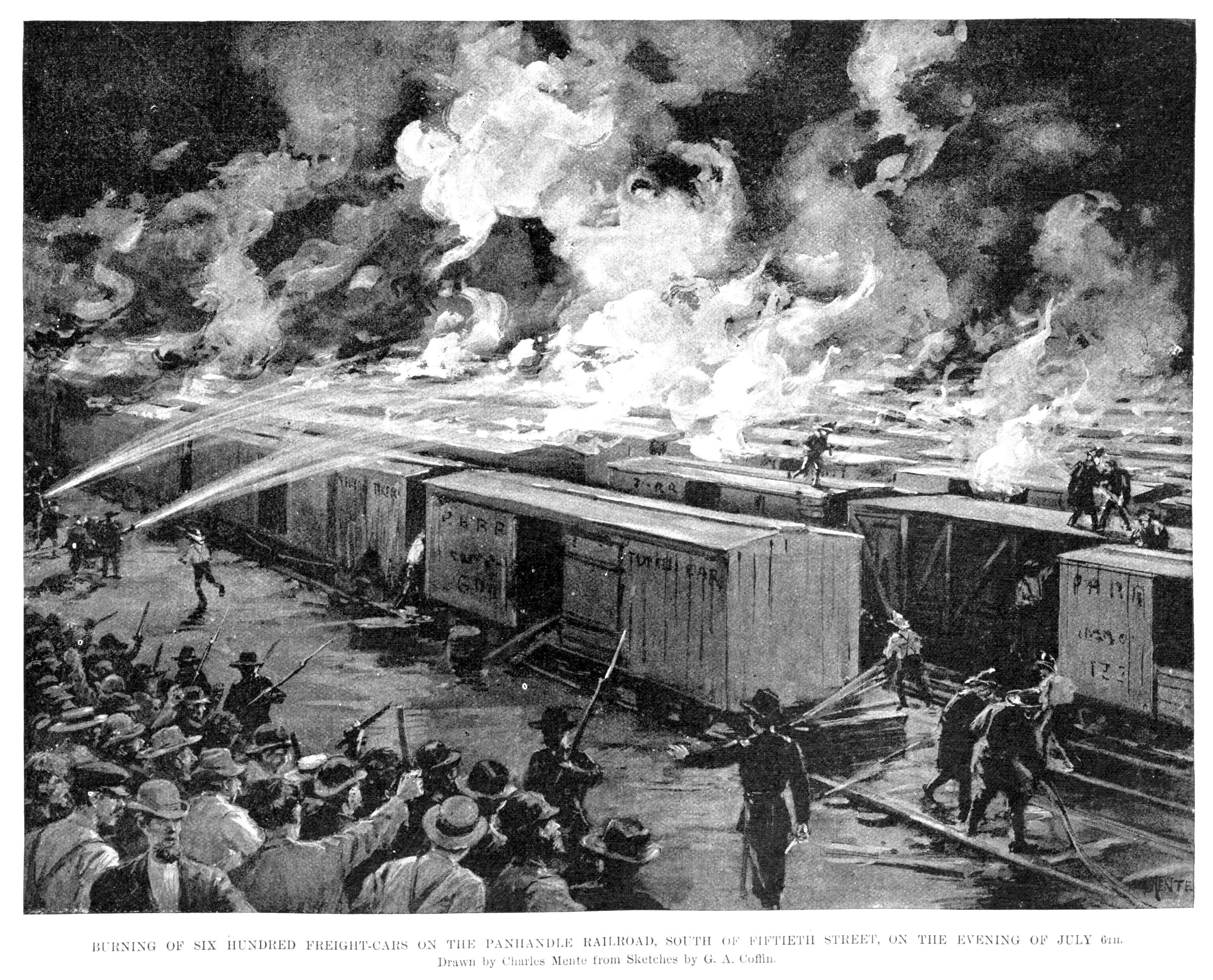
President Grover Cleveland, a hard-money Democrat and no friend to organized labor, signed a bill making Labor Day a national holiday at the end of June in 1894, at the height of the Populist movement, and just after the American Railway Union, led by Eugene Debs, had launched a boycott and strike, starting in Pullman, Illinois. Protesting the Pullman Palace Car Company’s treatment of its workers, including harsh wage cuts, railway workers across the country refused to handle any train hauling a Pullman car.

The Federal government used an injunction, then troops, to battle the union and get the trains moving.  In July, just after announcing a national day to celebrate the contributions of American workers, President Cleveland ordered federal marshals–along with 12,000 Army troops, into Chicago to break up the strike.  Workers fought back, and 13 workers were killed, and at least several dozen injured.  Debs was tried for violating an injunction, and went to prison, where he discovered the writings of Karl Marx. Clarence Darrow provided a vigorous, but unsuccessful, defense.

Debs would go to prison again, for his opposition to US entry into World War I, and would run for president five times as a Socialist.

But I digress.  President Cleveland created a distinctly American Labor Day, emphatically not on May 1, which had already been the occasion for vigorous and disruptive workers’ activism.  (Read about the Haymarket affair.)

May Day remains the day for international workers mobilization.  Instead, our Labor Day is a time to mark the end of summer by cooking outdoors and shopping for school supplies.

The  US Department of Labor’s website gives credit for Labor Day to the American worker, but makes no mention of the Pullman Strike or the Haymarket demonstrations.

So, commemoration can actually be a way to neuter the historical memory.  See our discussions of commemorative days for Martin Luther KingCesar Chavez, and Fred Korematsu, all significantly more difficult characters than what they’ve come to represent.

P.S. Organized labor’s cumulative difficulties and declines have begun to lead to new strategies. One involves organizing workers that unions in the past had largely overlooked. Established unions have tried to expand their reach by organizing in retail stores and in fast food outlets, working to unite less skilled workers. Most recently, as example, the National Labor Relations Board ruled that graduate teaching assistants at private colleges could organize unions and bargain collectively. But I’m not quite convinced that graduate students are the new vanguard for the working class.

Members of the Wisconsin Jobs Now group, representing Fight For 15, which favors a $15 an hour minimum wage, march down E. Chicago St. shortly before entering the Summerfest grounds for Labor Fest in 2015.

Likely more promising are efforts to use politics to improve the fortunes of American workers. Collective bargaining is one way to raise wages. Another is to mandate higher minimum wages for everyone. The Fight for $15 has had claimed some important successes in new ordinances in generally liberal cities, and has shifted the debate elsewhere. Bernie Sanders campaigned for the Democratic nomination by endorsing the proposal for a new minimum wage, and Hillary Clinton, competing for his voters, essentially endorsed the effort.

But,

When well-honed routines of organizing are no longer working, organizers have to innovate. The Fight for $15 has made substantial inroads, particularly in the Democratic Party, and organizers now see immigrants as allies rather than competition, mostly. Family Leave campaigns provide a route to build bridges between different classes of workers which, ultimately, could have large payoff. Most generally, the campaign for workers welfare is transforming to a larger concern with political and economic inequality: it’s what’s left as viable strategy.

Posted in Uncategorized | Tagged , , , , , , , , , , , , | Leave a comment

Froze and reversed the arms race: anniversary, repost.

I’m reposting this reminder about the massive nuclear freeze march, part of an important campaign in the 1980s. Of course, nuclear weapons are rarely the most salient story today, when a war rages in Ukraine, activists across the country demonstrate against mass arrest and deportation sweeps of migrants, and a general fear about the eroding of democracy.. Just for starters.

But the fairly short story of the nuclear freeze offers useful lessons for all sorts of other movements. Not the least of these is that movements (sometimes) matter, and don’t get credit for their efforts unless organizers claim it. The June 12 demonstration made international news in 1982, but is generally edited out of popular histories of the Cold War or of the Reagan era. (See if you can find anniversary remembrances in your media feed today, and tell me if I’m wrong.)

The threat of nuclear war isn’t gone, and more than a few developments in the Trump era have made it more pronounced: The United States abandoned an arms control treaty with Iran that was working, and is now trying to renegotiate it, despite differences within the administration. The United States also announced that it would no longer abide by the Intermediate-Range Nuclear Forces Treaty, negotiated in the mid-1980s, and announced that it was withdrawing from an “Open Skies” verification accord first proposed by Dwight Eisenhower, and in force for decades. Bilateral and multilateral negotiations on nuclear arms control have largely stalled. But the Russian invasion of Ukraine–which ceded nuclear weapons deployed on its territory to Russia in 1994 for a promise from the major powers, including Russia, to protect its territorial integrity–put nuclear weapons back on the agenda, and Russian leader Vladimir Putin periodically threatens to use nukes on the battlefield.

It’s an urgent moment.

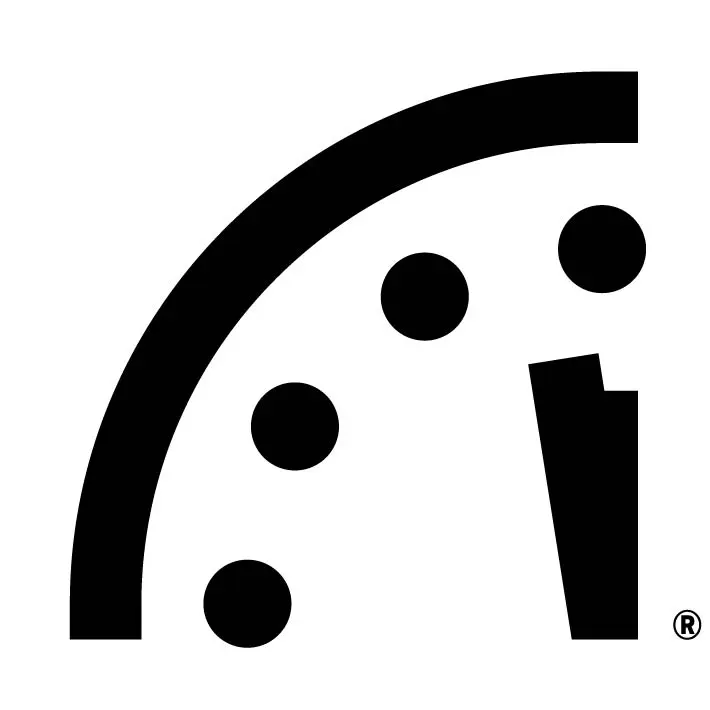
The Federation of American Scientists, an expert group that has promoted nuclear safety and arms control since the end of the second World War, maintains a “Doomsday Clock,” signaling its perception of the nuclear danger. In 1981, when Ronald Reagan took office and the freeze campaign took off, the clock was set at 4 minutes to midnight. In 2012, when I first wrote the appreciation below, the Clock was set at 5 minutes to midnight. 

Today, the Doomsday Clock is set to 90 89 seconds to midnight, the closest to apocalypse that it’s ever been. Had you heard of the Doomsday Clock before reading today’s post? When first created in 1947, it was a big deal, and every adjustment–usually closer to midnight–got lots of attention in mainstream media. Now that the perceived danger is worse than ever, the Clock doesn’t seem to claim much public attention.

So:

Forty-one years ago today, one million people marched in the streets of New York City to protest the nuclear arms race in general and the policies of Ronald Reagan in particular.

  Organized around a “nuclear freeze” proposal, the demonstration was a watershed for a movement that seemed to come out of nowhere, not just in the United States, but throughout what was then called Western Europe.

Of course, movements have deeper roots. Relatively small groups of people have been protesting against nuclear weapons since the idea of nuclear bombs first appeared. On occasion, they’re able to spread their concerns beyond the few to a larger public. Such was the case in 1982, when Europeans rallied against new intermediate range missiles planned for West Europe, and when Americans protested against the extraordinary military build-up/ spend-up of Ronald Reagan’s first term in office.

The freeze proposal, imagined by Randall Forsberg as a reasonable first step in reversing the arms race, was the core of organizing efforts in the United States, which included out-of-power arms control advocates and radical pacifists. Local governments passed resolutions supporting the freeze, while several states passed referenda. People demonstrated and held vigils, while community groups in churches and neighborhoods organized freeze groups to discuss–and advocate–on the nuclear arms race.

The freeze figured in large Democratic gains in the 1982 election, and Ronald Reagan ran for reelection as a born-again arms controller. Most activists didn’t buy it, but after Reagan won in a landslide, to the horror of his advisers and many of his supporters, he negotiated large reductions in the nuclear arsenals of the United States and what used to be called the Soviet Union.

US/ Russia nuclear warheads

The arms control agreements created the space in the East for reforms, reforms that spun out of control and eventually unraveled the cold war and the Eastern bloc.

The world changed.

It was both less and more than what most activists imagined possible.

Do you want to call it a victory?

Update:

The nuclear freeze movement was the subject of my doctoral dissertation and my first book

The issues in it remain relevant.

The story shows the long and complicated trajectory through which social movements affect influence. That’s the topic of my most recent book.

There are a few simple lessons that merit repeating today:

  1. It’s never one event, action, demonstration, statement, or lawsuit that makes the difference; rather, it’s an accumulation of efforts.

2. All victories take forever.

3. And they’re never enough, and certainly not necessarily permanent.

4. The work is important, and it must continue in order to be effective.

Posted in Uncategorized | Tagged , , , , , , , , , , , , , , , , , | 2 Comments

How the LA protests might work for activists and politicians. A note on strategy.

https://ktla.com/news/local-news/massive-protest-against-trump-deportations-forms-near-downtown-l-a-lapd-calls-it-non-permitted/

The fallout from the immigration protests in Los Angeles that started this weekend will play out for a long while, far long than the protests–which are likely to continue and, maybe, change form in the next few days and nights. Partly, this is because those involved in the conflict are carrying different visions about what they want the demonstrations to do. I’m going to go through some of the different players, their interests, and their likely strategies–please correct me on whatever I get wrong:

At the most basic level, a demonstration is a show of political commitments and strength. Demonstrating opposition to the contours and conduct of Trump’s mass deportation is, by itself, a political act of consequence. Some have a dramatically different vision of immigration policy, and others just want a more basic support for legal process, but they all know what Trump is doing is wrong.

The spectacle of a demonstration is a signal to others that large numbers of people won’t sign onto the Trump agenda, and they may vote, campaign, and send money to strengthen their opposition. They want to stand up for the people taken into custody. In this vision, the demonstrations aren’t likely to affect policy in the short run, but may strengthen institutional resistance to mass deportation over time and underscore the horrors of the current process. Los Angeles police aren’t necessarily an obstacle, and local politicians are potential allies.

These protesters are likely to be very concerned with how the demonstrators come off to audiences elsewhere, and determined to present a broadly acceptable vision of themselves. They’re more likely to welcome American flags than Mexican flags. And they’ll emphasize non-violence, maybe even politeness.

This group was surely the largest share of this weekend’s demonstrators.

Some demonstrators have more ambitious aims: they want to raise the costs of implementing mass deportation for the Administration, or even bring down the government without elections. Local police are another obstacle, and disruption is the chief resource they have. They mean to cultivate support with demonstrated strength. They’re likely to be a small share of the demonstrators. Provoking police escalation and violence, even at risk to their own safety, is a demonstration of commitment, and the evils of authorities. They’re often called “radicals.”

Local politicians, including Mayor Bass and Governor Newsom, welcome the demonstrations and the support of the demonstrators as long as they are controllable. Opposition to the Trump Administration and support for the migrants echoes the arguments they’ve made and can provide a political resource for what they want to do. They’re going to attack Trump from the vantage point of “normal” politics, emphasizing civil liberties and the rule of law. To pull this off, they have an interest in supporting the less disruptive and confrontational protestors and marginalizing the “radicals.”

Meanwhile, Trump was very quick to call out the National Guard and alert the Marines, eager to throw gasoline on the first sparks of conflict. It’s possible he didn’t realize that his engagement in managing a demonstration in Los Angeles would energize the most radical protest factions, but everyone else did. Visible radicals throwing firecrackers, breaking windows, or writing on walls are exactly what this president wants. Trump is desperate to demonstrate his strength and commitment to deportation, and to take down his political opponents, showcasing their weakness, and unify and mobilize his supporters. He knows immigration is his best issue, and he wants to focus attention on his efforts and his enemies, rather than all of the other stupid stuff he’s involved in.

So, if the protests dissipate, Trump will claim credit, and if they accelerate, he’ll find justification for deploying increasing force. His course is clear.

Newsom and other local officials want to demonstrate support for the activists’ cause and almost all their efforts–but absolutely not the destruction of driverless cars and other acts of vandalism. It will be a hard line to walk. Filing a lawsuit is an action, to be sure, but it’s not likely to produce anything helpful for a very long time. Declaring all downtown protests an “unlawful assembly” is an understandable response, but it’s fraught with risk, shutting out the “peaceful” protesters and encouraging others to innovate.

So, the scary thing is that the Trump administration and some activists are likely to pour their efforts into dramatic demonstrations, each increasingly provoked, and Trump claiming control of the much better armed forces.

It’s not a recipe for peace.

Posted in Uncategorized | Tagged , , , , , , , , , , , , , | Leave a comment