
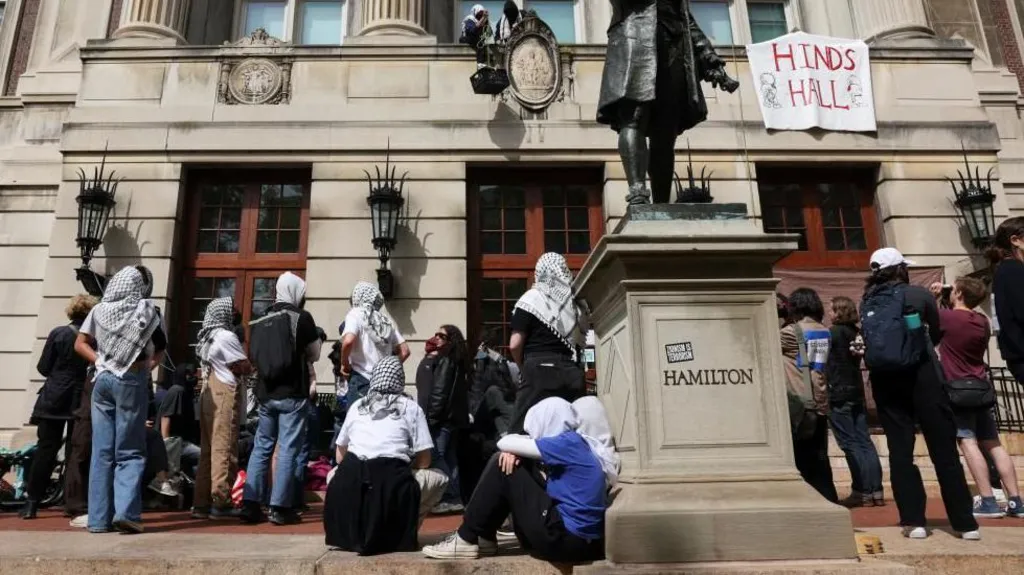
Taking hostages is an act of terror. Kidnappers hold more and less innocents to gain attention, extort money, and bully others into doing something they don’t want to do. Taking hostages is morally reprehensible and widely recognized as a war crime.
To punish Columbia University and intimidate institutions of researchers, scholars, and students, the Trump administration cancelled $400 million of grants and contracts. Like virtually all research universities, Columbia, depends on grant funding to support its extensive research efforts, as well as the underlying infrastructure that supports research. Although some researchers need little more than time and a good library, lab scientists spend a lot of money on labor (students, postdoctoral felloows, and technicians), equipment (like microscopes and cell counters), and supplies (like gloves). Because lab science costs so much more than anything happening in humanities and social sciences, Columbia’s medical school appears to have taken the biggest hits. Note, however, that the medical school is a subway ride of about two miles north of the main campus–where all the protest took place.
I couldn’t find a list of the canceled research grants, but some scientists posted anguished post-mortems of their projects on maternal mortality, diabetes, or fibroid tumors. I assume the scientists whose research has been taken hostage–if they think about the Middle East at all–hold a broad variety of political opinions. But their culpability is far less important than their vulnerability; without federal monies, jobs are lost and research stalls. Even a limited interruption risks the development of knowledge and the careers of young scientists. Researchers who spent hours and years competing for grants, want their money back and their work to resume. Of course. And Columbia wants the scientists back at the lab bench generating knowledge and indirect costs.
The Trump administration recognizes that it can punish scientists to coerce university administrations to do what they want–mostly, punishing student protesters. The administration describes the offense as antisemitism, but it’s very clear that Donald Trump wants to still pro-Palestinian activism and, more generally, any opposition to his rule. Moreover, the Administration is more than willing to punish third (and fourth and fifth) parties for what it sees as Columbia’s crimes. Standing up for scientific progress within the Administration is an obvious non-starter.
University administrators are among the least likely resisters to the this kind of punishment. A college president’s job is all about mediating differences among student, faculty, and funder constituencies. Presidents must entertain–and be entertained by–would-be funders of medical research, studies of all corners of the world, buildings, and financial aid for students–and so much else. The cultivation of ostensibly arcane knowledge plays poorly in populist politics.
Still, Columbia’s quiescent caving was striking, if understandable.
If Columbia ever wants research money again, the Administration explained, there’s a lot to be done. A letter signed by representatives of the General Services Administration, the Department of Education, and the Department of Health and Human Services issued a set of demands that included harsh and specific punishments of disruptive student protesters, as well as moving campus discipline from a judicial board to the president’s office. The Administration also called for unspecified admissions reforms and putting the the Department of Middle East, South Asian, and African Studies under academic receivership for a minimum of five years. If all of this is done, and quickly, the Administration announced, they would be willing to discuss next steps to allow the University to “return…to its original mission of innovative research and academic excellence.”
Columbia University followed quickly with announcements of expulsions and multi-year suspensions for students associated with the occupation of Hamilton Hall, as well as the revocation of some degrees, unusually harsh penalties, with more to come. Specific punishments for particular student offenses are not public–which is appropriate. (Try to find Donald Trump’s college transcript!) But Columbia clearly communicated to it would jump in response to the Administration’s orders–and vigorously. All of this is understandable–and wrong. (A group of five political science professors explained that the Administration could do better in explaining the consequences of quiescence.)
The problem with negotiating with kidnappers is that you encourage more kidnapping.
The Trump administration will keep demanding more until, at least, the demands stop working. The Department of Education sent letters to 60 other prominent schools, announcing unspecified investigations that could lead to unspecified but easily imaginable punishments. Don’t expect university presidents to lead the resistance.
Last weekend, the New York Times published alarmed and eloquent defenses of American universities by David French and Meghan O’Rourke. The Times urged defenders of academia “to be bolder about trumpeting its strengths and to be more reflective about addressing its weaknesses.”
It’s going to take a lot more than that.


 Politics Outdoors
Pingback: When victims try to bargain | Politics Outdoors
Pingback: Harvard fronts a defense of higher education | Politics Outdoors
Pingback: Solidarity and higher education | Politics Outdoors