
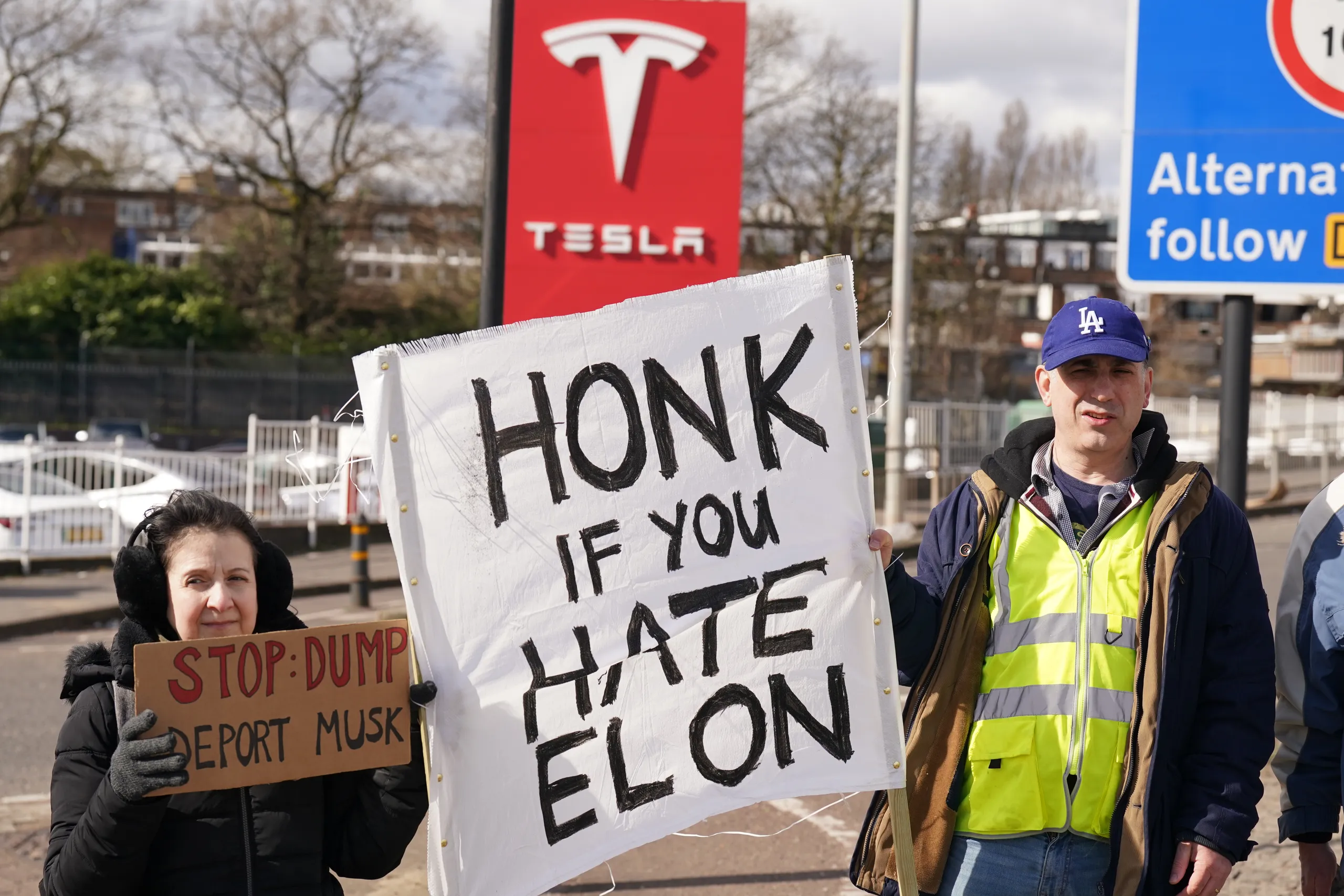
The influence of popular protests at Tesla dealerships is starting to play out as Republicans realize that Elon Musk is a mixed blessing, at best, for their political futures. We can get a good sense of the often indirect ways in which protests play out.
So, people with grievances about Trump administration initiatives–and there are plenty of them–are constantly looking for something meaningful to do. In 2017, during Trump I, the initial wave of opposition assembled in a parade of weekly protests in Washington DC, starting with the Women’s March. This time IS different.
We haven’t seen big national demonstrations on the National Mall, activists have staged more protest events than in 2017, scattered across the United States. (We can follow this with the help of the Crowd Counting Consortium, which has been tracking protest events across all sorts of causes since 2017. Jeremy Pressman and Erica Chenoweth started the project because they wanted to get reliable information on protest events that might escape coverage in mainstream media.) The events aren’t as big, but many people are involved, and they’re working with neighbors in local groups that can continue to stage events, attend candidate forums, and build a vital resistance.
While the logic of a protest in front of the Lincoln Memorial seems obvious: assemble large numbers on a national stage to show popular support for your position and watch everyone else respond.
But at the local level, there are more possibilities and more complications. The first issue is finding a target and a tactic. It’s fine to assemble at a City Hall, but lots of Trump opponents don’t have major grievances with their local governments. They payoff isn’t so clear.
In contrast, Elon Musk has made himself a big target for all kinds of gripes about the Trump presidency, particularly the massive lay-offs executed by the so-called Department of Government Efficiency (DOGE). Supported by some version of Artificial Intelligence and aided by a team of young coders processing spreadsheets, Musk has ended the jobs of tens of thousands of people, making conspicuous mistakes along the way. Maybe it’s even more important that he’s expressed apparent delight with every lost job, and has appeared gleeful and provocative in public. It’s almost as if he wanted to be a target.
Musk’s close association with Tesla, the electric vehicle company that he bought and promoted, made dealerships a particularly attractive target. They’re all over the place and visible. So are the protests. The demonstrators worked to stigmatize the cars, and also to signal Trump’s opponents that there were lots of angry people willing to take action. The protests showed people concerned about layoffs or Ukraine or reproductive rights or the budget or tax justice (and so on) that they were not alone. It matters.
The protests were also a signal to Trump’s supporters that their allegiance could have costs. Tesla’s stock price cratered after a post-election spike, which means that Musk and his investors lost money; a responsible Board of Directors, considering its fiduciary duties, would surely urge Musk to step back from politics a little. (Apparently, Tesla does not have such a Board.) The Secretary of Commerce (illegally) promoted the stock on television, while Trump himself turned the White House driveway into a showroom and himself into a shill for at least one kind of electric car.
Meanwhile, Musk has flexed, mostly with money, politically, attacking opponents and judges while promoting himself. He’s threatened elected Republicans who think twice before supporting whatever Trump wants, promising to find and fund primary opponents for each of them.
And he invested mightily in a high-profile election for the swing seat on the Wisconsin Supreme Court, dropping $25 million on conservative Brad Schimel’s candidacy. Susan Crawford defeated Schimel handily, winning by about 10 points. Even more important, Musk provided focus and publicity for Crawford’s candidacy. His presence in the race, and in a cheesehead, helped Democrats raise money from across the country and turn out voters in Wisconsin. Voting for Crawford was a way to vote against Musk.
This week’s election showed Musk is a political liability. Although Republicans still want Musk’s money, it would be better if they could get it without a personal handoff.
The challenge for Donald Trump and the Republicans is to find some way to push Musk off the stage without giving up access to the hundreds of millions he’s been willing to spend. It’s not clear they’ll be able to pull it off, but Trump has already announced that Musk will be leaving….soon. The question is whether he’ll leave some money in the cushions at the White House.
To hammer the point: The Tesla demonstrations focused attention on Elon Musk, all his assets and liabilities, and exposed the political risks associated with allowing him to front for the administration. That’s a win.


 Politics Outdoors