
https://www.inquirer.com/education/upenn-union-rally-dei-funding-trump-administration-20250320.html
Virtually everyone starts with a gripe about higher education: costs, grades, debt, jobs, parking, artificial intelligence, natural intelligence, and so and so on. The Trump administration has floated on all the grievances to launch a series of attacks that almost look strategic. And while students and scientists and teachers and administrators and parents are all threatened by these attacks, a coordinated defense has yet to emerge.
Yet American universities share a common vulnerability: dependence on government money. Non-profit status and special rules and rates on endowments are the start. Researchers depend on government grants, atudents depend on means-tested government grants and subsidized loans, and universities depend upon students who, with the help of grants and loans, can pay tuition. Every state subsidizes at least some public universities, providing education to students and jobs to teachers, janitors, accountants, and football coaches. And all of this helps promote science, commerce, and professional sports.
Because universities depend upon public monies, the government can withhold funds if a school is up to activities that violate the law. Mostly, universities have been careful not to do so. The Trump administration claimed violations: schools were antisemitic; schools discriminated on the basis of race–by considering race in admissions; schools were too liberal and indoctrinated youth (Shout out to Socrates….); schools discriminated by allowing transwomen to participate in sports. And so on.
Exploiting the pro-Palestine protests that animated politics on 160 or so college campuses, the Trump administration went hard at higher education, focusing first on Columbia University, and charging antisemitism. (There were certainly antisemitic expressions that came out of and around many of the encampments.)
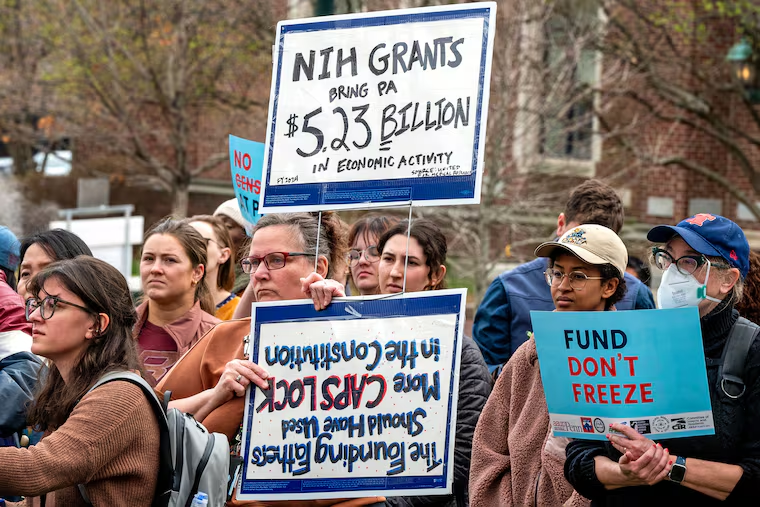
Now here is where we need to think about interests: Academic administrators make decisions that affect higher education in general, but are ultimately accountable to the Boards of Trustees and funders or their own institutions. Top professional administrators, like college presidents, move from school to school, and promote themselves for the next job by trumpeting their achievements at a particular school, often raising money and moving up in institutional rankings. The Trump administration didn’t have to develop a strong case of legal violations in order to make a powerful threat to the institution, freezing funding for all kinds of campus activities, most notably, medical research. Call it hostage-taking….or extortion.
It worked, at least at the start. Columbia paid $200 million settlement to the US Treasury, and announced a slew of new policies. The awful true story is that it was a good deal for Columbia–at least financially. Columbia paid a ransom to have access to more than $4 billion of research funds, ending negotiation and uncertainty–administrators (led by a new president) hoped. (I’m indebted to Michael Dorf’s analysis on this matter–and he has much more worthwhile to say.) Of course, the government could always come back with new demands.
The University of Pennsylvania, which also dismissed a president, didn’t pay a settlement, but made policy concessions on sports and the interpretation of Title IX than far exceeded any damage done by one transgender swimmer. Then Brown University negotiated payments of some $50 million to local workforce development, and agreed to adopt the Trump Administration’s approach to admissions and to defining Title IX.
These settlements are all awful for higher education in general, but offered apparent safety plays for each individual school.
Then negotiations with Harvard University went on and on and on, with periodic reports about movement toward a settlement–yet to be announced. I suspect the stalled negotiations at least partly reflected increased ambitions from the Trump Administration and Harvard’s new president Allan Garber’s efforts to balance commitments to his institution with his responsibilities to higher education more broadly. Although Harvard is a big and attractive target for the Administration, it’s also extremely well-resourced–loaded with money, skilled and connected attorneys, and visibility.
As the negotiations dragged on, the Trump Administration moved to a new strategy that afforded the chance to go after more than one school at a time; it starts with the Compact.


 Politics Outdoors