
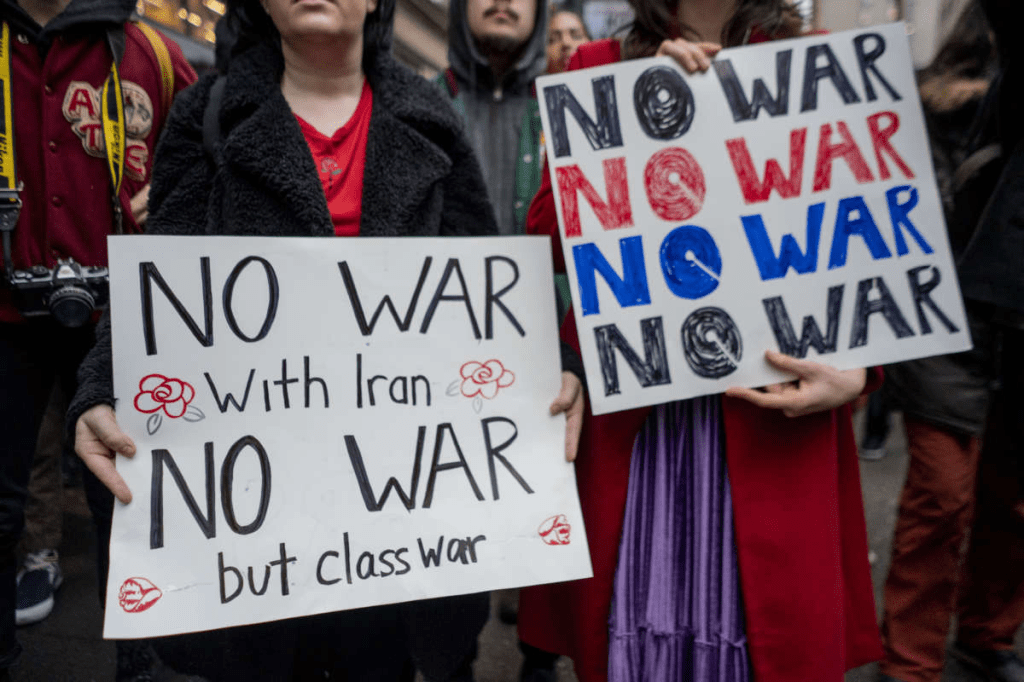
War dominates our screens, our politics, and our brains. For a while, it crowds out almost everything else. And, more than virtually any other issue, war polarizes.
For these reasons and others, presidents in political trouble often turn their gaze abroad, and demand that Americans get in line behind them. After all, politics stops at the water’s edge–a debate-killing maxim.
Historically, presidents have enjoyed a bump in public support when they send troops into combat, a “rally round the flag” effect. (I first learned this from John E. Mueller’s book, War, Presidents, and Public Opinion.) The surge of support erodes over time, as the costs and horrors of war become visible.
But Donald Trump’s leap into war with Iran didn’t produce any spike in public opinion, so the anticipated decline in support is from a smaller base from the start. Maybe it’s because Trump has done an abysmal job of building support for his effort; he doesn’t even seem to be trying. This, despite his shameless capacity to dissemble even more than his most egregious predecessors. (Pick any war mongering lying president for example.) And it’s hard to ignore that this war is particularly ill-conceived and badly planned.
One challenge is how to fit this awful war in the litany of grievances animating the resistance to the Trump administration. Offenses and provocations abound: ICE abuses, a war on science and American universities, restricted access to health insurance, environmental despoilation, evisceration of the federal government–and civil service protections, and and and. The list is far too long, and it includes so many lesser offenses: renaming or destroying buildings and putting the Trump visage on coins. And recall that the attacks on policy are all larded with corruption, Constitutional offenses, incompetence, racism, bad taste, and bad manners.
Issues and activists compete for attention. Thus far, the Iran war is just another one. The Bannon/Trump strategy of “filling the zone with shit” works to blur focus on anything but the Trump persona which provides a tight focus for Trump’s defenders. The conflict about climate policy becomes a battle about Trump, just the same as a debate about health care subsidies. This is just dandy for a target with a bottomless appetite for attention, but it’s paradoxically difficult to get political traction.
Still, Trump’s demonstrated incompetence in conducting the war undermines faith and fear of his efforts on other issues. Recognition of the Trump team’s damage to the Middle East and the global economy undermines faith among his strong supporters and fear among his more tentative acolytes; it will stiffen the spines of his opponents and offer them newly attentive audiences. Some challenges are a little less daunting: It’s an odd paradox that unfolding horrors in the Persian Gulf may end up saving some of the sight lines in the nation’s capital.
In this moment, everything dovetails into Congressional elections still nine months away. As the costs of war become more clear and dramatic, organizers face the challenge of forging connections among an increasingly diverse collection of groups and individuals with a wide range of grievances and mobilizing meaningful political action. This is no easy matter. At the moment, however, Trump seems determined to help them do it.


 Politics Outdoors