
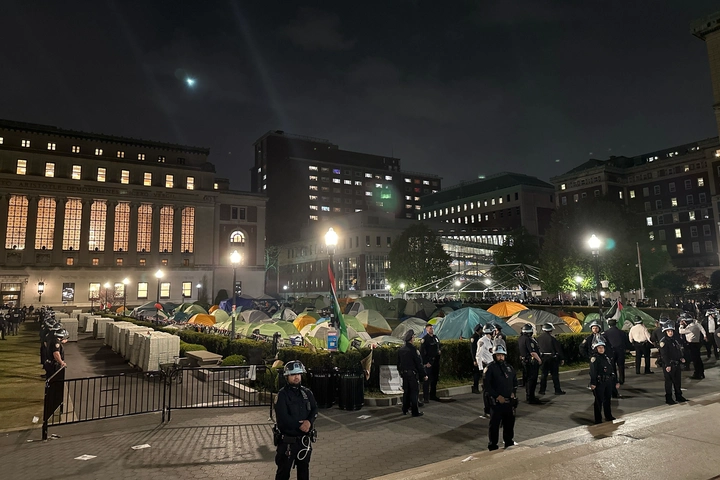
The Trump administration was very clear that Mahmoud Khalil was an example; ICE officers arrested, jailed, and planned deportation to teach everyone else a lesson. The government intends to deport Khalil, a legal permanent resident (green card), because he had been visible in representing the volatile pro-Palestine, anti-Gaza destruction, encampment at Columbia University.
Khalil, armed with a newly awarded Master of Public Administration degree, isn’t a particularly dangerous threat, but he is a powerful example. Unlike other student activists, Khalil isn’t accused of harassing anyone or destroying property, or of breaking Columbia’s rules or US laws. He did, however, criticize support of Israel’s Gaza War. He’s being punished not for what he did, but for why he did it.
This is a potent message.
Encampments opposing Israel’s policies appeared on more than 100 college and university campuses during the war, disrupting normal routines to draw attention to horrific destruction. Opposing Israeli policies isn’t anti-Semitic–despite what some have argued–but there were certainly expressions of anti-Semitism from within and around some of the protests.
The Trump administration doesn’t want those protests, expressed opposition to its grand plans for a beach resort cleared of Palestinians on the narrow Gaza Strip, or any visible action against the administration. By dispensing with basic free speech protections and any due process, it’s sending that message to everyone–particularly to immigrant and student activists.
Set the context: Remember, Trump pardoned and commuted sentences of more than 1,500 January 6 insurgents–people who had been convicted or plead guilty to actual crimes, including violent action against police officers. It’s not what they did that earned them pardons, but why they did it–to support Donald Trump. And Trump also pardoned people who were jailed for blockading abortion clinics. Again, for this Administration, support for the Trump coalition functions as a get-out-of-jail-free card.
This is also a potent message.
The basic principle underlying free speech is that advocacy of unpopular causes doesn’t constitute criminal conduct, and a cause favored by a powerful figure doesn’t justify vandalism or assault, much less greater crimes.
All of this means that Khalil’s case should be the concern of anyone who cares about the Constitution and civil liberties. Mahmoud Khalil serves as a canary in the coal mine; his persecution is a signal and a symptom of a comprised democracy.
Columbia University is a somewhat bigger canary. (More to come)


 Politics Outdoors
Pingback: Kent State Anniversary (May 4, 1970, revised and reposted) | Politics Outdoors