
This is a repost and edit of an earlier post.
As always, May Day is an international day of protest for workers rights. Below is a picture of a march at a courthouse in Philadelphia. CBS News has posted great photographs of May Day protests around the world, where protests are about wages, pensions, jobs, and so much more.
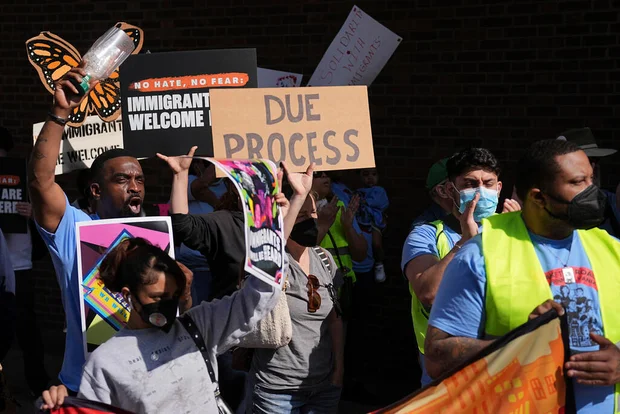
You’ll not from the signs that May Day protests, often animated by class, address all sorts of other issues, but economic inequality is a constant, and the protesters side with the workers. Welcoming immigrants and due process have not been the go to issues for workers during most of our history.
In the United States, by design we have a different day for workers (Labor Day), and May Day always seems like an opportunity to organize and demonstrate around a somewhat related cause, with or without the support of organized labor.
Workers, organized and otherwise, have plenty of issues in the United States these days, and President Donald Trump is on the other side of most of them. The budget plan about to drop is a proximate provocation for a whole range of other issues of inequality, now with racism, democracy, and the rule of law inescapable add-ons. Senator Bernie Sanders spoke at the Philadelphia demonstration, and you just know he was able to update the speech he’s been updating and refining for the past forty years.
Although it’s a desperate time, there are burning embers for optimism. Campaigns for raising the minimum wage at the state level have met with some success in some states. Unionization campaigns have succeeded at a couple of Starbucks and Amazon sites, but every subsequent site is a battle. Graduate student researchers and teaching assistants have launched unionization campaigns and strikes for better contracts with some success–including at the University of California. Here at UC-Irvine, the unions won substantial raises, and the University responded by cutting the number of graduate students admitted and teaching assistants assigned. There are no easy battles.

Successful campaigns have increased the number of unionized workers in the United States, bucking the trend of the past 70 years or so, but the percentage of American workers in unions continues to decline.
The graph below charts the rate of union membership since 1983. It’s hard to miss the trend line–and it’s worse for private sector workers.

May Day is an obvious time to take stock. Journalists look for labor stories that are normally undercovered on May Day (and even on Labor Day), and organizers work hard to fill the space.
May Day is an opportunity to organize and say something, reminding the rest of the world that constituencies and concerns remain vital and potentially volatile.


 Politics Outdoors