
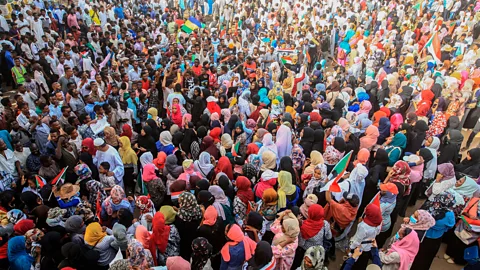
Every media outlet is going to post estimated numbers on the No Kings rallies, and they’re sure to be impressive. Larger than the extremely large June 14 demonstrations will be seen as a sign of the movement growing. Opponents will question the numbers, and then the character of the people who show up. But they’ll be counting and talking too. Numbers matter, but not by themselves.
Organizers have been touting a magic number–or rather percentage: 3.5%. Reaching this magic number, they’ll say, will ensure a victory. It’s encouraging–protest can matter; it’s directive: get out and demonstrate and bring your friends. It’s also wrong.
The availability of numbers for political events a valuable resource, but it can also lead to a distorted scientism that can easily jump conclusions. A critical example of this risk is work that compares the outcomes of contentious large demonstrations across very different contexts. In their important study of non-violent action, Erica Chenoweth and Maria Stephan (2011) considered more than 300 cases of campaigns spread across the world over more than 100 years. Supplementing their large N analysis with detailed case studies, they offer a theory of how non-violent campaigns sometimes succeed. Their insightful book, however, is dependent upon trusting the accounts of very different movements at different times recorded in different languages in different sorts of media.
Looking at their data, Chenoweth and Stephan noted that the “maximalist” campaigns that sought to replace regimes ultimately triumphed when they turned out more than 3.5 percent of the population in non-violent sustained action. Chenoweth promoted the idea in a TED talk. And many activists and pundits found the “3.5 percent rule” encouraging, partly because it provided such a clear focus—get 11 million people to attend protests (for example, see Caroline Gleich; David Robson ).
But think about all the larger questions such a “rule” elides: under what circumstances would such a large faction of the population be able to protest non-violently? Would activists be dependent upon tolerant or incompetent policing—or authorities unwilling or unable to repress? Would they necessarily enjoy very broad public support and available infrastructure from major social institutions? The point is that the application of 3.5+ percent protest is not strictly an independent element that can be deployed without many other elements also in effect—and those factors are also likely to matter, independently. Moreover, how translatable are insights drawn from campaigns against authoritarian governments to reformers seeking policy change in a relatively stable democracy?
Erica Chenoweth has more recently been cautious about 3.5 percent as a rule, acknowledging that it was observed, rather than theorized or tested, and that in newer cases it hasn’t held up. Numbers are attractive because of the generalizations and precision they seem to offer. But the fixation on a constant percentage is a chimera that can lead us to neglect other important factors, like non-public defections from leadership or international pressures.
Turnout at demonstrations is important: it’s a statement about citizens’ positions on issues and the strength of their commitments. But electoral campaigns and kitchen table discussions and public testimony and lawsuits matter too–along with much else. There is no magic number that will change the world through a single event. The demonstrations are important, almost exclamation points in a larger social movement story. The success of No Kings–or any other social movement, will be affected by the numbers that turn out for a demonstration, but even more important will be what those people do the day after and the day after that.


 Politics Outdoors
Thanks for addressing this. I’ve been skeptical of this 3.5% number but I didn’t know the context in which it had been raised. There’s a lot more to it than how many people get out in the street!
Yeah. We all would like to be able to push one hyperspace button and get out of this moment. But it’s not just one button.
A timely post. I think there are a couple of books on the topic of protests in general – Micah White’s The End of Protest: A New Playbook for Revolution is a pretty good read. Social Movements and Protest Politics by Greg Martin is also a nice read…
In general, the 3.5% rule is nice to make people feel good; but does it really matter when the one being protested against doesn’t give a shit.
Thanks. Trump is not the only person who could be influenced by large numbers at the No Kings protests. Large numbers can stiffen the spines of legislators who are already (often weakly) challenging the initiatives of the Trump administration. The turnout can also tug on the commitments of the many Republicans and independents who have always been luke-warm or cooler to Trump. This president desperately needs their compliance.