
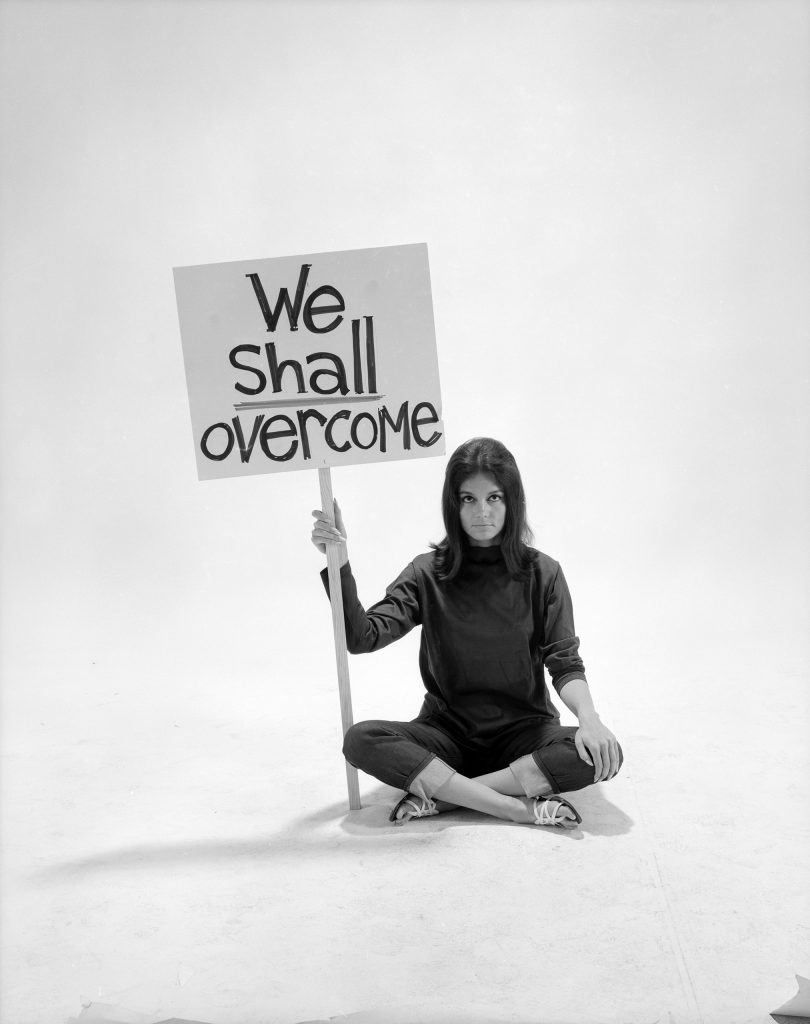
Gloria Steinem’s death on September 2 ended a long and eventful life, and gave concerned folks an opportunity to reflect on that life, and on the second wave feminist movement. Steinem was certainly one of many key leaders of the second wave, representing that movement to all sorts of audiences, and deeply engaged in ideological and tactical battles within contemporary feminism.
But how many names will appear in the textbook treatments of the second wave of feminist activism in the United States? Committed, sometimes heroic, individuals who do important work for their cause always get edited out. And with them, the differences and disputes within a movement can almost disappear from history.
So, who stands in for a movement?
Organizations often make deliberate choices about who they want to represent themselves and their cause. Leaders are elected and they can designate spokespeople who receive instruction on who to talk to and what to say. But movements are much broader and less disciplined than individual groups. Reporters, politicians, and pundits pick their own movement leaders to serve their own purposes. This can mean the most articulate and charming person circulating around a movement, particularly if that person returns phone calls quickly. But it can also mean the most disheveled and incoherent person willing to appear on camera—for a movement the reporter doesn’t like.
Visibility, longevity, persistence, energy, and charm all matter, but the historical process of defining a broad campaign in the context of just a few identifiable individuals is complicated and contested. Steinem proved to be long on the assets that bring mainstream attention. She was the kind of feminist who curious television hosts wanted to interview, and she took the offers and returned phone calls. She showed up to events on college campuses for decades, and was ready to appear with all sorts of campaigns in progress. (See Letty Cottin Pogrebin’s appreciation in The New York Times.)
Over time, energy and activity builds a kind of ubiquity. I was struck by how many academic friends recounted their own personal contacts with Gloria Steinem. The summary is always something like: pleasant, patient and unassuming, engaged and visibly committed to the cause, and optimistic. There must be a lesson there.
It’s important to remember that the feminist movement of the 1960s and 70s and 80s and onward was a site for contention about all sorts of issues, including abortion, capitalism, gay rights and visibility, police, pornography, race, rape, and war. Over time, some of those disputes have been mostly settled within the movement.
In the wake of Steinem’s death, mainstream media was quick to identify her as a critically important feminist leader. Some feminist writers responded with resistance, reminding readers of long standing, sometimes simmering, disputes within the movement. Jenny Brown’s review in Jacobin offers one excellent account. It starts…
Gloria Steinem died this week at age 92. The establishment’s favorite “radical” feminist, Steinem worked with the CIA to promote reactionary propaganda and helped direct the women’s liberation movement into a corporate-friendly, anti-socialist direction.
After graduating from college trying to get a start as a journalist, Steinem worked for several years (1958-1962?) for the Independent Research Service, a front for the CIA, charged with promoting American values to youth abroad. The CIA connection, no matter how long ago, is enough to earn cancellation in some circles, but likely more significant is that Steinem expressed no regret.
Within the feminist movement—already under way in campaigns for an Equal Rights Amendment and abortion rights—Steinem tacked toward more mainstream audiences. She was a co-founder and editor of Ms., which was intended to be a mass market glossy magazine, supported largely by advertising. (In 1971, this didn’t seem impossible.) But more radical feminists didn’t find a space for themselves and their ideas in Ms. which, critics charged, skewed toward self-esteem, consciousness raising, Democratic Party politics, and away from radical confrontation. In 2016, she endorsed Hillary Clinton, rather than Bernie Sanders, for the Democratic Party’s presidential nomination.
Was this the result of a focused chase for a mainstream audience or a deliberate and ideological move away from more confrontational politics?
Steinem offered a slightly different explanation—the need for advertising revenue.
Ms. operated within the initial mass market model for nearly twenty years. By 1990, however, the editors found the advertising financial model was becoming even less viable. Steinem explained that chasing advertising dollars meant featuring topics like entertaining, cooking, and fashion, and avoiding topics that were potentially controversial, like abortion, gun control, or disparaging remarks about religion. It became another outlet for culture and consumption, rather than a more vigorous political project. Steinem’s “Sex, Lies, and Advertising,” which announced Ms.’s shift to a quarterly without advertising support, is still worth reading.
So, Gloria Steinem consistently offered a vision of feminism that critics within the movement found unduly modest and moderate. I think you will be hard-pressed to find any long-tenured leader of a campaign with some influence who doesn’t face similar criticisms from committed visionaries who want to put forward a stronger line. Steinem, like Ms., targeted a mass market, and took heat for it.
I was particularly curious about how those critics wanted to remember Gloria Steinem. Alice Echols, an activist and historian who had been critical of Steinem, wrote a long social media post, repeating her differences with Steinem, but extolling her persistence and her commitment. She also praised Steinem’s continued engagement with her more radical critics. Similarly, Angela Davis, recalled that Steinem served as national treasurer of Davis’s defense fund. (Davis, then a member of the Communist Party, spent a year in prison awaiting trial for three felonies including conspiracy to commit murder; guns she owned were used in an assault in a courtroom which resulted in four deaths.)
So Steinem maintained ties with more radical colleagues, and made space for them as well, calling attention to often neglected Black and Latino women activists, and insisting that groups and schools that booked her for a talk also included another feminist speaker of color.
I am certainly not the person to adjudicate the value of Steinem’s approach to building and feeding an important movement. From the outside, it looks like Steinem targeted the mainstream, but tried to create openings for more radical activists to reach that same audience.
Would a more radical Gloria Steinem with a more radical Ms. have been more influential?


