Protest at the Convention? Of course.

People always show up to protest at the national conventions of the Democratic and Republican Parties. The protests span the political spectrum, often including local and national issues. In looking through old reports for the second edition of The Politics of Protest, Amanda Pullum and I found protest at almost every major party convention in a presidential election year between 1948-2012. I bet there’s even more now.

The attractions for carrying signs and chanting in the streets–or more–are very clear. Usually located in major cities, it’s relatively easy to generate crowds and, more importantly, attention. Delegates include party activists, elected officials, and aspiring candidates for office. They are obvious targets and, sometimes, potential allies.

But the local audience is the least of it. Media outlets of all sorts swarm the national conventions looking for news and usually there isn’t much. Although party conventions are charged with selecting candidates for the presidency and vice presidency, since 1972 the nominees are well-known in advance. Reporters looking for stories might drift outside and see protesters for (or against) abortion rights, civil rights, immigration reform, organized labor, and peace, and war–and so much else.

Protesters demonstrate their concerns and their commitments, projecting everything to a broad national and international audience. They attack the Party opposing their positions, and demand the Party closer do more. And movements are far more likely to engage with distant audiences than those wearing funny hats inside.

And there’s a paradox here: Although the people inside the convention hall are better positioned to make policy, they are least likely to be responsive to pressure from most campaigns. By the time the national conventions take place, delegates and candidates are far more concerned with the November election and imagined swing voters than persistent opponents or putative allies in the streets.

The Chicago protests at the Democratic Convention of 1968 focused on the Vietnam War more than anything else, and one reason they were so disruptive and dramatic and dangerous was activist frustration at being unable to influence what was going on inside. Party insiders chose Vice President Hubert Humphrey as their nominee. Humphrey had difficulty sketching out a clear position on the war while demonstrating fealty to President Lyndon Johnson and had skipped all of the primaries. Activists locked out of the convention focused their efforts–and their rage–outside.

After the Chicago debacle, both parties executed reforms of the primary process that guaranteed issue activists more meaningful influence much earlier in the process.

By the convention, partisan positions are pretty clear, and leaders work to blur those that might hurt them at the polls.

Now look at the Gaza war–as demonstrators in Chicago urge. Protesters want the next president (and this one, as well) to put more pressure on Israel to stop the killing and reach some sort of settlement. They offer a range of remedies, from more forceful rhetoric to an embargo of arms to Israel.

President Joe Biden has adopted a policy mostly offering abundant arms and quite diplomacy to Israel, which clearly has been ineffective at ending the carnage. To the extent that we can derive a policy position from Donald Trump and the Republican Party, it’s one of more vigorous support of Israel.

In an electoral calculus, Democratic candidate Kamala Harris has every incentive to avoid a strong position on the issue. She called for a cease-fire months ago, and brokered meetings with the Israeli opposition to the Netanyahu government, but has been unwilling to risk a stronger stance.

Demonstrators will demand more from Harris, to be sure, but the real hope for influence is the audience watching from afar.

The prospects for influence in a presidential campaign are much better much earlier in the process.

Posted in Uncategorized | Tagged , , , , , , , , , , , , , | 1 Comment

Protest can build political capacity: The Case of Ferguson

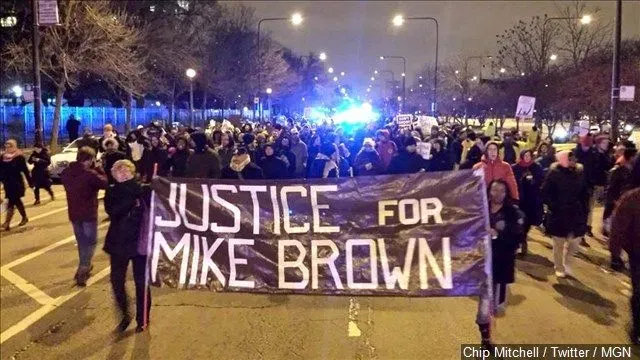
Representative Cori Bush’s primary defeat last week gave The New York Times an excuse to look at the infrastructure that supported her surprise primary victory in 2020.

Audra D.S. Burch’s excellent article starts with the police killing of Michael Brown in 2014 and the waves of Black Lives Matter protests that followed. Cori Bush was one of many effective organizers who demonstrated commitment, savvy, and organizing skills in the protests, and one of more than a few who turned their attention to elective office. Burch notes that over the decade that followed, Ferguson elected its first Black mayor, hired its first Black police chief, and St. Louis County elected its first Black prosecutor. Veterans of the protest marches made their way into Boards of Alderman and into citizen action groups. (This, by the way, is nothing new in American politics. Many politicians start a political career in protest politics.)

None of this was visible during the disruptive protests of 2014, but staging those protests built the infrastructure and networks that made a different kind of politics and political leadership possible. People who were willing to come out to the marches were willing to walk the wards in an electoral campaign, and they were far more likely to campaign for those who marched beside them. Activists learned how to organize events, influence government, and manage interviews with the press. Organizer training provided a good foundation for electoral and institutional politics as well.

Cori Bush, who defeated a non-responsive incumbent in 2020, lost in 2024 to Wesley Bell, St. Louis County prosecutor, who also cut his political teeth in the response to Michael Brown’s killing.

Now, here’s the twist: Cori Bush still had citizens willing to walk the wards and knock on doors, but she also had new vulnerabilities, including a federal investigation for misuse of campaign funds. More than that, Bell got more than $8 million for his campaign from AIPAC’s (American Israel Political Affairs Committee) political action committee. Bush’s justice advocacy in Congress included harsh criticism of Israel, and well-funded and well-organized AIPAC made an example of her–and Rep. Jamaal Bowman, who also lost a Democratic primary in a mostly suburban New York district. AIPAC picked incumbents with vulnerabilities who were critical of Israel to send a message to everyone else.

Israel/Palestine is not a particularly salient issue in Ferguson, Missouri, but $8 million is a lot of money to raise a profile and attack an incumbent. Other prominent critics of Israel were able to fend off primary challenges. (Ilhan Omar [Minnesota] held her seats by a margin of 13 points!) But be sure that every Democrat in Congress who considers crossing AIPAC on Israel will know just how much money the group put into taking Cori Bush and Jamaal Bowman out.

There’s a double lesson about the outcomes of protest politics: Sustained mobilization can build the networks, experience, confidence, and skills needed to navigate institutional politics. But those networks need to be nurtured in order to sustain themselves and their champions.

Posted in Uncategorized | Tagged , , , , , , , , , , , , , , , | Leave a comment

Randy Kehler’s life

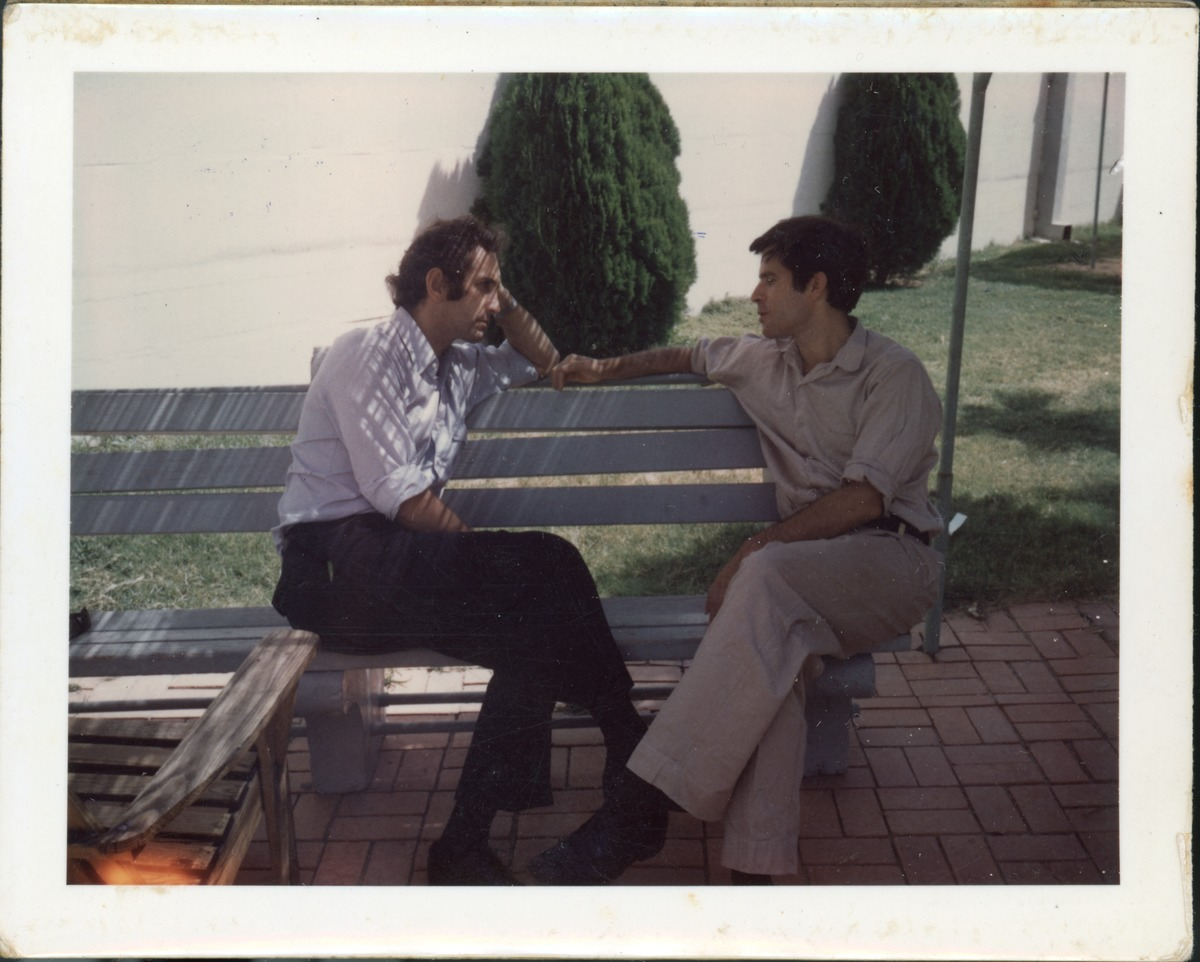
I met Randy Kehler a couple of times, but knew him mostly by his public actions and reputation. The picture above is from my last entry in PoliticsOutdoors, posted a little more than a year ago, a comment on Daniel Ellsberg’s death.

The picture features Randy on the right and Daniel Ellsberg on the left. Ellsberg said that he never would have released the Pentagon Papers had he not learned of Kehler’s commitment and his sacrifice. Kehler had returned his draft card during the Vietnam War, eschewed conscientious objector status, and spent nearly two years in federal prison for his acts of conscience.

Randy died last month at the age of 80, of chronic fatigue syndrome.

There’s no small irony here, as Randy Kehler was a tireless organizer for peace and democracy. He came up with the idea of putting the nuclear freeze proposal on the ballot in a few Western Massachusetts Congressional districts for the 1980 presidential election. The freeze passed by large margins, even as the districts went for Ronald Reagan, part of a Republican landslide.

But the referenda demonstrated the nuclear freeze proposal’s strong appeal. The wins pointed progressives to a viable issue and a workable strategy. Every place the freeze appeared on a ballot over the next several years, it won decisively, and a national movement took off, with Randy Kehler among the key leaders. He served as the first national coordinator of the freeze campaign and testified before Congress.

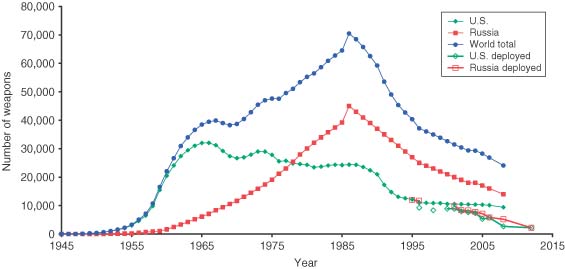
And, though Reagan–the movement’s prime target–was reelected in another landslide in 1984, it was a different Reagan, one who acknowledged the horrors of nuclear war and offered arms control proposals to the Soviet Union to try to take the steam out of the movement. When a new Soviet leader, Mikhail Gorbachev accepted America’s grossly asymmetrical proposals–offers intended to be rejected–Reagan said yes. Agreements on Intermediate range nuclear missiles in Europe (INF), and then strategic weapons (START), gave reformers in the East space to work, leading to the end of the Cold War and the dissolution of the Soviet Union. Today, the global total of nuclear warheads is about less than 1/5 of what it was in the 1980s. That’s still plenty, but it could have been much worse. (Ulp, it could still be.)

Randy Kehler was a great strategist, but his actions weren’t all strategic. He and his wife, Betsy Corner, lost their house to the federal government because they refused to pay taxes supporting preparations for war. The story is told in Clay Risen’s good obituary in the New York Times, in another obit by Diane Broncaccio in one of Kehler’s local papers, the Amherst Bulletin, and in a documentary, An Act of Conscience. The local papers quote Kehler’s neighbors who testify to his engagement and his kindness.

I’m reminded that Henry Thoreau, who got more mileage out of war tax resistance with far less sacrifice, announced that he would always pay local taxes because he wanted to be a good neighbor.

Randy Kehler’s life was consequential in ways that he could not have anticipated, and even after his passing, it remains a model.

Clay Risen picked exactly the right Kehler quote as an epitaph:

“Don’t ever, ever assume that anything you do, particularly if it’s an act of conscience, won’t make a difference.”

Posted in Uncategorized | Tagged , , , , , , , , , | 3 Comments

Convictions and convictions (4): how sacrifice (sometimes) works

Daniel Ellsberg and Randy Kehler in 1971, photo from Kehler papers at UMASS

Daniel Ellsberg died of pancreatic cancer at 92, having lived a long and contentious life.

As the obits everywhere tell, he started by touching every base on the career trajectory of an elite military analyst: an academic start in prep school, through undergraduate and graduate degrees at Harvard, interrupted by a stint as a Marine Corps officer, and then a job at RAND and service as an adviser to Secretary of Defense Robert McNamara.

In 1971, Ellsberg jumped off the inside track and leaked The Pentagon Papers, a secret study of US involvement in Vietnam commissioned by McNamara. Photocopying thousands of pages–before autofeed existed, Ellsberg tossed away his career and any prospect of future government jobs to show, among many other things, that successive US administrations lied to Americans about the war, offering an optimistic vision of a potential victory that high level officials knew was impossible.

Why did he do it?

Years later, Ellsberg told different versions of the same story: he was moved and shamed into action by the stories of young men who went to prison for resisting the draft. There were more than a few names, but one that came up in every story was Randy Kehler, a star student at Harvard–like Ellsberg–who returned his draft card, rejecting the conscientious objector status he’d been granted, and served nearly two years in Federal prison.

Ellsberg spent the rest of his life campaigning against nuclear weapons, war, and government secrecy.

Randy Kehler has spent his life organizing against war and for democracy. A founder and national coordinator of the Nuclear Freeze campaign, Kehler launched many citizens’ campaigns and staged a very visible tax resistance campaign that cost him his home. (Kehler’s papers are collected and available to researchers at the University of Massachusetts, Amherst, not far from where he lives.)

“No Randy Kehler, no Pentagon Papers,” Ellsberg wrote in a copy of one of his books, given to Kehler.

Kehler said that he didn’t think his stint in prison would end the war, but resisting the draft was the right thing to do. It’s hard for me to imagine that he didn’t entertain doubts about his efforts during his time in prison. Certainly, there were few visible signs that a very costly personal sacrifice was changing the conduct of the war at the time.

But protest sometimes works in odd and unanticipated ways, and inspiring others to action can matter.

Ellsberg certainly thought so. In the decades after leaking the Pentagon Papers, Ellsberg was arrested 90 times at protest actions.

https://www.spokesman.com/stories/2011/mar/21/hundreds-rally-at-base-holding-wikileaks-suspect/
Posted in Uncategorized | Tagged , , , , , , , , , , , , , | 1 Comment

Convictions test convictions (3): Principle, strategy, and loyalty

Arraignments test convictions too. So do the bursts of detail revealed in charging documents.

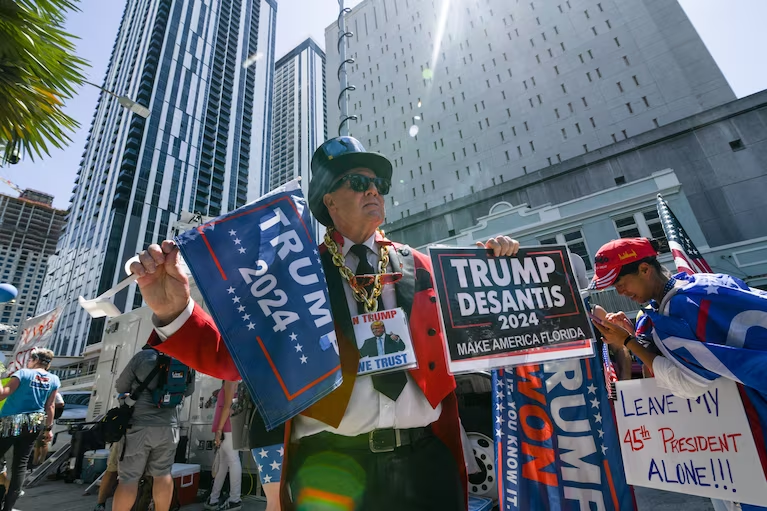
A few hundred* Trump loyalists, many in costume, appeared to show their support for the former president, newly indicted in the classified documents scandal. Although the Trumpist turnout in Florida was much bigger and more vigorous than the showing in New York City earlier this year, it’s far smaller than what local police obviously prepared for, and not near the demonstration of division Trump’s allies threatened.

Every charge, trial, and blurted insult provides a chance for supporters to get off the Trump train, and Republican politicians are still trying to figure out how long they can safely ride and walk off in time before…..steaming off into the sea.

Of course, some Republicans never boarded that train for reasons ideological or strategic. Trump was clearly unprepared to be president, departed from Republican orthodoxy on a batch of important issues, presented a substantial drag on the Party’s electoral, and daily displayed considerable character deficits. Still, Trump won the Party’s presidential nomination in 2016, representing its only hope of gaining the presidency. Most Republicans got on board rather than risk being left behind, and the Never Trumpers were marginalized within the Party.

Early defectors among national Republicans fared worse. Senators Jeff Flake (Arizona) and Bob Corker (Tennessee) cited principles (civility and foreign policy, respectively) in explaining their reasons for breaking with the sitting president of their party. They were isolated in Washington, DC, and ostracized at home; neither could mount a viable campaign for reelection.

The impeachments provided additional reasons and opportunities to stand up for something other than Trump. In the House of Representatives Justin Amash (R-Michigan) said that he read the Mueller report before deciding to support impeachment. He was basically forced out of the Republican Party, joined the Libertarian Party, forfeiting any chance at reelection or any kind of political career. Utah Senator Mitt Romney (Utah) was the lone Republican to vote for the first impeachment, surviving politically only because of the strong loyalty he commanded from the Mormon community in his state.

Of course, other Republicans supported Trump less enthusiastically, occasionally explaining differences on one issue or another, or just left office. But when the 2020 reelection campaign commenced, the crowds got in line. Although Joe Biden’s electoral victory was real and substantial, Trump somehow pulled millions more votes than in his first campaign.

Trump’s defeat at the polls was another long stop where Republicans could have changed trains. Most didn’t. The January 6 insurgency was another stop, this time unexpected, and more than a few appeared ready to leave Trump and find other vehicles for protecting themselves. Notably, Senator Lindsey Graham (South Carolina) announced that he was done with Trump, who had just gone too far. But the break-up didn’t take.

Strategic actors, trying to read a room, looked to see how many were ready to move away from Trump, and who they were. Waiting for someone else to move first, politicians in the national party found a way to continue supporting Trump, despite repeated defeats and increasingly egregious claims.The two House Republicans ready to publicly challenge Trump, Liz Cheney (Wyoming) and Adam Kinzinger (Illinois) were isolated in the institution and unable to win reelection.

Strategic considerations–keeping a job, political allies, or golf invitations–trumped principle. Republicans in office were willing to abandon their political stances on everything but Trump, who demanded loyalty. But be sure that most Republicans were still watching and waiting for another moment to break. Among those NOT running for office, including a long line of former Trump staffers and Cabinet officials, pointed criticism was much easier to find.

The presidential campaign, in conjunction with what will surely be an extended set of legal dramas, may have changed the strategic calculus. Fearful of alienating Trump’s electoral base, most of his opponents have been unwilling to criticize the former president on matters of policy or principle, even as they hoped that something else would take Trump out of the race. The challengers have, however, suggested that he might be an electoral liability for the Party. As the details of the most recent indictment appear, eager defectors can proclaim that loyalty to country supersedes commitments to Trump. Tentatively, at first, Nikki Haley and Ron DeSantis, have suggested that–if proven–the charges against Trump are serious. They’re testing the response.

Meanwhile, Americans for Prosperity Action (funded by the Koch network) has begun running ads that focus on Trump’s electoral liabilities, even asserting that Trump may be the only Republican who would be unable to defeat President Joe Biden.

It’s not a Never Trump movement so much as a not Trump now campaign. Principled early defectors suffered for what we can call premature prescience. But now, each new Republican Trump opponent coming out makes it a little less risky and a little less difficult for the next pragmatic politician to follow.

It’s certainly not most Republicans, at least not yet, and be sure that there will be some dead-enders who will cling to Trump through their last breath. But the pragmatic case for defection is getting stronger and stronger.

When politicians reconsider their political commitments, the deliberations and decisions eventually become public–and they have to explain their choices. But at the grassroots, no-longer-loyal Trumpists don’t have to explain their decisions to anyone.

They just stop showing up.

* The total number of demonstrators was initially reported as in the dozens, before I posted. Since then, later reports identified hundreds of protesters.

Posted in Uncategorized | Tagged , , , , , , , , , , , , , , | 2 Comments

Froze and Reversed the Arms Race, June 12 anniversary (reposted)

I’m reposting this reminder about the massive nuclear freeze march, part of an important campaign in the 1980s. Of course, nuclear weapons are not the most salient story today, when a war rages in Ukraine, activists across the country demonstrate against gun violence, and pundits fear that every new legal move against a former president could spur another violent attack on the institutions of governance. Just for starters.

But the fairly short story of the nuclear freeze offers useful lessons for all sorts of other movements. Not the least of these is that movements (sometimes) matter, and don’t get credit for their efforts unless organizers claim it. The June 12 demonstration made international news in 1982, but is generally edited out of popular histories of the Cold War or of the Reagan era. (See if you can find anniversary remembrances in your media feed today, and tell me if I’m wrong.)

The threat of nuclear war isn’t gone, and more than a few developments in the Trump era have made it more pronounced: The United States abandoned an arms control treaty with Iran that was working, while pursuing a kind of detente with North Korea that hasn’t worked. The United States also announced that it would no longer abide by the Intermediate-Range Nuclear Forces Treaty, negotiated in the mid-1980s, and announced that it was withdrawing from an “Open Skies” verification accord first proposed by Dwight Eisenhower, and in force for decades. Bilateral and multilateral negotiations on nuclear arms control have largely stalled. But the Russian invasion of Ukraine–which ceded nuclear weapons deployed on its territory to Russia in 1994 for a promise from the major powers, including Russia, to protect its territorial integrity–put nuclear weapons back on the agenda, and Russian leader Vladimir Putin periodically threatens to use nukes on the battlefield.

It’s an urgent moment.

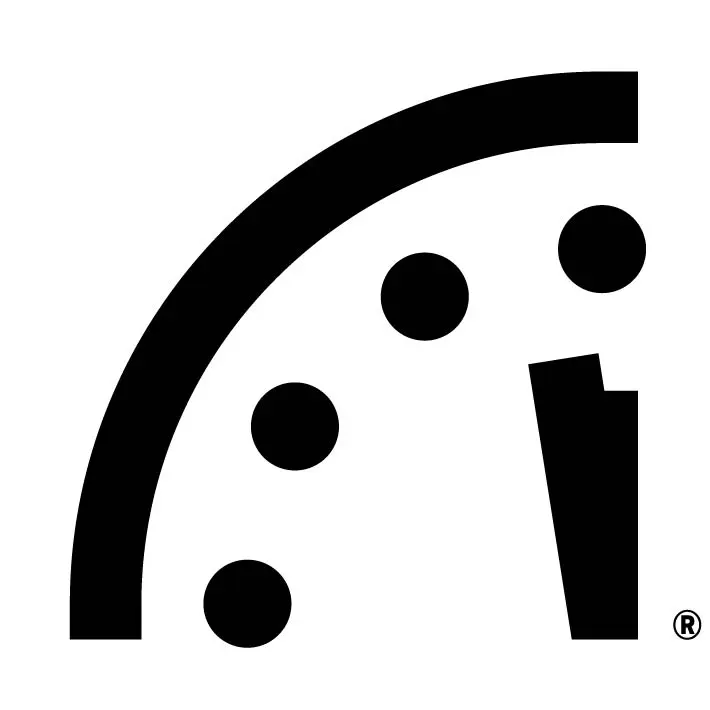
The Federation of Atomic Scientists, an expert group that has promoted nuclear safety and arms control since the end of the second World War, maintains a “Doomsday Clock,” signaling its perception of the nuclear danger. In 1981, when Ronald Reagan took office and the freeze campaign took off, the clock was set at 4 minutes to midnight. In 2012, when I first wrote the appreciation below, the Clock was set at 5 minutes to midnight. 

Today, the Doomsday Clock is set to 90 seconds to midnight, the closest to apocalypse that it’s ever been. Had you heard of the Doomsday Clock before reading today’s post? When first created in 1947, it was a big deal, and every adjustment–usually closer to midnight–got lots of attention in mainstream media. Now that the perceived danger is worse than ever, the Clock doesn’t seem to claim much public attention.

So:

Forty-one years ago today, one million people marched in the streets of New York City to protest the nuclear arms race in general and the policies of Ronald Reagan in particular.

  Organized around a “nuclear freeze” proposal, the demonstration was a watershed for a movement that seemed to come out of nowhere, not just in the United States, but throughout what was then called Western Europe.

Of course, movements have deeper roots. Relatively small groups of people have been protesting against nuclear weapons since the idea of nuclear bombs first appeared. On occasion, they’re able to spread their concerns beyond the few to a larger public. Such was the case in 1982, when Europeans rallied against new intermediate range missiles planned for West Europe, and when Americans protested against the extraordinary military build-up/ spend-up of Ronald Reagan’s first term in office.

The freeze proposal, imagined by Randall Forsberg as a reasonable first step in reversing the arms race, was the core of organizing efforts in the United States, which included out-of-power arms control advocates and radical pacifists. Local governments passed resolutions supporting the freeze, while several states passed referenda. People demonstrated and held vigils, while community groups in churches and neighborhoods organized freeze groups to discuss–and advocate–on the nuclear arms race.

The freeze figured in large Democratic gains in the 1982 election, and Ronald Reagan ran for reelection as a born-again arms controller. Most activists didn’t buy it, but after Reagan won in a landslide, to the horror of his advisers and many of his supporters, he negotiated large reductions in the nuclear arsenals of the United States and what used to be called the Soviet Union.

US/ Russia nuclear warheads

The arms control agreements created the space in the East for reforms, reforms that spun out of control and eventually unraveled the cold war and the Eastern bloc.

The world changed.

It was both less and more than what most activists imagined possible.

Do you want to call it a victory?

Update:

The nuclear freeze movement was the subject of my doctoral dissertation and my first book

The issues in it remain relevant.

The story shows the long and complicated trajectory through which social movements affect influence. That’s the topic of my most recent book.

There are a few simple lessons that merit repeating today:

  1. It’s never one event, action, demonstration, statement, or lawsuit that makes the difference; rather, it’s an accumulation of efforts.

2. All victories take forever.

3. And they’re never enough, and certainly not necessarily permanent.

4. The work is important, and it must continue in order to be effective.

Posted in Uncategorized | Tagged , , , , , , , , , , , , , , , , , | 1 Comment

Convictions test convictions (2)

The sentences for the January 6 insurrectionists are getting far more harsh. Partly, it’s because the first sentences reflected plea bargains, and then prosecutors worked up to the trials of the worst offenders–and they’re not done yet.

Stewart Rhodes, founder of the Oath Keepers, was just sentenced to 18 years in prison after being found guilty of seditious conspiracy–among other charges. Unrepentant on the stand during his criminal trial months ago, Rhodes expressed regret only that his forces weren’t better armed in the onslaught on the Capitol. Up to the moment of sentencing, he reiterated his belief that the 2020 election was “stolen,” and his commitment to work for regime change–and not through electoral politics. Another half-dozen insurgent leaders await sentencing on similar charges.

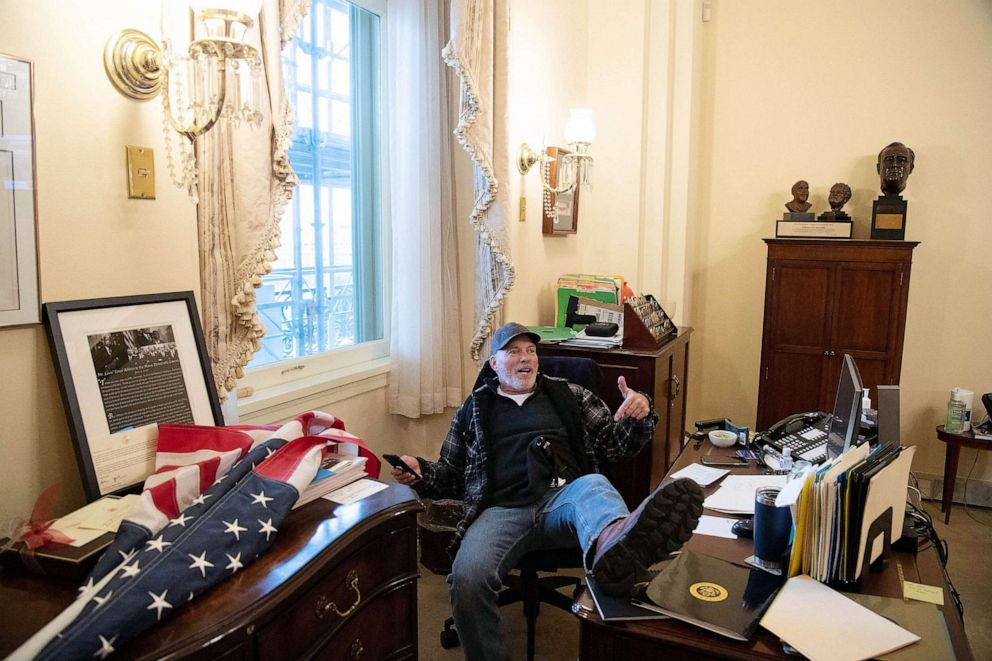
In another courtroom on the same day, Richard “Bigo” Barnett was sentenced to 4 1/2 years in prison for a clutch of crimes that included posing for the cameras in then-Speaker Nancy Pelosi’s office. He said he got distracted while looking for a stun gun he misplaced, and acknowledged remorse that he’d gotten so angry. A retired fire fighter, Barnett got caught up in the Trump-induced frenzy about the election, and then in the madness of the day.

Rhodes, in contrast, had been working up to the invasion for years, orchestrating the Oath Keepers’ invasion without setting foot in the Capitol himself. A graduate of Yale Law School, Rhodes offered a more developed plan to keep Trump in office and suppress any forces that might want to honor the results of the election. He says he’s going to keep working on such plans.

Rhodes’s estranged wife, who’s been seeking divorce for years, used the term “sociopath” to describe her husband, and says she prayed for a sentence long enough to keep the man out of her life and the lives of their children.

They’re different offenders with very different stories, but they present the same set of dilemmas to regular Republicans. The test is one of separating political beliefs from criminal action. Candidate Donald Trump has promised to pardon many of the January 6 insurgents if he gets back into the Oval Office, citing the legitimacy of their grievance–that Trump was being forced to leave office.

Not to be outdone, newly declared presidential hopeful, Ron DeSantis announced that he too would aggressively consider pardons for the insurgents if he makes it to the White House. DeSantis, however, is running a campaign based on Donald Trump’s record as a loser, so he needs another rationale for the pardon, and blames the Justice Department for political enforcement of the criminal code, and promising a reversal.

Broad protection of a free society is premised on encouraging free expression of diverse ideas, but punishing criminal conduct regardless of political motivation. When Republican regulars are forced to choose between the law and putative supporters who may be criminal or just crazy, the choice should be easy. The fact that it’s not is an ominous threat to American democracy.

I hope that enterprising reporters will keep asking about pardons, but not about a diverse group like the Capitol rioters. They should ask about Bigo and the stun gun. And about Rhodes and the Oath Keepers. And certainly about the series of prison sentences sure to follow.

Watching Rhodes, by the way, other Oath Keeper and Proud Boy convicts may decide that testifying against others is a better bet for a shorter sentence than hoping for a favorable election and a pardon. Be sure that those who spent January 6 down the street from the Capitol, strategizing in the White House, are well-aware of that possibility.

Note that it’s not just criminal verdicts that pose the test. When Trump was judged responsible for sexual abuse and libel of writer E. Jean Carroll in a civil trial, regular Republicans got another reason to pause and consider on the road to nominating Trump for a third run at the presidency.

Posted in Uncategorized | Tagged , , , , , , , , , , , , | 1 Comment

Convictions test convictions: Oath Keepers, Proud Boys, and the Republican Party (1)

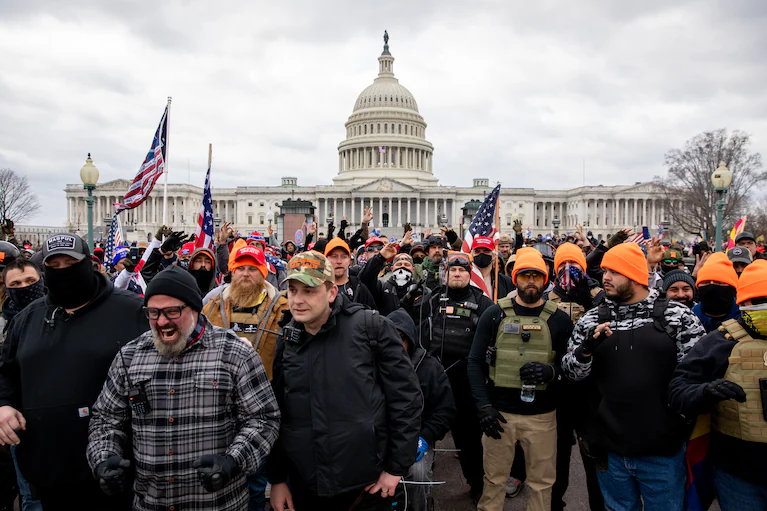
Seditious conspiracy is a heavy criminal charge in the United States, hard to prove, rarely used, and harshly punished. But this week a jury convicted four members of the Proud Boys–a far right group–of the charge, along with a range of other crimes. They were the third set of defendants convicted of seditious conspiracy as a result of the attempted insurrection of January 6, 2021, all liable for decades in prison.

It’s a big deal.

Over the past few years, the Department of Justice has processed hundreds of criminal charges against people involved in storming the Capitol and trying to stop Congress from certifying the electoral defeat of Donald Trump.

The first set of actions were plea deals, where protesters pled guilty to charges like vandalism or trespass. The sentences varied, depending upon the provable actions of the defendant, and ranged from probation to several years in prison.

Those who chose not to take plea deals then faced trials, and somewhat harsher sentences. Defendants claimed they were confused or misled or doing their Constitutional duty. More than a few blamed Donald Trump, then president of the United States (ulp!) for inviting the insurrection. Attorneys went further, blaming Trump for intentionally misleading and exploiting confused and troubled individuals.

From early on, it was clear that while some of the Capitol invaders were people who had come to protest peacefully and just got caught up in the moments. But others were part of organized groups that came with access to arms and allies, and saw themselves as executing a coordinated strategy. They planned their actions and left an electronic trail of communications. They also left frustrated allies who cooperated with the Department of Justice and testified against their former colleagues.

Several Oath Keepers were convicted of seditious conspiracy–and other felony charges, in November, and then another group was convicted in January. They await sentencing. Stewart Rhodes, among the convicted, founded the group as a mission and a business in 2009, and has led it since. Absent Rhodes, resources, or direction, its prospects of continuing seem bleak.

The Proud Boys, convicted just this week, may be another matter. Founded in 2016, the group has already been through several leadership changes, and maintains a more decentralized structure, with local groups plotting out their own efforts. Since January 6, local Proud Boys groups have staged actions against LGBT events and drag queen story hours, starting fights and getting attention. The locals can continue even without their national leaders, people who are likely to be in federal prisons for a long time.

The criminal convictions are a challenge to the groups, and a bigger challenge to their allies operating more or less in the mainstream of the Republican Party. Most national Republicans have been silent on the legal processing of the January 6 defendants. But a few far right performers, including members of Congress Matt Gaetz (Florida) and Marjorie Taylor Greene (Georgia) have valorized the insurgents, visiting them in prison and complaining about the conditions of incarceration.

Trump has gone further, kicking off his third campaign for the presidency in Waco Texas, with a song of sorts, featuring the “J6 choir” singing the national anthem while the candidate recited the Pledge of Allegiance. Trump promised pardons for the insurgents, a promise he could only deliver on if elected.

Democratic governance works by separating belief from conduct, allowing debate of contentious ideas, and making policy through established institutions. Everyone’s supposed to follow the same rules, and enjoy equality under the law.

Fascism works another way, by identifying worthy individuals and groups and giving them wide berth in advancing their interests at the expense of anyone else.

You can tell the difference.

Posted in Uncategorized | Tagged , , , , , , , , , , , , , , , , , , , , , , | 1 Comment

May Day 2023

Same as it ever was, May Day is an international day of protest for workers rights.  Below is a picture of a march in France, where people are protesting against raising the national retirement age to 64.

In France, protests against Prime Minister Macron’s reform plans, have stretched on for months–with no signs of influence on anything yet, except encouraging more protest.

In the United States, where by design we have a different day for workers (Labor Day)May Day always seems like an opportunity to organize and demonstrate around a somewhat related cause, with or without the support of organized labor.

Workers, organized and otherwise, have plenty of issues in the United States these days. Hollywood screenwriters are about to go on strike in response to their worsening prospects in a stream-centric entertainment world. Campaigns for raising the minimum wage at the state level have met with some success in some states. Unionization campaigns have succeeded at a couple of Starbucks and Amazon sites, but every subsequent site is a battle. Graduate student researchers and teaching assistants have launched unionization campaigns and strikes for better contracts with some success–including at the University of California. Here at UC-Irvine, the unions won substantial raises, and the University is responding by cutting the number of graduate students admitted and teaching assistants assigned. There are no easy battles.

Successful campaigns have increased the number of unionized workers in the United States, bucking the trend of the past 70 years or so, but the percentage of American workers in unions continues to decline.

The graph below charts the rate of union membership since 1983. It’s hard to miss the trend line–and it’s worse for private sector workers.

May Day is an obvious time to take stock. Journalists look for labor stories that are normally undercovered on May Day (and even on Labor Day), and organizers work hard to fill the space.

May Day is an opportunity to organize and say something, reminding the rest of the world that constituencies and concerns remain vital and potentially volatile.

Posted in Uncategorized | Tagged , , , , | 1 Comment

The Tennessee Three and what a win looks like (2)

Now that Justin Pearson has (again) taken the oath of office, the Tennessee Three is reunited in the state House of Representatives. On Wednesday, the Shelby County Council voted on appointing an interim representative to replace the one who was expelled last week (Pearson). Seven of thirteen members showed up to a special session and voted unanimously to put Pearson back in office.

Like his colleague, Justin Jones, Pearson wasn’t just waiting for the vote. He and his supporters staged a demonstration at the Civil Rights Museum located in the former Lorraine Motel–where Martin Luther King spent the last evening of his life–and then a large march to the Memphis Council, where Pearson gave a stemwinder of a speech. My favorite sign: “No Justin, No Peace.” The next day, he returned to Nashville and the state legislature, expressing determination to continue the fight for sensible gun regulation.

The modest disruption the Three (Jones, Pearson, and Rep. Gloria Johnson) caused by bringing a megaphone to the podium turned into a tactical tour de force, aided by a significant and unwitting boost provided by the Republican majority.

But they didn’t get all that much closer to their expressed goal, pushing for sensible gun regulation in Tennessee. The Republicans still enjoy a massive advantage in the House, holding 75 of 99 seats, with legislators still elected in heavily gerrymandered districts. Upon reaching the age of 21, any Tennessean can carry a gun, open or concealed, without having to get any kind of permit. The governor and the majorities in each house of the legislature are quite clear that they have no interest in making it much more difficult to get any kind of weapon. Although the Three and their supporters were masterful organizers and tacticians, the road to reform lies ahead, and it looks like a long haul.

We always want shorter stories about movement influence, in which the heroes win meaningful battles quickly enough that we can connect policy changes to protest. But that’s not the way the world works. Rosa Parks on a bus in Montgomery makes for a shorter simpler story if we edit out more than a decade of organizing she did beforehand, and a decade of organizing afterward to get to Voting Rights legislation. That story isn’t over either.

In addition to the road ahead, there’s a long backstory that’s worth telling. Before fixing on the confrontation in the well of the Tennessee House of Representatives, take a glance at how much time the Three spent getting ready for that moment.

Gloria Johnson had a career as a teacher in Knoxville, before first running for the state house in 2012. She organized in Barack Obama’s presidential campaign, and worked at the grassroots for educational funding and health care reform. She first clashed with House Speaker Cameron Sexton a couple of years ago, when she was the lone representative who refused to vote for him as speaker. He gave her an office in a windowless conference room, and she moved her desk into the hallway.

Justin Jones had mixed it up with the state legislature long before he ran for office. In 2019, as a Divinity student at Vanderbilt, he was banned from the building after staging a disruptive protest against the presence of the bust of Nathan Bedford Forrest, Confederate war hero and founder of the Ku Klux Klan. The bust was placed in the Capitol as a sign of resistance during a much earlier round of civil rights activism. In 2021, it was removed from the State House.

Jones been arrested before for political protests, including efforts for health care, against Senator Marcia Blackburn, and a 62 day vigil against police violence after the murder of George Floyd.

Jason Pearson had organized a campaign against the siting of the Byhailia oil pipeline that was to be routed through poorer Black neighborhoods in South Memphis. The pipeline, opposed by a broad coalition of interests, was cancelled. Pearson’s parents (dad a preacher, mom a teacher) say he’s been a powerful orator and committed crusader forever–he’s still not thirty. He got to make his case for activism and politics in an op-ed at the New York Times.

The first point is that it took a long time to become the Tennessee Three; the protest about guns and democracy built on long histories of advocacy and organizing, and a couple of identifiable wins.

To win even a modest policy reform like limiting access to assault-style weapons will take a lot more work, which will include many meetings, protests, lobbying, and electoral campaigns. Alas, it will probably take more horrific shootings as well.

In the meantime, Governor Bill Lee has announced his support for “red flag” legislation, strengthening background checks for gun purchasers, and spending $140 million to “harden” schools and funding armed guards stationed at schools. Of course, these aren’t the remedies gun safety advocates were demanding, but there’s no reason to believe Gov. Lee would have gone even that far without the pressure and the national exposure. Lee didn’t acknowledge the influence of the protesters, also of course.

Posted in Uncategorized | Tagged , , , , , , , , , , , , , , , , , | 1 Comment