
Visitors to Washington, DC can choose either an anti-abortion or abortion rights demonstration this week.
The March for Life started with a rally on the
National Mall, then activists marched to the Supreme Court to protest Roe v. Wade, praying for the health of the justices. Abortion rights activists started at the Court, and sponsored sympathy demonstrations around the country; they also prayed for the health of the justices.
Thirty-eight years ago the US Supreme Court announced its Roe decision, establishing a Constitutional right for women to have access to legal abortion s, and finally resolving an issue that had become increasingly contested in the previous decade. Uh, not quite.
Roe nationalized the abortion debate, and within a few years abortion politics became a critical issue in party politics, mobilizing new activism and demonstrating–and exacerbating–deep divisions in American life. Anti-abortion and abortion rights activists stoked increased interest in existing political organizations, established new movement groups, and mobilized several new generations of activists on the issue. Politicians have played to one side or the other, often emphasizing the threat represented by their opponents. The politics of abortion access are more contested in the United States than anywhere else in the world.
And every year, on the anniversary of the decision, activists on both sides assemble by the Court, in varying numbers and varying degrees of civility. It’s an opportunity for a show of strength, a chance to demonstrate commitment and resolve, and an event to organize and fundraise around.
It’s hard to remember that Roe didn’t generate wide interest in 1973, especially as it’s become the rhetorical and political centerpiece for both sides in the abortion battle. But changes in national politics made abortion a valuable issue for activists and politicians. Fundraising and electoral reforms meant that individual candidates gained increasing responsibility to do their own fundraising, cobbling together issues that had traction in the body politic. Jimmy Carter first demonstrated the value of evangelicals of a political constituency in campaign leading up to his election in 1976, and Ronald Reagan played to that constituency far more effectively in his 1980 campaign.
In the meantime, the anniversary of the decision became an unavoidable event for activist organizations. The commemorations, of course, generate far more attention each year than the decision did in 1973. When anti-abortion activists started the commemorations, abortion rights activists responded by putting their side in the streets–and in the news–as well. Now, locked in a perverse symbiotic stalemate, neither side can give up and cede the day–and the battle–to its opponents. Looking at the other side each year, sometimes across barricades, sometimes in the news, inspires activists to keep up their efforts, including going to meetings, attending events, and sending money.
 The March for Life organizes its efforts around this demonstration every year, doing a little better when there’s a Democratic president committed to abortion rights. A coalition of women’s and reproductive rights groups organizes in support of the decision, doing a little better when Republican presidents work to erode abortion rights.
Of course, each side mobilizes throughout much of the rest of the year, outside clinics, in state electoral campaigns, and particularly when there’s a vacancy on the Supreme Court. But the Roe anniversary is the most predictable moment each year when you know that the other side and the mass media will be watching.
Here I predict there will be large demonstrations on both sides next year as well.
 freeze in May, and the proposal never came close to the floor in the Senate. [Knowing that this would happen, House Democrats who were dubious about the freeze as policy could vote for it and then vote for contradictory policies.]
 establish democracy. The theme of the day was to be: “What would he say?”
 The Constitutional convention was filled with pragmatic politicians, not ideologues. I’m reasonably confident that, were we somehow able to haul them into the present health care debate, they would want to know how medicine worked in contemporary America, whether bleeding was still a preferred treatment, who funded medical care, and how much it cost. Bold experimenters with government, they would certainly also want to know how other countries managed their own health care programs.
 The effort to honor Martin Luther King with a holiday commemorating his birthday started at the King Center, in Atlanta, in the year after his assassination. States began to follow suit, and by 1983, more than half celebrated King’s life with a day. In that year, Ronald Reagan signed a bill making Martin Luther King day a national holiday expressing ambivalence, acknowledging that it was costly, and that King may have been a Communist.
 igins of the Cold War. It’s hard not to notice that we’re spending more than previous peace and war time peaks of spending since World War II. In the simplest calculations, military spending comprises more than one-fifth of all Federal government spending. Yet when we talk about the deficit, cuts to military spending rarely appear on the hypothetical table–outside the speeches of (very) liberal Democrats and libertarian conservatives.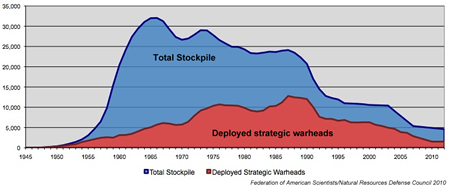


 ng. It’s not the event itself that matters so much as the positioning after the fact. Political figures try not to waste crises.


 Politics Outdoors