Tesla protests and the Musk dilemma

https://www.vanityfair.com/style/story/tesla-boycott-mark-kelly-elon-musk

The influence of popular protests at Tesla dealerships is starting to play out as Republicans realize that Elon Musk is a mixed blessing, at best, for their political futures. We can get a good sense of the often indirect ways in which protests play out.

So, people with grievances about Trump administration initiatives–and there are plenty of them–are constantly looking for something meaningful to do. In 2017, during Trump I, the initial wave of opposition assembled in a parade of weekly protests in Washington DC, starting with the Women’s March. This time IS different.

We haven’t seen big national demonstrations on the National Mall, activists have staged more protest events than in 2017, scattered across the United States. (We can follow this with the help of the Crowd Counting Consortium, which has been tracking protest events across all sorts of causes since 2017. Jeremy Pressman and Erica Chenoweth started the project because they wanted to get reliable information on protest events that might escape coverage in mainstream media.) The events aren’t as big, but many people are involved, and they’re working with neighbors in local groups that can continue to stage events, attend candidate forums, and build a vital resistance.

While the logic of a protest in front of the Lincoln Memorial seems obvious: assemble large numbers on a national stage to show popular support for your position and watch everyone else respond.

But at the local level, there are more possibilities and more complications. The first issue is finding a target and a tactic. It’s fine to assemble at a City Hall, but lots of Trump opponents don’t have major grievances with their local governments. They payoff isn’t so clear.

In contrast, Elon Musk has made himself a big target for all kinds of gripes about the Trump presidency, particularly the massive lay-offs executed by the so-called Department of Government Efficiency (DOGE). Supported by some version of Artificial Intelligence and aided by a team of young coders processing spreadsheets, Musk has ended the jobs of tens of thousands of people, making conspicuous mistakes along the way. Maybe it’s even more important that he’s expressed apparent delight with every lost job, and has appeared gleeful and provocative in public. It’s almost as if he wanted to be a target.

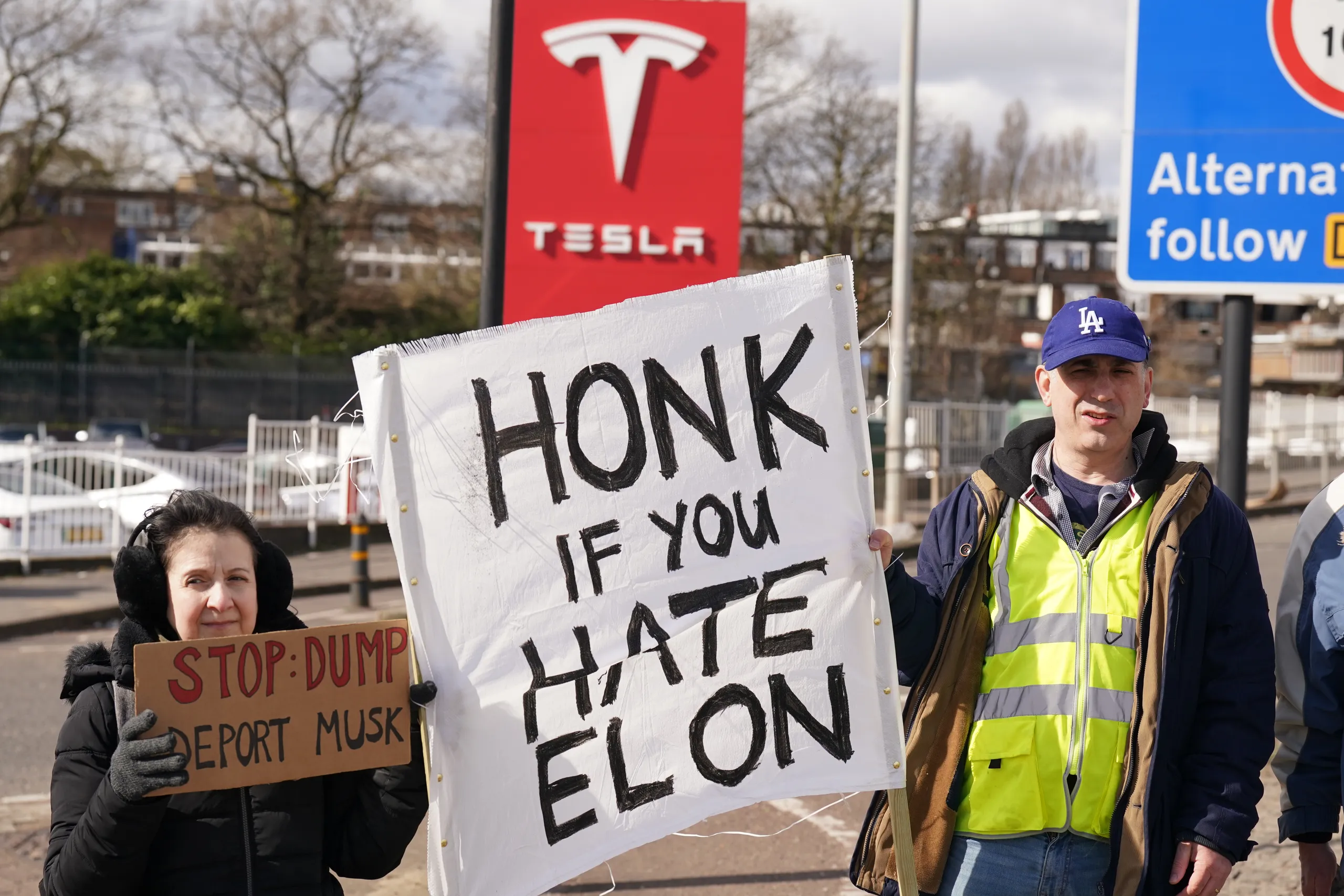
Musk’s close association with Tesla, the electric vehicle company that he bought and promoted, made dealerships a particularly attractive target. They’re all over the place and visible. So are the protests. The demonstrators worked to stigmatize the cars, and also to signal Trump’s opponents that there were lots of angry people willing to take action. The protests showed people concerned about layoffs or Ukraine or reproductive rights or the budget or tax justice (and so on) that they were not alone. It matters.

The protests were also a signal to Trump’s supporters that their allegiance could have costs. Tesla’s stock price cratered after a post-election spike, which means that Musk and his investors lost money; a responsible Board of Directors, considering its fiduciary duties, would surely urge Musk to step back from politics a little. (Apparently, Tesla does not have such a Board.) The Secretary of Commerce (illegally) promoted the stock on television, while Trump himself turned the White House driveway into a showroom and himself into a shill for at least one kind of electric car.

Meanwhile, Musk has flexed, mostly with money, politically, attacking opponents and judges while promoting himself. He’s threatened elected Republicans who think twice before supporting whatever Trump wants, promising to find and fund primary opponents for each of them.

And he invested mightily in a high-profile election for the swing seat on the Wisconsin Supreme Court, dropping $25 million on conservative Brad Schimel’s candidacy. Susan Crawford defeated Schimel handily, winning by about 10 points. Even more important, Musk provided focus and publicity for Crawford’s candidacy. His presence in the race, and in a cheesehead, helped Democrats raise money from across the country and turn out voters in Wisconsin. Voting for Crawford was a way to vote against Musk.

This week’s election showed Musk is a political liability. Although Republicans still want Musk’s money, it would be better if they could get it without a personal handoff.

The challenge for Donald Trump and the Republicans is to find some way to push Musk off the stage without giving up access to the hundreds of millions he’s been willing to spend. It’s not clear they’ll be able to pull it off, but Trump has already announced that Musk will be leaving….soon. The question is whether he’ll leave some money in the cushions at the White House.

To hammer the point: The Tesla demonstrations focused attention on Elon Musk, all his assets and liabilities, and exposed the political risks associated with allowing him to front for the administration. That’s a win.

Posted in Uncategorized | Tagged , , , , , , , , , , , , , , , , , , , , , | Leave a comment

Quitting takes courage: Young attorneys make choices

https://www.bostonreview.net/articles/lawyers-face-an-existential-choice/

It’s sometimes hard to see a critical moral and political choice even when it lands in your lap. But some people are blessed (or cursed) with the vision to see it way in advance. When Paul Weiss negotiated a deal to provide Trump with $40 million worth of pro bono services, Rachel Cohen, a young associate at another very large and prestigious firm, saw what was coming–intense pressure on the most visible firms to abandon basic principles of legal ethics and responsibility to protect their bottom line. The Trump Administration was determined to punish firms that represented clients and causes that Trump didn’t like, and firms that employed people who had investigated Trump and his, uh, associates.

Lawyers claim to believe that everyone is entitled to zealous legal representation, even people they may not like. (John Adams famously represented the British soldiers who fired into the crowd at the Boston Massacre.) Certainly, American law is compromised if political authorities can deny people they don’t like effective legal representation.

Cohen, a finance associate with nearly three years in at Skadden Arps and a Harvard Law degree, saw that she was sitting on the tracks with a freight train full of moral dilemma approaching fast. She gave notice–conditionally, along with an explanation, and an ask. Alarmed that lawyers will be reluctant to represent anyone at odds with the administration, and she called upon Skadden and other large firms to stand up for the rule of law. She posted her revocable resignation on her LinkedIn page.

For an associate to threaten to quit is a big deal. Getting hired at one of these large firms is extremely competitive. Associates work long hours and make a lot of money, particularly helpful in paying off the expensive high status law degrees they earned (and paid for). Some work to succeed on a partner track and build a career in corporate law. Others work to develop expertise and make connections that provide the foundation for other legal careers. Giving up such a position is a serious cost.

Cohen called for Skadden to support Perkins Coie, which was fighting Trump’s punitive Executive Orders in court. She also posted a broader letter for big law, predicting that once one law firm cut an independent deal with Trump, others would follow. (This turned out to be correct.) The letter asked associates to pressure their senior colleagues, their employers, to fight back. At this writing 1,700 associates at large law firms had signed–at least identifying the firms that employed them.

Skadden responded pretty quickly, blocking Cohen’s access to the firm’s communications, as she explained on TikTok. Not long afterward, the firm negotiated its own deal with Trump, promising $100 million in pro bono services. No surprise, the Trump administration sought out additional big firms to shake down. Some law firms are fighting back, contesting the orders in court, and winning early procedural victories; others are cutting quick deals with the Administration to protect themselves.

It’s an ongoing battle, and it’s an open question whether pressure from young associates will affect the large firms’ decisions. A few other associates have left Skadden and other cooperating firms, and other letters of protest are circulating, including one signed by Harvard Law alumni who want to support the rule of law. Anna Bower, a senior editor at Lawfare, has been tracking different strands of resistance on her bluesky feed.

Meanwhile, Rachel Cohen is using the attention of the moment to explain, again and again, why this moment is critical and why lawyers have an obligation to do more. (Read the interview in ABAJournal.) Her resignation letter, recalling the flights of imagination and reflection that good teachers promote when teaching about historical horrors, should evoke a moral reckoning for lawyers, to be sure, but for the rest of us as well. We all imagine that we would have sided with the heroes when we page through texts about evils like slavery or genocide, but most people didn’t.

Most of us wouldn’t have thought powerful resistance would come from a finance associate at a large corporate law firm or, for that matter, an Acting US Attorney in the Federalist Society. But Rachel Cohen and Danielle Sassoon are heroes and exemplars at this point in resistance, even if they’re not marching or carrying signs. Effective activism takes many different forms. But the first step, they realized, is recognizing the moral dilemma that most of us have been able to ignore.

Posted in Uncategorized | Tagged , , , , , , , , , , , , , , , , , | Leave a comment

Cesar Chavez Day, 2025

Commemoration of Cesar Chavez Day is an annual ritual in California–and in Politics Outdoors.

The day is a chance to reflect on Chavez, the movement he led, which continues, and the issues he and that movement addressed. (It also seems to be a good opportunity to return to writing here, with the chance to repost, reconsider, and update writing from past years.) Recalling his career, organizing and mobilizing a mostly migrant Latino workforce, is particularly important now…just when the Trump administration wants to purge all the details from public notice.

Image result for edna chavez speech, stephon clark

In 2018, less than a week after Edna Chavez, the charismatic then-seventeen year old high schooler from South Los Angeles, electrified a national crowd with a demand to end gun violence, Californians celebrated the legacy of another Chavez.

On my campus, we commemorated Cesar Chavez Day on Friday, rather than Monday, March 31 (his birthday), by closing. The state established the holiday in 2000, and six other states have followed suit.  In California, the legislature calls upon public schools to develop appropriate curricula to teach about the farm labor movement in the United States, and particularly Chavez’s role in it.

A campaign to establish a national holiday has stalled so far (The Cesar Chavez National holiday website seems to have last been updated in 2008), but at one point President Obama issued a proclamation announcing a day of commemoration, and calling upon all Americans “to observe this day with appropriate service, community, and education programs to honor Cesar Chavez’s enduring legacy.”

That feels like a long time ago.

Political figures have many reasons for creating holidays, including remembering the past; identifying heroic models for the future; recognizing and cultivating a political constituency; and providing an occasion to appreciate a set of values. Regardless of the original meaning, the holidays take on new meanings over time.  Columbus Day, for example, is celebrated as an occasion for pride in Italian Americans (e.g.), and commemorated and mourned as a symbol of genocide  and empire (e.g.).

Cesar Chavez’s life and work is well worth remembering and considering, particularly now.  His career as a crusader was far longer than that of Martin Luther King discussed (here and here) and he was far more of an organizer than Fred Korematsu (discussed here). Chavez’s Medal of Freedom was awarded shortly after his death in 1993, by President Clinton, but many of his accomplishments were apparent well before then.

Dolores Huerta, 2009

As a young man, Chavez was an agricultural worker; by his mid-twenties, he became a civil rights organizer, working for the Community Service Organization in California.  With Dolores Huerta, in 1962 Chavez founded the National Farm Workers Association, which later became the United Farm Workers.  Focusing on poor, mostly Mexican-American workers, Chavez’s vision for activism was right at the cornerstone of racial and economic justice.  Establishing an organization, however, is a long way from winning recognition and bargaining rights as a union.

Chavez was a tactician, a public figure, a charismatic, and something of a mystic. Modeling his efforts after Gandhi’s successful campaigns, Chavez was an emphatic practitioner of active nonviolence. He employed boycotts, strikes, long fasts, demonstrations, long marches, and religious rhetoric in the service of his cause.  He also registered voters, lobbied, and worked in political campaigns. He was a tireless and very effective organizer for most of his life.

But holidays are best celebrated with an eye to the future, rather than the past.

On Cesar Chavez Day this year, we can think about the large and growing Latino community in the United States. The 2020 Census reports that Latinos now comprise 18.7% of the population nationally. This is the youngest and fastest-growing population in America today, and they are severely underrepresented in the top levels of politics, education, and the economy.  The civil rights map is at least as complicated as at any time in American history, but not less important or urgent. The future of American Latinos is very much the future of America.

And Chavez saw the civil rights struggle as a labor issue.  When Chavez and Huerta started

The Crusades of Cesar Chavez,' by Miriam Pawel - The New York Times
https://www.nytimes.com/2014/04/27/books/review/the-crusades-of-cesar-chavez-by-miriam-pawel.html

their campaign, nearly one third of Americans were represented by unions.  The percentage now is now less than 10 percent, and even less in the private sector. Donald Trump has issued an executive order, banning collective bargaining for many federal employees. This probably isn’t legal.

And public sector workers, even if represented by unions aren’t doing so well.  In 2018, the Supreme Court issued a ruling in Janus vs. AFSCME,that undermined the capacity of unions to organize and represent members by allowing workers to opt out of membership and paying dues.

Still, organizers and some observers find some encouragement in unionization campaigns at Amazon and Starbucks. Still, the larger picture is dark. In the moment, the Trump administration is vilifying teachers and firing other government workers

We need to remember that you can’t attack teachers, nurses, police officers, and firefighters without hurting the people they serve: us.

Or should I say, US?

We commemorate the past to help guide the future. Edna Chavez, working in an urban setting far from Cesar Chavez’s organizing, carried the legacy forward, and adds more.

Posted in Uncategorized | Tagged , , , , , , , , , , , , | 1 Comment

Moral choices to resist generally come unannounced

The Trump Resistance I featured large numbers of people who went out of their way to confront legal and moral threats. Millions turned out for demonstrations, when they could have stayed at home. Thousands braved traffic or mass transit to mass on airports, demonstrating against the “Muslim Ban” and even offering free legal services to travelers caught in the chaos. They jumped into Resistance they could have easily ignored.

Most of the time most of us can get through our days without having to feel a sense of moral courage or compromise. We work, eat, and sleep, doing our best to navigate the world as it is. Even talk of politics is an add-on, not always connected to day-to-day routines.

But sometimes individuals are faced with an explicit choice about whether to contest injustice, or to comply with authorities. Donald Trump and his Administration have vigorously forced the issue, demanding explicit compliance, often wrapped in extraneous flattery. Recognizing the moment of Resistance and taking risks or losses to do what’s right may look obvious in retrospect, but refusing to comply is never easy or simple.

The University administrators forced to explain away the policies they may have endorsed weeks earlier surely never expected this sort of moment. It shouldn’t be surprising that it’s easier to genuflect to Trump and hope to keep federal dollars coming into the school. Compliance, usually quiet, is what we should expect.

When an individual recognizes the chance to compromise themselves and opts not to do so, it should provide a bit of inspiration to the rest of us–and it happens–sometimes at great cost to the resister. Most of Trump’s early Republican critics renounced their initial evaluations of an orange menace, and were able to flatter their way back into their leader’s good graces, even when it means revising political commitments on short notice. The relative few who did not retreat (e.g., Justin Amash, Jeff Flake, Bob Corker, Liz Cheney, Adam Kinzinger, Mitt Romney) are now way out of politics, living cautions to everyone else about the costs of resistance.

But people continue to resist, often at a serious cost. Danielle Sassoon, Acting Assistant US Attorney for the Southern District of New York, was far along in developing a high flying conservative legal career. But she refused to sign a motion to dismiss a corruption case against New York Mayor Eric Adams, when asked to do so. The obvious and easy thing to have done would be to sign. Sassoon, explicitly considering her professional oath and obligations, resigned instead, writing a long letter to explain why. A member of the Federalist Society, with degrees from Harvard and Yale, and two prestigious clerkships with conservative jurists (J. Harvie Wilkinson and Antonin Scalia), she was putting a lot on the line–but she was also extremely well-positioned to survive even in exile from the Trumpians. Seven young lawyers in the Department of Justice joined her, but there’s always someone willing to do the dirty deed. As Hagan Scotten, one of the lawyers who quit rather than comply, put it:

“Any assistant U.S. attorney would know that our laws and traditions do not allow using the prosecutorial power to influence other citizens, much less elected officials. If no lawyer within earshot of the President is willing to give him that advice, then I expect you will eventually find someone who is enough of a fool, or enough of a coward, to file your motion. But it was never going to be me.”

Every act of resistance–or visible compliance–matters, affecting how hard it is for the next person in line to resist. Sassoon, Scotten, and their colleagues exercised their responsibility with enough integrity–and flare–to make it a little less scary and difficult for someone else to violate their professional obligations in the service of fealty to the Trump Administration.

Don’t expect all lawyers to follow the model.

Trump has forced similar choices upon the largest, richest, and most prestigious law firms, issuing orders to punish three large firms, Paul Weiss, Perkins Coie, and Covington and Burling for offenses that would best be descried as normal legal work for people Trump doesn’t like. Trump’s orders stripped security clearances, banning firms from government contracts, and restricting lawyers in the firms from entering designated federal buildings. All of this makes it harder–or impossible–for the firms to represent some of their clients.

Perkins Coie and Covington and Burling have signaled resistance, with an endorsement from the American Bar Association. Perkins Coie engaged representation from another large firm, Williams and Connolly, and filed a suit against the government. Now Williams also risks Trump’s wrath and wary clients’ flight. Perkins is also posting updates from the case on its website, along with an explanation for its decision. A long expensive and difficult fight now looms.

But Paul Weiss cut a deal with Trump, who reversed the Executive Order affecting the firm in exchange for the promise of $40 million dollars of pro bono services for causes that Trump cares about. Trump rescinded the strictures on the firm.

To be sure, fighting Trump’s initiatives is costly. Some clients will leave or be turned away, and managing partners care about the financial health of their massive firms, hundreds of lawyers and many more other employees.

Other large firms are watching the pressures and the choices as they make their own decisions about taking sides. Some have issued statements of support for Perkins, the traditional obligations of attorneys, and the rule of law–even acknowledging that resistance may have costs. Anna Bower, an editor at Lawfare, has maintained a thread of BigLaw acts of resistance. Meanwhile, Trump has targeted other firms for a shakedown.

It’s a fright night Halloween scene. If you knock on one door and get candy, you’ll keep walking and knocking until stopped.

Choices matter. Recognizing that there are choices is the first critical step.

Posted in Uncategorized | Tagged , , , , , , , , , , , , , , , , , , , , , , | 2 Comments

When victims try to bargain

Columbia University’s surrender to the Trump Administration’s initial demands was unsurprising; its enthusiasm in raising the White flag was. Columbia’s administration announced a raft of new policies on free speech, student discipline, admissions, and academic administration, all in hopes of recovering some of the $400 million the Trump administration holds hostage. The concessions are unlikely to work for Columbia, although they’re sure to encourage the Trump Administration to broaden its own attack.

Columbia’s concession was always the most likely response. Faculty, students, and funders split on many of the immediate issues, as well as an appropriate response to being bullied, and $400 million–the initial cut–is a lot of money. (Apparently, the exact sum represented the amount Trump believed the university had cost him in a failed real estate deal.) Resisting would have been divisive, expensive, and time-consuming; depending on judicial vindication and remedy takes a long time and is never a sure bet. It would have required a commitment to principle and tolerance for confrontation that would get in the way of advancement in any career in academic administration.

Of course, there’s been plenty of blowback from other academics–although not, as yet, many university presidents. Some prospective students and professors blessed with choices will announce their personal rejection of Columbia, while the Trump administration, observing a conspicuous flinch across the bargaining table, will up its demands. Indeed, The New York Times quotes a Department of Justice lawyer involved with the case that the university will have to clean up its act in order to get funding again, noting “They’re not even close, not even close to having those funds unfrozen.”

On the other hand, the Trump Administration, buoyed by the humiliation of one Ivy League University, has extended its battle down the Northeast corridor to take on another, announcing a pause in a somewhat more modest $175 million in funds due the University of Pennsylvania. (Apparently, Trump wasn’t trying to sell real estate in Philadelphia.)

The Trump Administration’s ask of Penn isn’t quite so clear. Trump has, however, announced that he’s still angry Penn fielded a transgender swimmer, Lia Thomas, on its women’s team. The controversy about Thomas’s participation made a big splash at the NCAA championship meet in 2022, when she won the 500 yard freestyle, exposing a previously undiscovered audience for women’s swimming.

For what it’s worth, Thomas was in compliance with NCAA rules at the time; so was Penn. Since then, Thomas has graduated and the NCAA has revised its rules. As far as I know, Penn isn’t fielding transgender women in any NCAA sport. What’s being punished now? Still, the legacy of the conflict has its own ongoing impact. Riley Gaines, an accomplished swimmer beaten by Thomas in a big race, was particularly visible in calling Penn and the NCAA out, and translated her efforts into a paid position as a conservative Christian provocateur. She’s nurturing her own political future. (By the way, there were even more accomplished women swimmers who supported Thomas.)

History remains a burden. Without a time machine, Penn can’t comply with Trump’s concerns. Of course, I appreciate the urge to rectify institutional sins of the past. I note that some universities, including Brown and Georgetown, have undertaken reparations efforts for their profits from slavery. Both of those programs look very much like effective DEI efforts that the Trump administration wants to end. What makes the 2022 500 Freestyle championship different?

Posted in Uncategorized | Tagged , , , , , , , , , , , , , , , , , , , | 5 Comments

Columbia University negotiates with terrorists: The Trump Administration

Taking hostages is an act of terror. Kidnappers hold more and less innocents to gain attention, extort money, and bully others into doing something they don’t want to do. Taking hostages is morally reprehensible and widely recognized as a war crime.

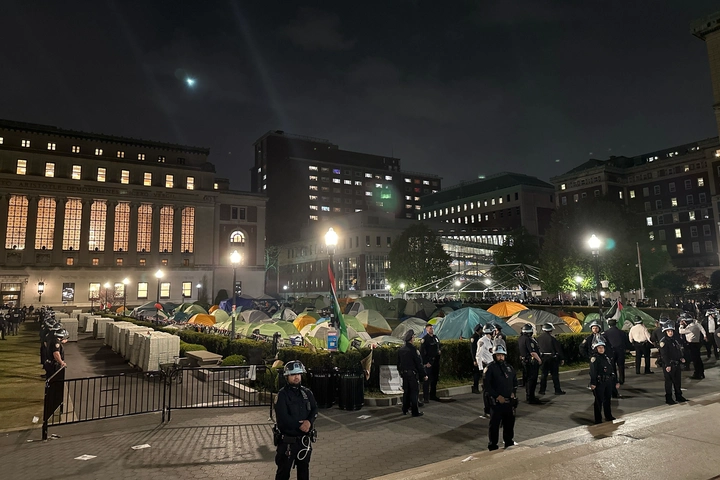
To punish Columbia University and intimidate institutions of researchers, scholars, and students, the Trump administration cancelled $400 million of grants and contracts. Like virtually all research universities, Columbia, depends on grant funding to support its extensive research efforts, as well as the underlying infrastructure that supports research. Although some researchers need little more than time and a good library, lab scientists spend a lot of money on labor (students, postdoctoral felloows, and technicians), equipment (like microscopes and cell counters), and supplies (like gloves). Because lab science costs so much more than anything happening in humanities and social sciences, Columbia’s medical school appears to have taken the biggest hits. Note, however, that the medical school is a subway ride of about two miles north of the main campus–where all the protest took place.

I couldn’t find a list of the canceled research grants, but some scientists posted anguished post-mortems of their projects on maternal mortality, diabetes, or fibroid tumors. I assume the scientists whose research has been taken hostage–if they think about the Middle East at all–hold a broad variety of political opinions. But their culpability is far less important than their vulnerability; without federal monies, jobs are lost and research stalls. Even a limited interruption risks the development of knowledge and the careers of young scientists. Researchers who spent hours and years competing for grants, want their money back and their work to resume. Of course. And Columbia wants the scientists back at the lab bench generating knowledge and indirect costs.

The Trump administration recognizes that it can punish scientists to coerce university administrations to do what they want–mostly, punishing student protesters. The administration describes the offense as antisemitism, but it’s very clear that Donald Trump wants to still pro-Palestinian activism and, more generally, any opposition to his rule. Moreover, the Administration is more than willing to punish third (and fourth and fifth) parties for what it sees as Columbia’s crimes. Standing up for scientific progress within the Administration is an obvious non-starter.

University administrators are among the least likely resisters to the this kind of punishment. A college president’s job is all about mediating differences among student, faculty, and funder constituencies. Presidents must entertain–and be entertained by–would-be funders of medical research, studies of all corners of the world, buildings, and financial aid for students–and so much else. The cultivation of ostensibly arcane knowledge plays poorly in populist politics.

Still, Columbia’s quiescent caving was striking, if understandable.

If Columbia ever wants research money again, the Administration explained, there’s a lot to be done. A letter signed by representatives of the General Services Administration, the Department of Education, and the Department of Health and Human Services issued a set of demands that included harsh and specific punishments of disruptive student protesters, as well as moving campus discipline from a judicial board to the president’s office. The Administration also called for unspecified admissions reforms and putting the the Department of Middle East, South Asian, and African Studies under academic receivership for a minimum of five years. If all of this is done, and quickly, the Administration announced, they would be willing to discuss next steps to allow the University to “return…to its original mission of innovative research and academic excellence.”

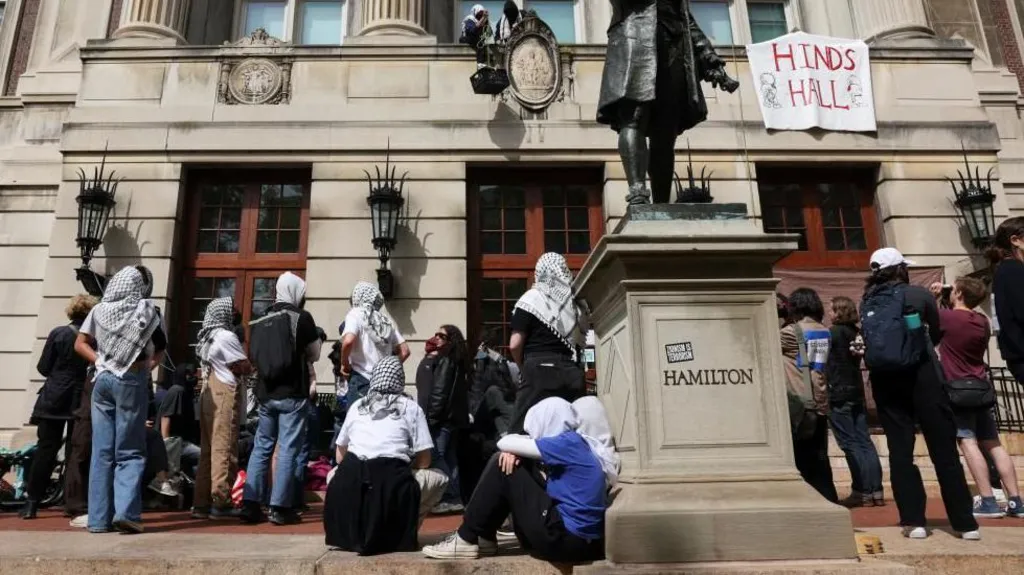
Columbia University followed quickly with announcements of expulsions and multi-year suspensions for students associated with the occupation of Hamilton Hall, as well as the revocation of some degrees, unusually harsh penalties, with more to come. Specific punishments for particular student offenses are not public–which is appropriate. (Try to find Donald Trump’s college transcript!) But Columbia clearly communicated to it would jump in response to the Administration’s orders–and vigorously. All of this is understandable–and wrong. (A group of five political science professors explained that the Administration could do better in explaining the consequences of quiescence.)

The problem with negotiating with kidnappers is that you encourage more kidnapping.

The Trump administration will keep demanding more until, at least, the demands stop working. The Department of Education sent letters to 60 other prominent schools, announcing unspecified investigations that could lead to unspecified but easily imaginable punishments. Don’t expect university presidents to lead the resistance.

Last weekend, the New York Times published alarmed and eloquent defenses of American universities by David French and Meghan O’Rourke. The Times urged defenders of academia “to be bolder about trumpeting its strengths and to be more reflective about addressing its weaknesses.” 

It’s going to take a lot more than that.

Posted in Uncategorized | Tagged , , , , , , , , , , , , , , , , , , , , , | 3 Comments

Examples and education for higher ed and the rest of us

The Trump administration was very clear that Mahmoud Khalil was an example; ICE officers arrested, jailed, and planned deportation to teach everyone else a lesson. The government intends to deport Khalil, a legal permanent resident (green card), because he had been visible in representing the volatile pro-Palestine, anti-Gaza destruction, encampment at Columbia University.

Khalil, armed with a newly awarded Master of Public Administration degree, isn’t a particularly dangerous threat, but he is a powerful example. Unlike other student activists, Khalil isn’t accused of harassing anyone or destroying property, or of breaking Columbia’s rules or US laws. He did, however, criticize support of Israel’s Gaza War. He’s being punished not for what he did, but for why he did it.

This is a potent message.

Encampments opposing Israel’s policies appeared on more than 100 college and university campuses during the war, disrupting normal routines to draw attention to horrific destruction. Opposing Israeli policies isn’t anti-Semitic–despite what some have argued–but there were certainly expressions of anti-Semitism from within and around some of the protests.

The Trump administration doesn’t want those protests, expressed opposition to its grand plans for a beach resort cleared of Palestinians on the narrow Gaza Strip, or any visible action against the administration. By dispensing with basic free speech protections and any due process, it’s sending that message to everyone–particularly to immigrant and student activists.

Set the context: Remember, Trump pardoned and commuted sentences of more than 1,500 January 6 insurgents–people who had been convicted or plead guilty to actual crimes, including violent action against police officers. It’s not what they did that earned them pardons, but why they did it–to support Donald Trump. And Trump also pardoned people who were jailed for blockading abortion clinics. Again, for this Administration, support for the Trump coalition functions as a get-out-of-jail-free card.

This is also a potent message.

The basic principle underlying free speech is that advocacy of unpopular causes doesn’t constitute criminal conduct, and a cause favored by a powerful figure doesn’t justify vandalism or assault, much less greater crimes.

All of this means that Khalil’s case should be the concern of anyone who cares about the Constitution and civil liberties. Mahmoud Khalil serves as a canary in the coal mine; his persecution is a signal and a symptom of a comprised democracy.

Columbia University is a somewhat bigger canary. (More to come)

Posted in Uncategorized | Tagged , , , , , , , , , , , , , , , , , , , , | 1 Comment

Strategizing an Opposition in Trump II

I get more calls from journalists in turbulent political times, generally when there’s interest in figuring out viable political and protest strategies.

In the last week or so, I’ve commented on a consumer boycott announced by a thus far marginal character who started a new organization. That’s on Marketplace https://www.marketplace.org/2025/02/28/peoples-union-usa-economic-blackout-boycott/

The fact that the sketchy People’s Union effort got so much attention pretty clearly shows that many people are interesting in finding a way to fight back against destructive and anti-democratic policies coming from the Trump administration.

Working scientists are also trying to find ways to fight for their work, as noted in a thoughtful article in Nature https://www.nature.com/articles/d41586-025-00661-8, which includes my comments. Scientists haven’t generally done a very good job in advocating for the scientific work of producing knowledge. Maybe this time will be different.

I’d add that there’s a long history of some scientists as individuals and through organized groups, weighing in on the political issues of the moment. Here’s a few:

The Federation of American Scientists, founded in the wake of the first use of nuclear weapons (1945), continues to advocate for arms control and disarmament, as well as a range of other issues.

The Union of Concerned Scientists, founded at MIT in 1969, in no small part to oppose the Vietnam War, has established a consistent presence on the political landscape and engaged a wide range of issues, including nuclear weapons and nuclear power.

Much more recently, Scientist Rebellion, first active in 2021, has worked to get scientists–often in their lab coats–out into the streets to take direct action and exercise political influence on climate in particular.

There are many others.

And Der Spiegel has just published a long interview with me about organizing and effective tactics for political influence. It features a comparison of the protests against Trump I and the prospects for protest against Trump II. I can’t understand my comments in German, but I’m going to assume that they’re filled with insight and wit.

I will write more about all these issues in this space.

Posted in Uncategorized | Tagged , , , , , , , , , , , , , , , , , , , , , , | Leave a comment

Search for a Strategy: Protest Plus

The iconic image of a social movement is the mass demonstration, and American history is littered with plenty of them, representing causes, good and bad. Washington, DC is a magnet for mass demonstrations, and the Resistance to Trump I was marked by the largest one-day demonstration in history, the Women’s March, and a parade of more focused demonstrations on climate, science, immigration, reproductive rights, and more.

Across the country, we’ve seen demonstrations against Trump and against a range of provocative, often dangerous, policies. Last week, organizers staged public protests in all 50 states, but the news has been dominated by the offenses of the Administration. And, at least so far, the Trump Resistance II hasn’t generated the numbers and pictures of Resistance I.

But the mass protest is just one social movement tactic. Big demonstrations are easier to see and count than most other tactics, and the colorful drama they create makes for good, very simplified, stories about movements and social change. Historians and social scientists can’t miss them, unlike much less visible events in church basements and around kitchen tables. Effective movements don’t always stage such demonstrations, however, and even a series of big demonstrations isn’t enough to change the world. Notably, Trump Resistance I and Occupy stiffened the spines of Democratic Party politicians, and altered mainstream political discourse, but they didn’t win much. More notably, the massive demonstrations of the Arab Spring achieved none of the democratic reforms protesters demanded.

Effective movements don’t always stage big demonstrations, and they always do more than demonstrate. Wave I and Wave II feminists staged parades and demonstrations, but the smaller meetings where women shared grievances and activist strategies animated longer-lasting commitments. Abortion rights activists, often against the law, provided referrals and services. Racist nationalists built and protected enclaves safe for their rhetoric and insulated from outsiders. Many campaigns work to create in miniature the kind of society they want to live in, adopting different language, diets, or lifestyles. Anti-immigrant protesters ceremoniously patrolled pieces of the border, while their opponents left water in the desert for migrants walking. Al Gore promoted climate change activism by giving Keynote talks virtually anyplace that would have him. Virtually all movements engage in public education, promoting research (sometimes serious, sometimes scurrilous) to demonstrate the urgency of their concerns and paths forward. Advocates file lawsuits, make movies, write books, and give talks. They mobilize the law and change public opinion. And effective movements in the United States engage mainstream politics, circulating petitions, recruiting and supporting candidates, and pressuring elected officials.

Alas, there isn’t a magic recipe that guarantees visibility, much less policy influence. Strategies develop out of the resources and beliefs of activists, as well as available opportunities and the nature of grievances. The kinds of dramatic sit-ins that characterized periods of civil rights and labor activism make less sense now.

Before social media, large demonstrations grew out of lots of local organizing. That’s less true now, but the need for local organizing for everything else remains. Watch the small demonstrations, the lobbying and the filibusters, and the specific forms of resistance to each Trump initiative as a more complicated story emerges.

Posted in Uncategorized | Tagged , , , , , , , , , , , , , , , , , , , , , , , , , | 2 Comments

Greensboro Sit-in anniversary–and a few thoughts on tactics;

Today marks the anniversary of the start of the sit-in campaign in Greensboro, North Carolina. I’m always moved and encouraged by the audacity of those young men. The original post appears below, but there is more to say:

The sitters-in found an effective strategy to engage activists with long term commitments to racial justice and others new to the struggle. Their targets for action were local, even as the campaign and the movement had even broader aspirations. By interrupting segregation where it was enforced, the young activists drew attention to their core grievances while showing what a desegregated society might look like. They also applied economic pressures to local merchants who were, mostly, poorly positioned to withstand it.

Learning from the past is essential, but it doesn’t mean replicating the tactics and slogans of successful campaigns 65 years ago. Finding the site where civil service protections are being dismantled or a place to confront racist rhetoric of a president is more complicated–because decisions about the exercise of power is often distant from the implementation of those decisions. We can take inspiration from the sitters-in, to be sure, but our lessons should focus on the ways in which their choices lined up with the conditions they were protesting. It’s not easy or automatic.

The anniversary is also a great reminder of the important leadership roles that young people have played in making social movements and social change. It’s particularly relevant when we’ve seen young people at the front lines, innovating, in the campaigns for gun safety, action on climate change, and –still–racial justice.

Woolworth sit-in

There was once a store called Woolworths.  It sold dry goods, mostly cheap stuff, including paper and pencils. Many Woolworths also housed a cheap restaurant where you could get coffee and a grilled cheese sandwich, also cheap. Fifty-three (65!) years ago today, a Woolworths in Greensboro, North Carolina, was the site of a new phase in the civil rights movement, the beginning of the sit-in campaign.

On Monday morning, February 1, 1960, Ezell Blair, Jr., Franklin McCain, Joseph McNeil, and David Richmond, wearing their best clothes, went shopping at the Woolworths, bought some school supplies, then sat down at the lunch counter and tried to order coffee. The four young men, freshmen at North Carolina Agricultural and Technical College, knew the store wouldn’t serve food to black people, so they waited. Woolworths shut the lunch counter down.

The next day, black and white students filled the lunch counter at Woolworths, and by the end of the week, every lunch counter in downtown Greensboro was filled with students protesting segregation–and organizing a boycott of the downtown businesses that practiced segregation.  Over the next weeks, sit-ins spread across the segregated South, led by student activists.

The four freshmen, no not the singing group, had all been active in the NAACP’s youthcouncil, but none of them saw the large organization as a good foundation for a more activist and confrontational phase in the civil rights struggle.

Ella Baker https://ellabakercenter.org/who-was-ella-baker/

Pushed by the heroic Ella Baker, the NAACP launched an initiative to create a new student-based civil rights organization, the Student Nonviolent Coordinating Committee (SNCC), which staged dramatic education and direct action campaigns across the South for most of the rest of the decade.

Today is a great day to commemorate the sit-in movement, but anniversaries can be slippery.  When I tell the story to my classes, I usually start with the long Sunday night conversation when the brave young men talked themselves into action. You could start the story much earlier, with the sit-ins organized by the Congress of Racial Equality (CORE) organized decades earlier, or with the sit-down strikes organized by the Industrial Workers of the World at the start of the 20th century, even before the founding of the NAACP.  You could also start the story with the Montgomery Bus Boycott and Rosa Parks, or the Brown v. Board of Education decision in 1954. The Greensboro students knew all those stories.

Anniversaries help us remember important events and twists in history, but they invariably simplify longer and more complicated stories. The drama of the Greensboro sit-in makes for a good entry into thinking about the civil rights movement, and into thinking about how regular people sometimes make history. The names of Baker, Blair, McCain, McNeil, and Richmond are not particularly well-known today, not like those of Rosa Parks, Martin Luther King, John Lewis (who would later lead SNCC), or Thurgood Marshall.  The names of the thousands of young people crusading against segregation with them are even lesser known.  But movements are only possible and potentially effective with people willing to take risks without counting on seeing their names in the history books.

Woolworth lunch counter

The lunch counter itself, or at least a portion of it, has been reassembled at the American Museum of National History (Smithsonian) in Washington, DC.  There are only four seats on display.  When we think about the civil rights movement, however, we need to extend the counter a long way.

Posted in Uncategorized | Tagged , , , , , , , , , , , , , , , , , , , | Leave a comment