
If Barack Obama is somehow able to win reelection, the Tea Party should be on his list for a thank you note.
President Obama’s prospects for reelection are decidedly mixed, but better than we’d expect given all else in the environment. (I follow Nate Silver at 538.com on this.)
 The economy is terrible, unemployment is high, and President Obama’s approval rating is extremely low. Normally, this bodes badly for a president seeking reelection–although in this case, Obama’s approval rating is still much higher than the ratings for Congress or the Republican Party. The Tea Party deserves some of the credit.
At least two Tea Party achievements are now helping the president:
By invigorating the Republican Party’s base and helping the it make huge gains in the 2010 elections, activists have been able to pressure members of Congress to work on their agenda–an agenda that isn’t very popular with the rest of the country.
The Republican Party in Congress is now comprised of people elected with Tea Party support, others who fear being challenged in primaries by Tea Partiers, and Alaska’s Lisa Murkowski. The House passed Rep. Paul Ryan’s model budget, which would slash both taxes and government and turn Medicare into a voucher program. Policy merits (or demerits) aside, it’s awful politics. Republicans turned the debt ceiling debate into a debacle, and are now blocking an extension of the reduced payroll tax on working Americans to protect low rates on–really–millionaires.
Tea Party enthusiasts are still disappointed. Others are scared.
And the Republicans need a presidential candidate to beat Barack Obama. Without discussing intelligence and integrity at this point, candidates for the Republican nomination have created the weakest field of hopefuls in either party for generations.
The party out of power wants to nominate a presidential candidate who can win elections, and has demonstrated that ability in the past, preferably by winning big elections. Practically, this means governors and senators, preferably from large and/or swing states. Among the top tier of candidates, only Mitt Romney (Massachusetts) and Rick Perry (Texas) qualify on this front, and Governor Perry has disappointed as a campaigner. Governors Tim Pawlenty (Minnesota), Jon Huntsman (Utah), Gary Johnson (New Mexico), and Buddy Roemer (Louisiana) have generated minimal support; Pawlenty dropped out after the Iowa straw poll–and did you realize the others were still in the race?
Meanwhile, the rest of the field has included Herman Cain, a radio host who had never won an election, former Senator Rick Santorum, turned out of office by a large margin in a swing state (Pennsylvania), two sitting members of the House (Michele Bachmann and Ron Paul), and a former Speaker of the House (New Gingrich) who was forced to resign in disgrace (by his own party) more than a decade ago.
The last person to win the presidency without having won a prior election was Dwight D. Eisenhower (1952), who had been Supreme Commander of the Allied Forces in Europe during World War II–a bigger job even than fronting that National Restaurant Association.
The last sitting member of the House to win the presidency was James Garfield, but that was 1880.
The Tea Party mobilization within the Republican Party scared off or silenced many establishment Republicans, and nourished several weak and improbable candidates (see above). It has also moved the entire debate far to the right, with candidates trying to cultivate the enthusiasm demonstrated by Tea Partiers.
Because he started organizing and fundraising early, and because he has been willing to pander to the Tea Party, Governor Romney has survived all of this, but left little space and money for anyone else from the party establishment. Romney has been unable to increase his support, and thus far, no one else has been able to topple him.
While journalists and political junkies may fantasize about the excitement of a brokered convention, it’s likely that one of the candidates still in the field will win the nomination through the primary process. If it’s Governor Romney, he will be a less than inspiring choice for the Tea Partiers and some evangelicals at the Republican base, but he will have made enough pandering statements to them to fill the ads of his Democratic opponents. Any of the other Republican candidates would be substantially weaker in a general election.
Either way, the Tea Party has had the perverse effect of helping the electoral prospects of its prime target.


 Zuccotti Park, home for Occupy Wall Street for two months, is completely irrelevant to the future of the Occupy movement. Now that the activists have been cleared out, we’re watching to see what the most important place will be.
 government’s response to the Depression. Local authorities often tolerated the shanty towns, and their own concerns about crime and sanitation, because they didn’t have any other place to put the homeless. Occupants left when they could find jobs or homes, and as World War II started, local authorities began clearing out the encampments.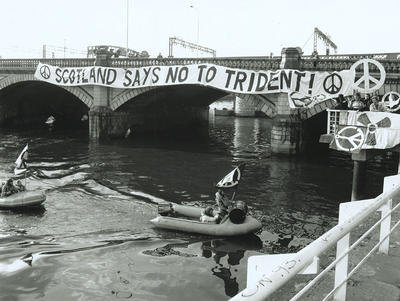

 the wars in Afghanistan and Iraq (where her son, Army Specialist Casey Sheehan, was killed in 2004). President Bush refused to meet with her, so she camped outside by the road on public lands.
 encampments to other targets. Occupy Los Angeles staged an


