More airport protest consequences; a dissent channel

The conditions that help protest movements grow also generate institutional efforts at Protesters jam the north security gate to San Francisco International Airport, Sunday, Jan. 29, 2017, condemning President Trump's executive order banning citizens from seven Muslim-majority countries from entering the country. (Karl Mondon/Bay Area News Group)resistance. So, sorting out the impact of protest on policy is tough.

Scholars generally want to employ tight measures of protest movements (the number or size of demonstrations, the volume of publicity, for example), and measures of influence at least as rigorous, like measurable changes in policy or Congressional votes on a resolution. But something that matters might not be so obvious or easy to count, and influence may play out over a longer time frame than an activist or analyst hopes.

Really, I’ve gotten notes from former students who explain that they now see the importance of something we’d discussed in class a decade earlier. The recognition matters, but it won’t change any grades.

Here’s another example that makes the point:

Yesterday, in trying to puzzle out the consequences of the airport protests, I ran through reactions from government officers, elected officials, activists, and the media. I should have mentioned protest within the State Department.

Since 1971, the Department of State offers its officials the opportunity to express dissent without fear of reprisal:

a. It is Department of State policy that all U.S.  citizen employees, foreign and domestic, be able to express dissenting or alternative views on substantive issues of policy, in a manner which ensures serious, high-level review and response.

b. The State Department has a strong interest in facilitating open, creative, and uncensored dialogue on substantive foreign policy issues within the professional foreign affairs community, and a responsibility to foster an atmosphere supportive of such dialogue, including the opportunity to offer alternative or dissenting opinions without fear of penalty.  The Dissent Channel was created to allow its users the opportunity to bring dissenting or alternative views on substantive foreign policy issues, when such views cannot be communicated in a full and timely manner through regular operating channels or procedures, to the attention of the Secretary of State and other senior State Department officials in a manner which protects the author from any penalty, reprisal, or recrimination.

 Over the past forty-plus years, foreign service officers have regularly responded critically to government policies, expressing their presumably well-informed opinions. Wikipedia reports that cables are typically signed by a few committed officials; sometimes, a controversial policy might generate a few dozen signatures.

Opposition to the travel ban was far more extensive: the dissent cable included about 1,000 signatures. (Here’s a draft of the cable unearthed by Josh Rogin at the Washington Post.) People who worked in diplomacy and foreign affairs saw the travel ban as unwise and unAmerican.

Rogin quotes the memo: “We are better than this ban. Looking beyond its effectiveness, this ban stands in opposition to the core American and constitutional values that we, as federal employees, took an oath to uphold.”

It’s hard to believe that an official would change his or her mind on policy in response to protest, but it’s not difficult to imagine that protest in the streets might intensify the sense of urgency that officials feel. Surely, it’s tougher to be the third signature than the 300th, and each signature makes the next one a little easier to collect. The official considering support might see a distant cousin sporting a pussy hat in a Facebook photo, reminded of just how provocative the new policy is.

The unprecedented opposition to the policy within the State Department was yet another factor that activists, attorneys, and even judges might consider in plotting out their next actions.

Many things can matter.

Posted in academic, Uncategorized | Tagged , , , , , , , , | Leave a comment

Assessing the airport protests: a first cut at consequences

As of 3:15 Pacific Standard Time today, Trump’s travel ban remains on hold. A 9th circuit appellate panel unanimously agreed to let District court Judge James L. Robart’s temporary injunction on enforcement stand.

Of course, the appellate ruling is by no means the end of litigation or political conflict on this matter, but it’s a significant blow to the Trump administration.

Our question: did the airport protests that started ten days ago have anything to do with what’s happened since?

The influence of protest on policy remains the critical question for activists and scholars People opposed to President Donald Trumps executive order barring entry to the U.S. by Muslims from certain countries demonstrate at the Tom Bradley International Terminal at Los Angeles International Airport Saturday, Jan. 28, 2017, in Los Angeles. alike. People who braved poor mass transit connections to metropolitan airports, pushed their way through restless pussy-hatted crowds, considered airport foods, and dodged traffic, surely wondered whether it was all worth the effort. No politician will say that she did something she thought wrong in order to appease a protest movement, and protesters never get all they ask for anyway. So how do you know?

Honestly sorting out the connections between all the events since Americans first began reacting to an ill-considered and poorly implemented embargo on travelers from seven mostly Muslim countries helps us understand how protest might work. It also points to a few places where academics who try to make sense of influence may go astray.

Americans and other expatriates gather to protest PresidentTo start: the airport protests were really an extraordinary set of events. Although the crowds that turned out for Women’s Marches the previous weekend were impressive, they weren’t all that surprising. Since his election Trump continued to be provocative and unpopular. The large demonstration is a familiar way to protest, and organizers worked hard to get spread the word and rally their supporters.

The spontaneous protests at big city airports were something very different. With no advance warning, angry people started turning up, on behalf of people they didn’t know, but even more in support of a vision of America. They crowded and pushed for religious tolerance and ethnic pluralism, and very much against a president ready to feed an uglier side of America. When travelers occasionally cleared ill-defined new strictures and walked out, sometimes aided by court orders, the demonstrators cheered. Meanwhile, volunteer lawyers streamed along the corridors, offering to help.

Trump’s Executive Order provoked lots of other push back on its own, but it’s helpful to imagine what, if anything, might have been different without the public demonstrations.

As soon as the ban became public, civil liberties groups like the ACLU and the Council on American-Islamic Relations (CAIR) began filing suits in federal district courts.  These groups don’t depend directly on public opinion, and surely would have filed suit whether or not people were publicly protesting. At the same time, I’m confident that both groups enjoyed a wave of contributions for their efforts.

But the suit that led to the 9th circuit appeal was filed by Bob Ferguson, the Attorney General of Washington state.  Ferguson was just elected to a second term, and apparently has higher political aspirations. The public outcry against the Trump ban made it easier for him to take the bold step of filing suit without seeming to risk his political future. The demonstrators lined up Ferguson’s legal judgment with his political interests.

Meanwhile, Acting US Attorney General Sally Yates ordered the Department of Justice not to defend the travel ban; Trump fired her in short order. Apparently, after determining that the policy was neither “wise nor just,” Yates considered resigning. She chose to defy the president instead, perhaps encouraged by the protesters at the airport gates. Public opinion, narrowly, followed the protesters, turning against the ban and against Trump.

I don’t believe that Federal judges normally interpret the law in the light of public opinion or protests; I think they try to focus on the law and the Constitution. I do think, however, that their opinions get more extensive coverage and more public attention when people are protesting and rooting for particular outcomes. The Trump administration had to answer more questions about the policy publicly than they expected, questions they were clearly unprepared for.

What’s more, critical commentary about the ban, particularly from conservative sources, received more attention than it otherwise would have. (See Benjamin Wittes, “Malevolence Tempered by Incompetence.”) When John Yoo, who was critical in drafting the memos justifying torture for the Bush Administration, writes that the president has taken executive power too far, people take notice. The protests made it more likely that the New No Ban Protests at Pittsburgh International Airport People protest President Donald Trump's travel ban at the baggage claim area at Pittsburgh International Airport in Moon on Sunday.York Times would solicit such a piece. Many Republicans who wanted to work with Trump, even Senate Majority Leader Mitch McConnell, found ways to distance themselves and criticize the ban. If the courts struck down the ban, McConnell was clear, Congress would not save it.

And the president’s extraordinarily thin skin allowed the protests to go even deeper. Trump could not help being trolled, responding by gratuitously attacking all his opponents, including federal judges, for their judgment and their motives. It’s hard to imagine his explanations did anything at all to build support for his policies.

Regardless of what happens next, the Trump administration has expended a great deal of political capital defending the policy, and the protests raised the costs. Even if the policy is ultimately upheld, the Trump administration will find it more difficult to take the next step, whatever that is, and to keep its supporters in line for the next controversy.


Posted in Uncategorized | Tagged , , , , , , , , , , , , , , , , | 4 Comments

Quick responses in Romania don’t mean resolution

When Romanian Prime Minister Sorin Grindeanu announced a new polA general view of the massive protest at Victory Square in Bucharest on Feb. 5, 2017.icy decriminalizing  slighter smaller-scale official corruption , Romanians took to the streets quickly and in very large numbers.  An estimated 600,000 people demonstrated across the country, with perhaps 250,00 in Bucharest.

Relatively quickly, after six nights of protest, the government withdrew the new policy. Romanian leaders did not feel comfortable ignoring the voices in the streets.

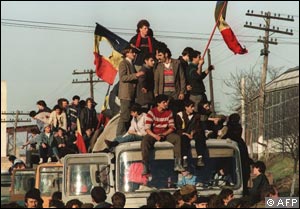
Remember, it’s not all that long ago, in 1989, when the Army deserted the government after days of fighting demonstrators in the streets. Protesters overthrew the government, captured President Nicolae Ceausescu, and summarily tried and executed him. Communist governments fell in Czechoslovakia, Hungary, Poland, East Germany, and Bulgaria within a few months, but no transition was as violent and scary as the one in Romania. Surely, everyone in government making decisions is well aware of those events.

At this writing, the protesters continue; the current president, a critic of the current coalition government, has described this moment as a “full-fledged” political crisis.

Posted in Uncategorized | Tagged , , , , , , | Leave a comment

Happy birthday, Rosa Parks (2017)

Happy birthday, Rosa Parks!  Born on February 4, 1913, Parks was not a tired old lady in 1955, when she refused to move to the back of the bus.  She was an experienced and committed activist, deeply tied into the activist networks that animated the civil rights movement.  She wasn’t the only one who took a risk to challenge segregation laws in the South, but that hardly makes her less heroic.

Activism in the civil rights movement was hardly a career move for Rosa Parks. She paid a serious price over many years for stepping outside of expected norms of behavior and into history. Her role in sparking the bus boycott brought her a bit of celebrity that made it hard to find work in Montgomery, and soon afterward, she and her husband moved to Detroit, where she continued her activism.

Jeanne Theoharis’s The Rebellious Life of Mrs. Rosa Parks (Beacon) extends the story of the civil rights icon, undermining the myth of spontaneity surrounding the Montgomery Bus Boycott.

The popular version of the story recounts Mrs. Parks as a tired old lady who unexpectedly decided to resist a bus driver’s order to move to the back of the bus.  Theoharis describes the deep roots of Mrs. Parks’s activism: she was raised by a grandfather who supported Marcus Garvey, married to a long time civil rights crusader, and had served for more than a decade in a leadership role in the local NAACP.  In the summer of 1955, she attended a workshop on civil rights at the Highlander Institute, where she read about civil disobedience and the Brown v. Board of Education decision.  She says that she had decided to resist any directions to the back of the bus long before the opportunity presented.

Many years later, on a television game show, for example, or–more significantly–when she accepted the Presidential Medal of Freedom from Bill Clinton, she could be described as an old lady.  But that was 1996–forty years after refusing to move to the back of the bus.

The popular story makes activism seem like something that comes suddenly, out of nowhere, and unpredictably.  The fuller tale, just like the one about the Greensboro sit-in, shows that it generally takes long and focused efforts to create those seemingly spontaneous moments.

And recognizing that Rosa Parks is only one of the best known of many many civil rights heroes suggests the possibility that each of us could also, one day, step into history.


Posted in Uncategorized | Tagged , , , , , , , , , , , | 1 Comment

Lunch counter sit-ins anniversary

It’s the anniversary of the start of the sit-in campaign in Greensboro, North Carolina. I’m always moved and encouraged by the audacity of those young men. 


There was once a store called Woolworths.  It sold dry goods, mostly cheap stuff, including paper and pencils.  Many Woolworths also housed a cheap restaurant where you could get coffee and a grilled cheese sandwich, also cheap.  Fifty-three years ago today, a
Woolworth sit-inWoolworths in Greensboro, North Carolina, was the site of a new phase in the civil rights movement, the beginning of the sit-in campaign.

On Monday morning, February 1, 1960, Ezell Blair, Jr., Franklin McCain, Joseph McNeil, and David Richmond, wearing their best clothes, went shopping at the Woolworths, bought some school supplies, then sat down at the lunch counter and tried to order coffee.  The four young men, freshmen at North Carolina Agricultural and Technical College,  knew the store wouldn’t serve food to black people, so they waited.  Woolworths shut the lunch counter down.

The next day, black and white students filled the lunch counter at Woolworths, and by the end of the week, every lunch counter in downtown Greensboro was filled with students protesting segregation–and organizing a boycott of the downtown businesses that practiced segregation.  Over the next weeks, sit-ins spread across the segregated South, led by student activists.

The four freshmen, no not the singing group, had all been active in the NAACP’s youth council, but none of them saw the large organization as a good foundation for a more activist and confrontational phase in the civil rights struggle. Pushed by the heroic Ella Baker, the NAACP launched an initiative to create a new student-based civil rights organization, the Student Nonviolent Coordinating Committee (SNCC), which staged dramatic education and direct action campaigns across the South for most of the rest of the decade.

Today is a great day to commemorate the sit-in movement, but anniversaries can be slippery.  When I tell the story to my classes, I usually start with the long Sunday night conversation when the brave young men talked themselves into action.  You could start the story much earlier, with the sit-ins organized by the Congress of Racial Equality (CORE) organized decades earlier, or with the sit-down strikes organized by the Industrial Workers of the World at the start of the 20th century, even before the founding of the NAACP.  You could also start the story with the Montgomery Bus Boycott and Rosa Parks, or the Brown v. Board of Education decision in 1954.  The Greensboro students knew all those stories.

Anniversaries help us remember important events and twists in history, but they invariably simplify longer and more complicated stories.  The drama of the Greensboro sit-in makes for a good entry into thinking about the civil rights movement, and into thinking about how regular people sometimes make history.  The names of Baker, Blair, McCain, McNeil, and Richmond are not particularly well-known today, not like those of Rosa Parks, Martin Luther King, John Lewis (who would lead SNCC), or Thurgood Marshall.  The names of the thousands of young people crusading against segregation with them are even lesser known.  But movements are only possible and potentially effective with people willing to take risks without counting on seeing their names in the history books.

Woolworth lunch counter


The lunch counter itself, or at least a portion of it, has been reassembled at the American Museum of National History (Smithsonian) in Washington, DC.  There are only four seats on display.  When we think about the civil rights movement, however, we need to extend the counter a long way.

Posted in Uncategorized | Tagged , , , , , , , , , , , , , , , , , , | Leave a comment

Notes on how protest works, the travel ban

Protest matters, but not by itself, and usually not quickly. The massive Women’s March  (Justin Sullivan / Getty Images)and the miraculous airport protests haven’t yet triumphed: the president remains committed to restricting Muslim access to the United States and rolling back reproductive rights…among other provocations.

But:

Protest campaigns, when they work, stiffen the spines of would-be allies and weaken the resolve of their opponents. There’s pretty good evidence that this is already happening. Democratic senators are working hard to stall many of the Trump nominees they find problematic, and are strategizing to make hearings on the Supreme Court vacancy as difficult and educative as possible. Leaders like Dianne Feinstein (California) and Chuck Schumer (New York) were never before in the fiery liberal faction of the party, but they’ve been provoked, pushed, and propelled into more aggressive action. The demonstrations and phone calls help.

And Republicans wary about being taken down by Trump are calculating their own positions strategically.  As example: in Orange County, California, where I live, the mostly Republican Congressional delegates are trying to negotiate their alliances with Trump’s positions, mindful that the County voted against Donald Trump, the first time the OC has gone Democratic since the Pleistocene era.

In December of 2015, all four Republican representatives opposed candidate Trump’s proposed Muslim ban, for a variety of sensible and patriotic reasons. Trump’s election changed that, but….

Now, Dana Rohrabacher, once concerned about alienating potential Muslim allies, supports Trump’s travel ban, but wants more protections for Christians.  Ed Royce and Darrell Issa express sympathy for protecting the nation, but question the roll-out and implementation of the policy, trying to cultivate a little space between themselves and their president. Mimi Walters, my representative, has ducked all the questions; no one was answering the phone at her office this morning, and her Twitter account celebrates the lunar new year. But people keep asking. The protests mean they’ll keep asking. Waiting unsuccessfully for community meetings, activists have scheduled regular protests in her office.

Orange County contains beautiful beaches and shopping malls, and an increasingly diverse population including immigrants from around the world. From my office at the University of California, Irvine, you don’t have to be particularly fit to bicycle easily to a church, a Mormon or Buddhist temple, a synagogue, or a mosque. Over the weekend, religious leaders scheduled a news conference in Anaheim to denounce the travel ban, stand up for diversity, and demand support from their elected officials.

Democrats have targeted all four Republican Orange County districts, carried by Hillary Clinton in November, for campaigns in 2018. I’m sure all four representatives are paying attention to the demonstrations, the phone calls, and maybe even the tweets.

Activists didn’t show up at the airports to get Chuck Schumer to skip a hearing or delay a vote, nor to get Republican members of Congress to become more elusive, but this is how protest sometimes works.

Posted in Uncategorized | Tagged , , , , , , , , , , , , , , , , , | 3 Comments

Korematsu Day, 2017

Immigration protest at Denver International Airport

Airport protests in Denver

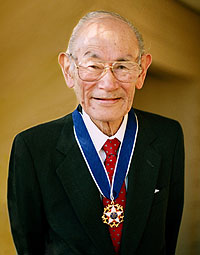
I try to post about Korematsu Day each year, and the repost is below. This year, of course, the treatment of people of different faiths or ethnic backgrounds is particularly salient. It’s important to recall that the Fred Korematsu who challenged the internment of Japanese Americans wasn’t an elderly gentleman wearing a medal, as pictured below. It’s at least a little encouraging that so many Americans today are able to see past the prejudices of their president.

Korematsu Day is celebrated today, and I repost the entry from the first Korematsu Day in 2011. The formal inclusion of commemoration in our calendar is a mixed blessing.  On one hand, it marks a terrible period in our nation’s history and recalls a destructive and explicitly racist policy of relocation.  It’s worth remembering.  On the other hand, it almost suggests that we’re beyond all of it today; we’re not.

Today Californians celebrate the first Fred Korematsu Day of Civil Liberties and the Constitution.  Represented by the American Civil Liberties Union, Korematsu challenged the constitutionality of relocating and interning Japanese Americans during World War II.  Three Supreme Court Justices agreed with him; six did not, finding that the emergency of korematsu.jpeg
a World War justified allowing Congress to put civil liberties on the back burner (Korematsu v. US, 1944).

Korematsu’s challenge exacerbated rifts within the Japanese American community; large organizations like the Japanese American Citizen’s League were eager to prove their patriotism by cooperating with internment.

Maybe the arc of history really does bend toward justice; it’s certainly long.  In 1980, President Jimmy Carter established a commission to investigate the internment of Japanese Americans during the war; in 1983, Korematsu’s conviction was vacated.   In 1988, Congress apologized to the Japanese Americans for the internment, and the government paid (modest) compensation to those interned.  In 1998, President Clinton awarded Korematsu the Presidential Medal of Freedom.  More than fifty years later, we recognized courage and heroism in what we first saw as a crime.

We should derive more benefit from the vindication of Fred Korematsu more than he did.  To do so, we need to draw lessons from the cause and the case that extend beyond Japanese Americans in World War II.  This means, I think, paying close attention to discrimination on the basis of race justified by appeals to national security.

We should tell Fred Korematsu’s story in New York City, where the construction of an Islamic Center in lower Manhattan draws opposition.  We should recall the history in Arizona, when the state passes a law mandating that police demand proof of citizenship from people who look like they might be undocumented.

And we should all think about how people learn.  California Attorney General Earl Warren pressed for interning Japanese Americans immediately after Pearl Harbor, arguing that their presence in California represented a threat to civilian defense.  Thirteen years later, as Chief Justice of the US Supreme Court, Warren organized the Court to issue unanimous decisions prohibiting racial segregation in the public schools.  I want to think he learned from the past, including his own past.

Apparently, one of the justices Earl Warren had to persuade was Robert Jackson, one of the three dissenters in Korematsu.  In dissent, Jackson wrote:

But once a judicial opinion rationalizes such an order to show that it conforms to the Constitution, or rather rationalizes the Constitution to show that the Constitution sanctions such an order, the Court for all time has validated the principle of racial discrimination in criminal procedure and of transplanting American citizens. The principle then lies about like a loaded weapon, ready for the hand of any authority that can bring forward a plausible claim of an urgent need.

Justice Jackson took a leave of absence from the Court to serve as as the chief US prosecutor during the Nuremberg war crimes trials, putting him in a very good position to think about a government’s use of race politics as a means of mobilization during moments of crisis.

Perhaps Korematsu Day will be an occasion for fireworks and picnics one day.  Today, it seems like a good time for reflection.

Posted in Uncategorized | Tagged , , , , , , , , , , | Leave a comment

Democracy’s rapid response: defending immigrant rights in the Trump era

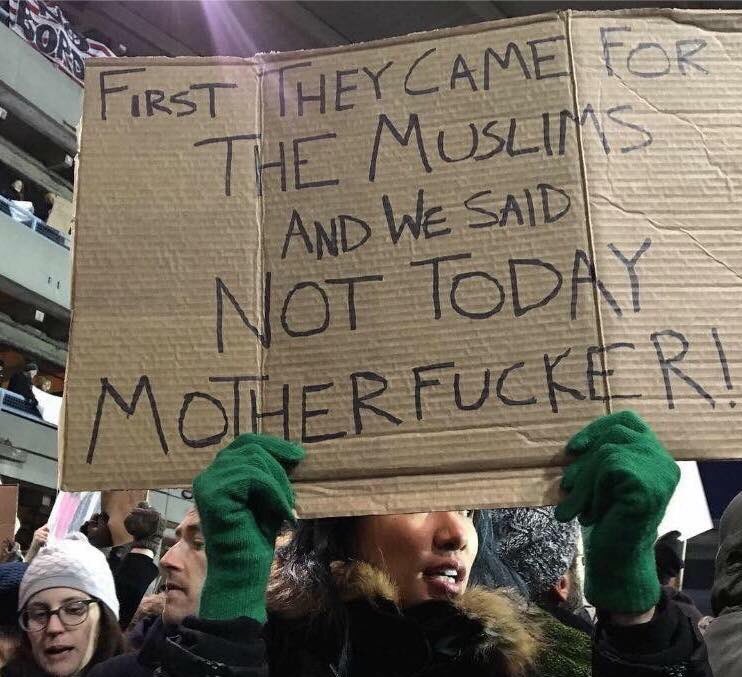
We live in extraordinary times, made so by the threat of tyranny, not of terrorism. When the Trump administration forced implementation of a new set of entry restrictions clearly Image result for First they came for the muslims, not this time motherfucker, cardboard signtargeted more at Muslims than terror, the responses were massive and virtually instant. When airline passengers from 7 mostly Muslim countries arrived in the United States, they were turned around or detained, including those with visas and even Green cards.

Protesters massed at major airports across the United States to announce their support for both migrants and travelers, and their opposition to Trump.

This is one of those moments that we’ll look back at years from now, and ask those who lived through it what they did. That Trump’s Executive Order was announced on Holocaust remembrance day, as the anniversary of the Executive Order authorizing the internment of Japanese Americans approached, made it all the easier to see the choices we have before us. There is an America that sent Jewish refugees back to Europe, imprisoned Japanese American families, and turned a blind eye to migrants fleeing wars, poverty, and political oppression. The protesters stood up for another America, one not defined by a skin tone or state religion, but by a inclusive civility that demands a great deal of work. It’s a more diverse, more colorful, and stronger America.

When reports of the first detainments trickled out on social media, protesters started showing up at Kennedy Airport, posting livestream feeds and tweeting to others. Only a sliver of those watching and cheering online made their way to the airports of large cities, where international flights arrive. Thousands turned out in Boston, New York, Chicago, Dallas, Atlanta, Seattle, Denver, Los Angeles, and Washington, DC–surely, elsewhere as well. Lawyers fanned out to offer their services to the detained, and the American Civil Liberties Union filed suit. Several Democratic members of Congress, including Elizabeth Warren (Massachusetts), Jerrold Nadler and Nydia Valazquez (New York), and John Lewis (Georgia) showed up at the airports to try to stand up for due process, support their constituents, and dump on Trump. By the end of the day, two federal judges had issued temporary restraining orders against immediate deportations and detainments.

Trump’s communications staff went to the media, awkwardly defending the policy by suggesting that it really didn’t inconvenience too many people.

Protesters assemble at John F. Kennedy International Airport in New York on Saturday.Of course, rights don’t work that way. We don’t excuse the Japanese internment because it really affected only a small portion of the population, or excuse lynchings or wrongful convictions because they don’t happen to many people.

The rapid mobilization was truly remarkable; the massive protest response was very much unlike historical reactions to government restrictions on minorities. It’s incredibly encouraging that so many Americans immediately realized something was wrong, and then were prepared to do something about it.

Of course, the Trump administration made it somewhat easier. The drafting, implementation, and political roll-out of the Executive Order was incredibly sloppy. 14 photos show the massive protests against Trump's Muslim ban at airports across the US(Benjamin Wittes offers a detailed analysis, describing “Malevolence Tempered by Incompetence.“) It was easy to find immediate victims who had worked for the American military abroad, who were scientists, doctors, Academy Award nominees–and even Christians.

But the activism and politics of the past few weeks of protest mattered as well. It took me about 4 seconds to find the photo at right of pussyhats from last week’s demonstrations at the airport protests. Every wave of protest builds networks and social media contacts that can make it a little easier to stage the next event.

So, where are we now? The judiciary has been independent, and federal judges have stood up to the administration. We have to watch to see if the administration complies with the rather limited restraining orders as the cases proceed through the system. Democratic politicians jumped in opportunistically–in the best sense of the word. A scattered few Republican officials have offered mostly tepid cautions about the policy, but most are staying silent….at this writing. We have to demand that the Republican Congress holds a Republican president accountable to the law.

Meanwhile, the democratic opposition movement responded forcefully. It’s a strong response to what amounts to a pop quiz for the movement. But the nativist and racist positions of the Trump administration will continue to push policies out of the Oval Office. Next comes the wall.

Posted in Uncategorized | Tagged , , , , , , , , , , , , , , , , , , , , | Leave a comment

March for Life 2017, with presidential support

If the annual March for Life (discussed here in the past) is able to generate anywhere near the turnout of the Women’s March last weekend, it will be an extraordinary achievement. Unlike many on the left, abortion opponents were able to ignore Donald Trump’s appalling persona and focus on policies.

Looking past Trump’s personal morality and previous support for reproductive rights, anti-abortion activists correctly judged that their prospects for a win were much better with Trump and the Republican Party than with Hillary Clinton and the Democrats.

Unlike Trump, Vice President Mike Pence has been a stalwart supporter of the anti-abortion cause–and a broad social conservative agenda–and will speak to the rally in person. He will be the first president or vice president who will actually show up at the march since its conception in 1974 as a reaction against Roe v. Wade. Previous anti-abortion presidents sometimes talked to the crowd on the phone.

Even more important, there’s every indication that the Trump administration will do everything possible to restrict access to abortion and reproductive rights more generally. The resurrection of an anti-abortion gag rule and the upcoming nomination for the Supreme Court mark the first moves to deliver for the anti-abortion cause.

But the anti-abortion movement’s good news on policy should make mobilization tougher. Most people are less likely to turn out for a protest when it doesn’t seem necessary to get what they want. If you’ve helped put allies in power and it’s cold, there’s plenty of other things to do.

In contrast, abortion rights supporters took to the streets in massive numbers last week as they recognized the real threat the Trump administration presented.

Expect the year-long effort to stage the march to turnout large numbers of committed anti-abortion activists again, but, at most, a sliver of the hundreds of thousands who turned out to protest Trump. Expect to see anti-abortion allies play the numbers game and inflate the turnout, while available objective measures (buses chartered, crowd photos, subway rides) undermine those claims. But don’t let those real numbers let you forget that the anti-abortion movement won a big victory in November.

Posted in Uncategorized | Tagged , , , , , , , , | 1 Comment

Protest in the Trump era, part 3 of ….: Loyalty?

Sometimes effective political action requires leaving a job you like; sometimes, it means finding a way to do that job properly.

Most of the political protest we think of as protest looks at least a little like the Image result for police wear pussy hatWomen’s March.  It’s Politics Outdoors, ornamented with placards and banners, dramatically choreographed, and occasionally including confrontation with police.

Sometimes, however, the demonstrators outdoors are dependent upon legislators and bureaucrats and judges doing their jobs properly…indoors. Elected officials are committed to working for their constituents; bureaucrats (police, food inspectors, and park rangers, for example) are committed to their institutions and their positions; judges are committed to the law.

Loyalty to the people, to the job, to the law, comes before commitment to the party or the president. Trump is betting that this formulation is just wrong.

The Trump administration’s newly reported gag orders to scientists and others in the Environmental Protection Agency and the Department of Agriculture–for starters are premised on the notion that loyalty to the Executive trumps commitments to the job, the law, and even the Constitution.

In immediate response to a shutdown of social media and academic communications, scientists and bureaucrats have begun to go rogue to do their jobs. Most immediately visible is a new wave of alt. and rogue. Twitter accounts. This will surely be followed by strategic leaks to independent media. If the new administrators sniff out the dissenters and try to punish them, we’ll see a series of court cases to see how much protection whistle blowers get from the law. Everything becomes even more public.

In addition to the wall, the Trump administration has announced plans to punish the cities that have promised to protect their immigrant populations by refusing to cooperate with deportation. Mayors of large cities across the country have  cultivated support with this promise; local police say that protecting public safety essentially requires focus on something other than the legal status of residents. People who are scared of deportation won’t cooperate with police, report crime, or testify in trials. A spokesman for the LA County Sheriff’s department announced shortly after the election:

We just want people to come forward so we have a better community. It doesn’t matter whether they’re an immigrant or going through the process of citizenship. Whatever it is, we want to hear from them. We don’t want them to not cooperate. It’s important to keep the community safe. We never ask about immigration status.

The bureaucrats, mayors, and police chiefs are all demonstrating their vision of loyalty to their jobs and their constituencies, even when it means defying the president.

The showdowns between local officials and mid-level appointees are likely to end up in the courts, and while the Trump administration may expect judicial deference, fealty to the law is more likely. The Constitution provides for an independent judiciary, and democracy depends upon it. Judges are supposed to be more loyal to the law and the Constitution than whoever happens to be in office.

Meanwhile, a slate of top level leaders in the State Department left their jobs at once, for reasons that will surely become clear in a little while.

None of these protesters will be chanting or carrying banners, but it’s protest and potentially very powerful.


Posted in Uncategorized | Tagged , , , , , , , , , , , , , , , | 4 Comments