Hypocrisy is progress

After Donald Trump reluctantly apologized for comments he could not deny–they were caught on tape–debate moderator Anderson Cooper forced him to explain whether or not it was just talk. Cooper deserves credit for pressing Trump to answer whether he sexually women protest donald trump and the gop in new york city #gophandsoffmeassaulted women or just bragged about doing so.

It’s generally been a safe bet that Trump’s bragging has far outstripped his accomplishments, but this was different. Trump himself denied that he had made unwelcome sexual advances on women–ever; it was just “locker room” talk. Given that there were already many public reports of such advances, the denial wasn’t very believable, but it must have seemed like the best answer available to someone running for president and facing a television audience of tens of millions. But the lie was progress.

Trump denied committing sexual assault because grabbing women isn’t a prerogative of wealth or power, a new truth that Trump, begrudgingly, acknowledged. In trying to put himself on the sunny side of respectability, Trump admitted where the line was. Many others weighed in to explain that lockers and showers don’t signal a suspension of such basic values.

The maxim that “hypocrisy is the tribute that vice pays to virtue, ” ascribed to François de La Rochefoucauld, is operative here; the lie reinforces the norm.

And the lie provides leverage to dig for the truth. Protesters who challenge sexual violence now joined those concerned with racism and xenophobia in turning out against Trump. More than that, it’s hardly surprising that Trump’s assertion of probity would provoke challenges–or that any media outlet not already in the tank for him would investigate and publish stories that expose the lie.

But the longer term effects are far greater. At once, all sorts of people had the opportunity to declare that it’s wrong to claim sexual favors just because you want them. Unwelcome grabbing, groping, and slobbering aren’t okay, and this is something that everyone gets to know again. Public confirmation of this value affects conduct, partly because of human awareness or moral education, partly because of fear of punishment. All of this is to the good. The lesson should extend far beyond the presidential campaign.

Anita Hill’s testimony about sexual harassment before a Congressional committee didn’t stop Clarence Thomas from taking a seat on the Supreme Court. Thomas denied the How we know Clarence Thomas did itcharges, and the Senate really didn’t press. The testimony did, however, go a long way toward defining and stigmatizing sexual harassment in the workplace, and law, culture, and practice evolved. I’m sure harassment still takes place, but it’s now clearly not legitimate, and sometimes perpetrators are punished (e.g.).

Oddly, being forced to lie about sexually assaulting women represents progress.


Posted in Uncategorized | Tagged , , , , , , , , , | Leave a comment

Persistence, part III: William Barber is ready

As the demonstration and discussions about the killing of Keith Scott continued, The New PHOTO: Protesters sit and hold a moment of silence for Keith Scott during another night of protests over the police shooting of Scott in Charlotte, North Carolina, Sept. 24, 2016York Times found an activist voice to explain what was going on. On the Op-Ed page, Rev. Dr. William Barber published “Why are we protesting in Charlotte,”  offering moral and religious motivations for his presence–along with that of many other clergy–at the protests. Barber explained:

In the Scriptures, the prophet Jeremiah denounces false prophets for crying “peace, peace when there is no peace.” We cannot condemn the violence of a small minority of protesters without also condemning the overwhelming violence that millions suffer every day.

But Reverend Barber didn’t emerge in the national news from out of nowhere. Over many years, he had been building an activist career on issues exactly like these, and when the Times sought an informed and respected voice, he was experienced and ready.

Since April of 2013, Rev. William Barber has been leading protests outside the state capitol in Raleigh, North Carolina. The Moral Monday (discussed here) protests focused on policy, specifically the new political agenda that Governor Pat McCrory and a Republican majority in the state William Barber at Moral Mondays rally.jpglegislature were pushing: measures to require photo ID to vote, restrict unemployment insurance and Medicaid. raise sales taxes to cut income and property taxes. relax environmental regulations, and cut funds for public schools. He lost on almost all these issues–at least in the short run.

But the protests continued, and have inspired like-minded efforts in neighboring states. (The Moral Monday campaign in Georgia supports an informative website.) In North Carolina, the campaign is explained on the site of the state NAACP; Barber is its president. In addition to the NAACP work, Rev. Barber, who holds a doctoral degree in theology,  and serves as pastor of the Greenleaf Christian Church in Goldsboro, about a 3 1/2 hr. drive from Charlotte, where he’s been demonstrating.

Reverend Barber’s continuing work in North Carolina helped him develop local credibility and contacts as well as national visibility. His persistence and visibility earned him a prime time speaking slot on the fourth night of the Democratic National Convention, where he outlined a vision of social justice that comes straight from the Biblical prophets.

This is another way in which protest matters, even if not at the time or in the way that activists hope.

Posted in Uncategorized | Tagged , , , , , , , , , , , , | Leave a comment

Persistence, part II: Kaepernick’s anthem protest and police violence

Most attempted campaigns stall out quickly, but sometimes…

Almost no one noticed when San Francisco 49 back-up quarterback Colin Kaepernick started his protest of police violence. Conservative media and the professional football commentariat pilloried Kaepernick, suggesting that his protest was ill-considered, inappropriate, and ineffective (see part I). His first defenders emphasized civil liberties and the quarterback’s right to protest more than his claims about police violence and race.

Tragic events, particularly police killings in Tulsa and Charlotte, turned attention from the Kaepernick’s physical posture to his political stance. Suddenly, the play that quarterback called seemed exactly on target. The protest about police violence echoed with enhanced resonance, and then spread to

Football players on other teams (Philadelphia Eagles here):

NFL: Pittsburgh Steelers at Philadelphia Eagles


College football players (Michigan v. Michigan State)

Michigan football players raise their fists up in protest during the National Anthem, before an NCAA college football game against Penn State, Saturday in Ann Arbor, Mich.

High school football players in Oakland, visited by Kaepernick


UNC students protest during the national anthem before the start of the Tar Heels’ game against Pittsburgh at Kenan Stadium in Chapel Hill.

Athletes in other sports (entire Indiana Fever team)


Spectators in the stands (University of North Carolina, Chapel Hill)


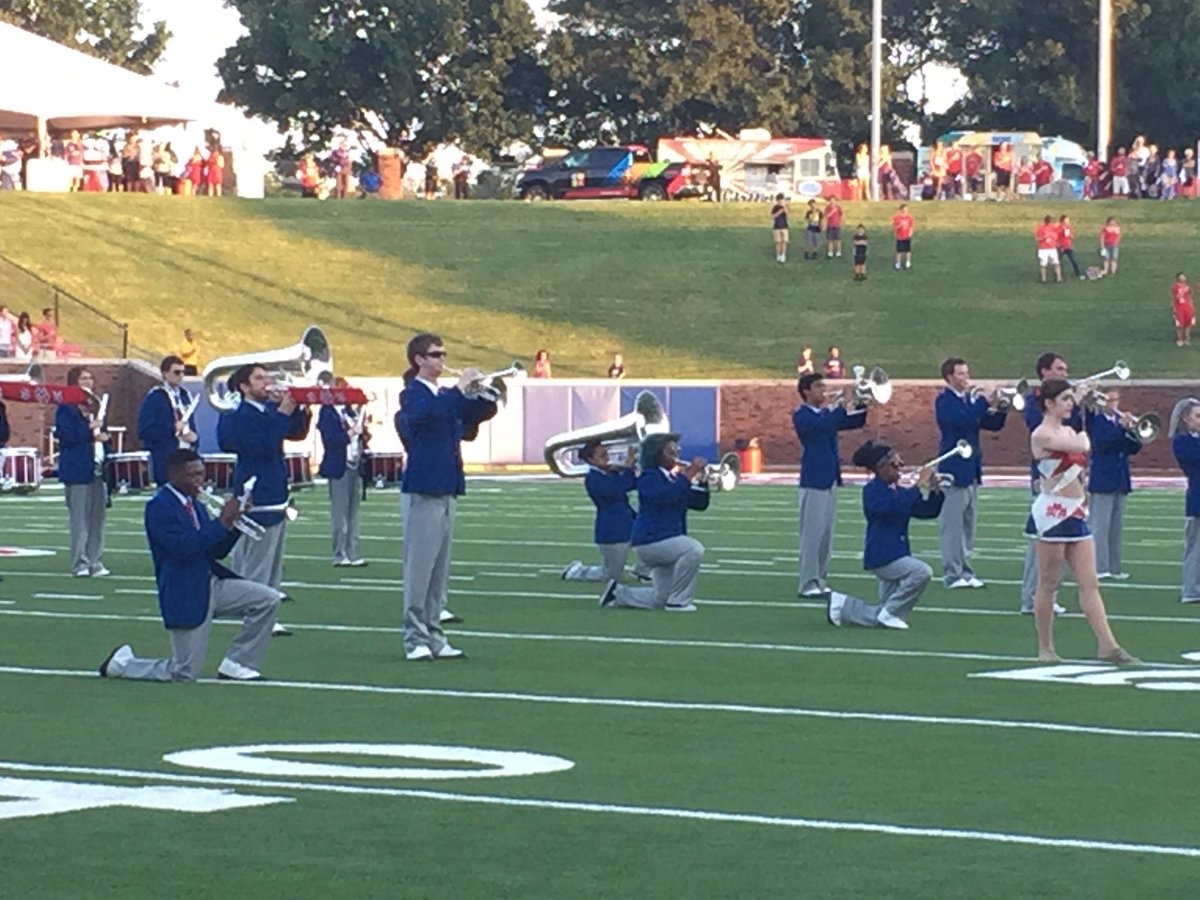
Musicians in the marching band (Southern Methodist University)


And cheerleaders (Garfield High School, Seattle)

img_6467

It’s mostly not majorities who are protesting, but it almost never is. The iconic campaigns of the past all started with a few people who were ridiculed by others. And there were always lots of false starts, where nothing seemed to take off. A successful campaign is a coincidence of commitment and opportunity, and the people who start it really never know how receptive the world will be.

Posted in Uncategorized | Tagged , , , , , , , , , , , , , , , , , , , , , , , | 5 Comments

Persistence, part I: Charlotte videos

The big story that activists always face is one in which authorities tell them that their efforts are inappropriate, ill-considered, and ineffective–or even counterproductive. (And, sometimes, they are.) It takes a certainty that comes from courage, social support, and stubborness toResidents and activists march in the streets of Charlotte on September 22. There was a heavy police presence, and the North Carolina National Guard was also on hand. keep at it. Sometimes persistence pays off all by itself. Sometimes, events vindicate and validate claims that previously seemed unimportant enough to generate protest.

So, once local and national activists learned of the existence of Charlotte, North Carolina police videos of the confrontation and killing of Keith Scott, it’s hardly surprising that they would demand their release. Scott’s family echoed that call, particularly after they had been allowed to view the police videos.

Rakeyia Scott released her own phone video of her husband’s death. It doesn’t show Keith Scott’s demeanor, nor whether he was armed, but you can hear Mrs. Scott imploring the police not to shoot her husband, then reacting to the shots and watching her husband die. It’s awful.

Protestors dump cargo from tractor trailers on a fire on I-85  during the Charlotte protests.Demonstrations shook Charlotte, night after night. Most, but not all, demonstrators were peaceful each night. There’s an ongoing battle to control the story and control the images. Black Lives Matter activists wanted the peaceful demonstrations to represent the conflict in Charlotte. Their opponents wanted images of disruption, looting, and violence. It wasn’t hard for either side to find what they wanted.

The police announced they wouldn’t be releasing their videos until an investigation was complete–however long that took. (Understandably, it’s harder for people to do most jobs when audiences are watching and commenting.  Public disclosure is a benefit–and a cost–of democracy.) The mayor then announced that the videos would come out some time–soon. She wasn’t very specific.

But after Mrs. Scott’s video came out and the demonstrations continued, the police released the videos the next day. Charlotte-Mecklenburg Police Chief Kerr Putney explained that he’d been assured that the ongoing investigation would not be affected by their release–allaying his earlier worries.

The videos, as Chief Putney acknowledges, don’t show that Keith Scott had a gun or threatened the police, but the chief is confident that there is enough additional evidence to support the police version of the story.

I doubt that this will be resolved easily or quickly. But the impact of the protests, in spite of what authorities and pundits said, is pretty clear.

Meanwhile, a new law that takes effect in North Carolina next week will prevent future videos from disclosure.

Expect a challenge here as well.

Posted in Uncategorized | Tagged , , , , , , , , , | 1 Comment

Where’s Occupy? (five years on….)

What happened to the amazing movement that captured public attention five years ago? Image result for Occupy ballerinaLast Saturday was the anniversary of the day the first Occupiers ambled marched through lower Manhattan and ambled into Zuccotti Park–where they stayed for two months, inspiring similar Occupations across the United States and scattered around the world.

Photographer Accra Shepp produced photographic portraits of some 400 Occupiers at the height of the movement, and then followed up and produced new portraits of the same people now. You can see some of the originals at the Steven Kasher Gallery site. Some were published in The New York Times.

Even for a movement that was particularly good at producing powerful images, Shepp’s artistry is still evident.  The photos are arresting and powerful.

But Shepp also provides capsule updates of the lives of the Occupiers. Dr. Alexandre Carvalho (below), for example, took a position overseeing health care for workers on an oil rig in the Atlantic, before he was fired for protesting the conditions they faced.

Reading through the stories, we get a sense not only of the surprising and often unexpected paths of individual lives, but also of the ongoing commitments these people made to spotting and fighting political and economic inequality. The commitments didn’t evaporate with the Occupations, but spilled out into many other movements and an even larger number of individual efforts.

Occupy continues, but not in any coherent, organized, or visible form.

Enough?

Posted in Uncategorized | Tagged , , , , | 1 Comment

The repressive power of tolerance

One way protest works is by provoking overreaction from opponents. Remember, Colin Kaepernick sat out the national anthem for three days before anyone noticed. It was the reaction from people who took offense that drew attention to the quarterback and–to a Image resultsomewhat lesser extent–his concerns. The tempest surrounding the anthem protest drew others in, including people who emphatically supported his right to protest more than the justice or wisdom of his approach.  The Seattle Seahawks are apparently planning a team action during the anthem of their next game, emphasizing their unity.  Three women on West Virginia Tech’s volleyball team took a knee during the pre-game anthem, in support of Kaepernick’s protest.

And high school athletes scattered across the country are beginning to see new opportunities in the anthem as well. If this leads to discussions of police violence in American high schools and stadiums–or even the Bill of Rights, it’s due not only to Colin Kaepernick, but also the people who would shut him down.

Indeed, part of the classic Constitutional strategy for dealing with dissent was to allow space for protesters–and freedom for those who wished to ignore them. The founders, by the way, generally understood the power or tolerance–but frequently forgot. (See, for example, Alexander Hamilton and James Madison on the Alien and Sedition Acts, 1798. Marvel again at Lin-Manuel Miranda’s brilliant creativity in portraying Hamilton as a champion of immigrants.)

Now Republicans in the House of Representatives have to figure out when reacting will be overreacting. Frustrated Democrats literally took to the House floor in JA photo shot and tweeted from the floor of the U.S. House of Representatives shows Democratic members of the House staging a sit-in on the House floor "to demand action on common sense gun legislation" on Capitol Hill, in Washington, June 22, 2016. une of this year, staging a sit-in to call for votes on a series of gun control measures.  Incensed, Speaker of the House Paul Ryan closed the session. The sit-in violated both the informal norms and the rules of the House, which allow the majority to dominate and marginalize the minority.

Republican representatives are still angry, and they want to punish the Democrats for their insolence. Punishment here is less likely to involve police dogs than a nasty resolution of disapproval. The question: is it worth it? Any punishment will recall–if not reopen–a debate about gun control on which the Democratic position enjoys more popular support. It will put the well-liked and collegial Speaker Ryan in direct confrontation with Rep. John Lewis, always (and accurately) described as an iconic hero of the civil rights movement. It’s ground Democrats would like to defend in the run-up to an election.

The Democrats are daring the Republican leadership not to do the smart thing–and look away. I’d bet the Republicans take the dare.

Posted in Uncategorized | Tagged , , , , , , , , , , , , , , , , , , , , | Leave a comment

The risks of standing out–by sitting down

San Francisco 49ers quarterback Colin Kaepernick, middle,San Francisco 49er quarterback and national anthem dissenter Colin Kaepernick stands to earn more than $10 million this year, and most of it is guaranteed–unlike the contracts for most professional football players. This very substantial sum belies the very serious risks Kaepernick is taking by standing up, sitting down, or kneeling for his beliefs.

Something less than a handful of professional athletes have thus far joined the quarterback in his protests. Partly, it’s likely that many don’t agree with his ideas or his actions. Surely, however, another obstacle to action is a real fear of retaliation. Professional football is an extremely difficult and dangerous way to earn an immense amount of money, and it’s not a career path that’s available to many people or for very long. Coaches and general managers, themselves under great pressure to win, try to avoid troublemakers–and the new attention to the anthem is certainly trouble. Exceptional performers can get away with a little bit more than those deemed to be more replaceable. There are many accomplished and committed people ready to do the job who won’t make trouble, as people who might make waves are constantly reminded. Kaepernick surely knows that he could be replaced by someone who won’t unite a massive crowd in coordinated booing. This replaceability is true on the field, on a movie set, and virtually anyplace else that there isn’t tenure.

Soccer star Megan Rapinoe followed Kaepernick’s lead, making her own gesture of supporting, adding her own concerns about injustice in the United States:

I think it’s actually pretty disgusting the way he was treated and the way that a lot of the media has covered it and made it about something that it absolutely isn’t. […] Being a gay American, I know what it means to look at the flag and not have it protect all of your liberties. It was something small that I could do and something that I plan to keep doing in the future and hopefully spark some meaningful conversation around it. It’s important to have white people stand in support of people of color on this. We don’t need to be the leading voice, of course, but standing in support of them is something that’s really powerful.

Football players who might have followed Kaepernick were reminded that such actions could jeopardize their careers, which are always even more tenuous than they appear. Richard Sherman, a star cornerback on the Seattle Seahawks, was clear in expressing support for Kaepernick’s concerns, even as he steered clear of taking on a similar protest. When asked about his advice to teammates who might have similar concerns, Sherman emphasized awareness of the risks: “Every action has an equal or greater reaction, and there’s going to be criticism. There’s going to be backlash. There’s going to be people behind screens that will judge you, that will criticize you, and you’ve got to be ready to deal with that.”

It’s not just a professional career that’s at risk, but a means of livelihood afterward. Taking a stand against the anthem is hardly an effective way to secure endorsements or motivational speaking engagements at corporate retreats afterward. Stepping into the political spotlight can also expose far more about an individual’s political commitments and ideas than most of us are ready for. Thus far, Colin Kaepernick has tried to step up to those challenges.

Nate Boyer, formerly a Green Beret, and a veteran of both combat and a very brief professional football career, published an open letter in Army Times trying to make sense of his own complicated feelings about Kaepernick’s actions, and inviting engagement. The quarterback responded by inviting Boyer to last Thursday’s game, and talking in detail about his issues and his options for action. When the anthem played, Boyer stood next to Kaepernick and teammate Eric Reid, who were kneeling, trying to signal respect for their country in conjunction with their concerns. Kaerpernick was visible in applauding the veterans honored that night, following the singing of “God Bless America” (a better national anthem I think; John Legend suggests “America the Beautiful”–even better).

Nate Boyer wasn’t alone; many veterans tweeted support for Kaepernick’s right to protest. Look for #VeteransForKaepernick and you’ll find pictures of servicemen and women and veterans of all backgrounds, deployed and at home, emphasizing their commitment to first amendment rights.

Between the kneel and the applause, Colin Kaepernick tried to navigate a course in which his gestures would signal both respect and concern. He found himself in a harsher spotlight than his passing alone would invite. Kaepernick emphasized his commitment to do more than complain, announcing that he would donate the first $1 million of his salary to community organizations–just about a tithe–starting with $60,000 worth of backpacks to school children in Harlem and the South Bronx. The criticism may have loosed the donation, but the money won’t stem the criticism. It’s worth asking how many of his critics–or the rest of us for that matter–are tithing in support of the causes we claim to support.

Posted in Uncategorized | Tagged , , , , , , , , , , , , , , , | 5 Comments

Labor Day 2016

For Labor Day Weekend, here’s a reminder about the history of this commemoration in America (reposted from 2011–with a postscript about new labor efforts).

Successful politicians exploit, buy off, and sell out the movements that sometimes buoy their campaigns.  This American story is an old one, and it’s one that leaves activists disappointed, wary, and cynical, even especially about the politicians who do the most for them.

[Recall that candidate Abraham Lincoln promised to put the preservation of the union higher on his list of priorities than ending slavery, and that abolitionists criticized President Lincoln’s Emancipation Proclamation (issued after two years of war), which ended slavery only in the territories that had seceded.]  And many do far less.
May DaySo, why is the American day to commemorate Labor held at the end of the summer, months after May Day, the workers’ celebration day virtually everywhere else in the world?  How do you turn a movement by creating an occasion for a cook-out?

President Grover Cleveland, a hard-money Democrat, and generally no friend to organized labor, signed a bill making Labor Day a national holiday at the end of June in 1894, at the height of the Populist movement, and just after the American Railway Union, led by Eugene Debs, had launched a boycott and strike, starting in Pullman, Illinois.  Protesting the Pullman Palace Car Company’s treatment of its workers, including harsh wage cuts, railway workers across the country refused to handle any train hauling a Pullman car.

The Federal government used an injunction, then troops, to battle the union and get the trains moving.  In July, just after announcing a national day to celebrate the contributions of American workers, President Cleveland ordered federal marshals–along with 12,000 Army troops, into Chicago to break up the strike.  Workers fought back, and 13 workers were killed, and at least several dozen injured.  Debs was tried for violating an injunction, and went to prison, where he discovered the writings of Karl Marx.  Clarence Darrow provided a vigorous, but unsuccessful, defense.

Debs would go to prison again, most notably for his opposition to US entry into World War I, and would run for president five times as a Socialist.

But I digress.  President Cleveland created a distinctly American Labor Day, explicitly not on May 1, which had already been the occasion for vigorous and disruptive workers’ activism.  (Read about the Haymarket affair.)  May Day remains the day for international workers mobilization.  Instead, our Labor Day is a time to mark the end of summer by cooking outdoors and shopping for school supplies.

The  US Department of Labor’s website gives credit for Labor Day to the American worker, but makes no mention of the Pullman Strike or the Haymarket demonstrations.

So, commemoration can actually be a way to neuter the historical memory.  See our discussions of commemorative days for Martin Luther King, Cesar Chavez, and Fred Korematsu, all significantly more difficult characters than what they’ve come to represent.

P.S. Organized labor’s cumulative difficulties and declines have begun to lead to new strategies. One involves organizing workers that unions in the past had largely overlooked. Established unions have tried to expand their reach by organizing in retail stores and in fast food outlets, working to unite less skilled workers. Most recently, as example, the National Labor Relations Board ruled that graduate teaching assistants at private colleges could organize unions and bargain collectively. But I’m not quite convinced that graduate students are the new vanguard for the working class.

Likely more promising are efforts to use politics to improve the fortunes of American workers. Collective bargaining is one way to raise wages. Another is to mandate higher minimum wages for everyone. The Fight for $15 has had claimed some important successes in new ordinances in generally liberal cities, and has shifted the debate elsewhere. Bernie Sanders campaigned for the Democratic nomination by endorsing the proposal for a new minimum wage, and Hillary Clinton, competing for his voters, essentially endorsed the effort. One future for labor is through Democratic party politics.

Posted in Uncategorized | Tagged , , , , , , , , , , , , , , , , , | Leave a comment

Disrupting the national anthem ritual by opting out

San Francisco 49ers quarterback Colin Kaepernick reminded us about how difficult the national (Photo by Thearon W. Henderson/Getty Images)anthem is.  My problems start with how hard it is to sing. I like to think that I sometimes start singing low enough that I can reach “the rockets’ red glare.” Even if this is true, I fear that I’m singing in a different key than the crowds surrounding me.

The national anthem for a democracy should be easier for the people to sing. America the Beautiful or This Land is Your Land would work better. Partly because it’s so hard to sing, The Star Spangled Banner ritual often becomes more about performance than anything else. And Americans perform it all the time. Even at city league swim meets, accomplished and/or ambitious young singers carry the melody for the rest of us. Some people bet on whether the performance comes in under two minutes. Others focus on the creativity and competence of the performers. Some focus on whatever event is scheduled to follow, and surely some people think about their country.

Mostly, however, we don’t talk about democracy or politics, but just walk through what’s become a rote public ritual on the way to something else. Somewhere along the line, most Americans have picked up on a version of accepted etiquette: stop, stand, salute or cover your heart, take off your hat, and face the flag. But this is America, so there’s lots of variation. People usually applaud, although this really isn’t appropriate; it’s not supposed to be for entertainment. The Constitution is remarkably clear (West Virginia State Board of Education v. Barnette, 1943): government can’t coerce expressions of patriotism. The United States should not be like North Korea.

In principle, individuals can consider their feelings about the song, the flag, the country, and their neighbors in figuring out what to do.  In real life, the ritual is so common that the two minutes–or so–passes without much reflection or comment.

Unless….someone doesn’t go along.

Kaepernick made news beyond football simply by opting out, refusing to stand unlike, it seems, everyone else in the stadium. The third time he sat through the pre-game anthem, audiences noticed. Very much unlike other athletes caught for faltering on anthem etiquette, he didn’t apologize; he did, however, explain:

I am not going to stand up to show pride in a flag for a country that oppresses black people and people of color. To me, this is bigger than football and it would be selfish on my part to look the other way. There are bodies in the street and people getting paid leave and getting away with murder.

Among the quarterback’s grievances about inequality and structural racism was the failure to prosecute and/or convict police officers who had killed unarmed civilians. It’s hard to think of anything else he could have done that would draw more attention to his cause. And reporters keep coming back to him for clarification and elaboration. A press conference or tweet would never get so much attention.

Precisely because the anthem, played before a game or after an Olympic event, has become so routinized and ritualized, any departure from what’s expected can draw disproportionate attention. A disruption of the ritual helps some people realize what the anthem or the pledge means to them. It’s a good way to get attention, but not necessarily to win friends and influence people. At least one fan publicized his burning of a Kaepernick jersey.

tsjcWhen Tommie Smith and John Carlos won gold and bronze medals in the 200 meter dash at the 1968 Olympics, they used their moment in the global spotlight to draw attention to racism and inequality. They appeared on the podium without shoes, raising fists covered by the one pair of black gloves they’d brought to the ceremony. They didn’t have a spare glove for Australian silver medalist, Peter Norman, who donned a human rights badge, and enthusiastically signed onto the cause he was dragged into. The International Olympic Committee banned Smith and Carlos from the games. All three men paid a price in public approbation–but lived long enough to see some vindication for their cause and their commitments.

My general rule for evaluating a protest tactic is to look at whether people talk about the cause as much as the tactic. Some politicians, pundits, and players have used the incident as a chance to stand up for the anthem and the flag–and against Kaerpernick, who says he will continue to sit during the anthem. This isn’t very risky–or really, very American. Maybe other players will see their own participation as an opportunity to engage in politics and join in. Maybe the National Football League will weigh in on the anthem with its players, to try to protect its own image. I suspect a few more fans at home will pay a little closer attention to the anthem before the next game to see.

It’s also worthwhile for the rest of us to look again at the anthem. We normally sing only the first verse, ignoring the final three, which express satisfaction in the death of escaped slaves. We normally don’t talk about the lyricist, Francis Scott Key, at all. The poet who lionized the “land of the free,” was not only a slaveholder, but a champion of slavery, who as a lawyer argued that the property rights of slave owners trumped the free speech rights of abolitionists.

Maybe anything that gets us to look closely at our nation’s inspiring ideals and complicated history is a good thing.

Maybe football really belongs on college campuses.

Posted in Uncategorized | Tagged , , , , , , , , , , , , , , , | Leave a comment

Oh yeah, guns…..

The sniper murders in Dallas provide another chance to think about what legal access to firearmsPOLICE RELEASE PICTURE OF DALLAS SNIPER SHOOTING SUSPECT in the United States should look like.

The demonstrators included individuals legally and openly carrying weapons. Apparently, even with good intent, this was of little help in deterring or responding to the bad guys with guns.

In the next few days, we should find out how the shooters obtained their weapons, and whether existing or proposed laws could have–or should have–prevented it.

Importantly, shooting at police is an example of individuals standing up to what they see as the illegitimate exercise of government authority. Some gun rights advocates point to recourse to armament as a defense against tyranny (e.g.).

This strikes me as an extraordinarily weak argument. First, citizens with grievances and guns can do a lot of damage acting against people and policies that most of us don’t see as tyrannical. Second, the government and the police will always be better armed, and the threat of armed opponents is used to justify harsh and violent policing.

The image of armed opponents is generally white and rural. The tragic crime in Dallas may change that. It’s worth remembering that the image of armed black men made it possible for conservative politicians to support gun control…long ago. In 1967, Governor Ronald Reagan signed the Mulford Act, which repealed open carry in California in 1967. It was directly inspired by the tactics of the Black Panther Party, whose members appear at right on the steps of the Capital building in Sacramento.

Posted in Uncategorized | Tagged , , , , , , , , | Leave a comment