Tracy Postert’s protests with Occupy Wall Street led rather directly to a job inside nearby. Ms. Postert, a biochemist with a Ph.D., had suffered bouts of unemployment over the years, and had a hard time finding another job in science. Her frustration in job-hunting, according to the CNN story, led to her decision to join the Occupation. (Thanks to Julie Song for the reference.)
Ms. Postert says that she moved her job search to Zuccotti Park in response to taunts from opponents of the Occupation, who cracked that the Occupiers would do better to find work rather than protest. She handed out resumes to passersby. As the job search manuals suggest, she used every opportunity to network.
It might lead to a job, but it was good politics nonetheless. Hardworking young women with science doctorates should be employable. Her resume was a job search, but it was also an indictment.
Wayne Kaufman, a market analyst, took a resume, and called her in for an interview. In short order, he offered her a job as an analyst for potential biotech investments,
It’s a good story, but it’s not one of redemption or selling out. Although some Occupiers want the financial infrastructure of the United States to collapse, that’s hardly the majority of the movement or its supporters. And surely some Wall Streeters, investors, analysts, and financiers, want to live in a country that takes better care of the 99 percent. (It’s no accident that President Obama constantly invokes the name of Warren Buffet in support of higher taxes on the very wealthy. But Buffet is unusual in his extraordinary wealth, not his politics.) Mr. Kaufman didn’t see Ms. Postert’s politics as a disqualification.
Tracy Postert went to Zuccotti Park for personal and political reasons. The personal (personnel) issues now resolved, the politics can still remain. Even if she’s now unavailable for full-time occupation, there’s much more that she can do. And it’s a mistake to assume that Mr. Kaufman and his colleagues are waiting for Donald Trump’s debate to resolve the Republican nomination fight and continue the decades-long process of eviscerating what passes for the American welfare state.
And of course, although one underemployed Occupier now has a job, there are still roughly 13 million others still looking. I expect that Tracy Postert and Wayne Kaufman will remember this.
Successful social movements spark the imagination and stiffen the spine of mainstream politicians, especially ambitious or desperate politicians.
Occupy has taken a lot of flak for failing to generate concrete policy proposals, but I’ve always thought that others will do that for them. It’s already starting to happen.
The notion that such an amendment would pass even the Republican-controlled House of Representatives, much less win a 2/3 majority in both Houses and ratification from 3/4 of the states, is fanciful. Either Rep. Deutch is hopelessly naive or more interested, at the moment, in making a symbolic statement. It’s likely to be only one of many attempts by mainstream politicians to share the movement’s spotlight and play to its supporters.
You want your political opponents sucked up in the long, complicated, costly, and generally unsuccessful politics of pursuing amendments to the Constitution.
Then yesterday, Barack Obama offered another answer to the question, “What’s the matter with Kansas?” In a provocative speech delivered in Osawotomie, President Obama challenged the Republican Party with a vigor unimaginable before two months of Occupy actions across the United States:
In the last few decades, the average income of the top 1% has gone up by more than 25% to $1.2m per year. I’m not talking about millionaires, people who have a million dollars. I’m saying people who make a million dollars every single year. For the top one hundredth of 1%, the average income is now $27m per year. The typical CEO who used to earn about 30 times more than his or her worker now earns 110 times more. And yet, over the last decade the incomes of most Americans have actually fallen by about 6%.
Now, this kind of inequality – a level that we haven’t seen since the Great Depression – hurts us all…
Inequality also distorts our democracy. It gives an outsized voice to the few who can afford high-priced lobbyists and unlimited campaign contributions, and it runs the risk of selling out our democracy to the highest bidder…
President Obama called for an extension of the payroll tax cut for working Americans and increased investment in education and science, all financed by slightly higher taxes on the very wealthy.
Testing themes for his reelection, President Obama directed the blame clearly at the Republican Party:
Now, so far, most of my Republican friends in Washington have refused under any circumstance to ask the wealthiest Americans to go to the same tax rate they were paying when Bill Clinton was president….
That is the height of unfairness. It is wrong. It’s wrong that in the United States of America, a teacher or a nurse or a construction worker, maybe earns $50,000 a year, should pay a higher tax rate than somebody raking in $50m…
His speechwriters wrote the words, but Occupy provided the music. When a movement is successful, lots of people try to join in and sing along–adding their own words. It’s rarely harmonious. For Occupy, it’s getting louder and louder.
Courageous or crazed, activists tip into our awareness in the context of a moment and a movement. But when the media spotlight moves and the placards disappear, the activism often continues. Here are two new projects that put the ebbs and flows of activist life in high relief:
Catherine Corrigall-Brown‘s book, Patterns of Protest, appears next week. She traces the ongoing participation of activists in political life as they shift in and out of active engagement and across issues. It’s a fascinating and important corrective to two prevalent–and simplistic–views of activists: 1) that activism is a temporary bout of madness or adolescence that passes; 2) that activists are different from everyone else, fighting on the frontlines of their causes consistently throughout their lives. Catherine shows how activists negotiate the balance between personal and political commitments and maintain active lives as citizens between periods of intense engagement.
And here’s a chance to support a new film:
Michael Heaney and Melody Weinstein are seeking publicity and financing for their film, The Activists, which tells the stories of the individuals who made up the antiwar movement that worked–and works–to stop the wars in Iraq and Afghanistan (link below).
I didn’t think I’d be writing about Miley Cyrus again, but:
Patricia Grim, identified as an “influential leader” in the Occupy movement, has endorsed Miley’s video, but challenged the singer to put her body on the front lines. According to TMZ, a new source for my blog, Ms. Grim says the video “rocks,” but Miley should do more:
“I double dog dare [her] to fight on the front line of economic civil rights at LA City Hall…Revolutionaries occupy, Ms. Cyrus.”
With no aesthetic stake in this matter, I think Ms. Grim has it exactly wrong. If the only way people can support Occupy is by sleeping outdoors and committing civil disobedience, the movement is doomed to marginality.
Close your eyes and think of thirty things that Miley could do that would be more helpful than joining any of the General Assemblies. It’s a blink!
Surely one of the one percent, Miley Cyrus has released a remixed video of “It’s a Liberty Walk,” dedicated to “the thousands of people who are standing up for what they believe in.” While the dedication praises sincerity and commitment more than any claims, the video is edited to support the protesters. Miley’s video shows Occupy as a global movement, marching–and sitting–to a disco beat.
I assume Miley was inspired by the movement to direct some of her talents to reinforce and publicize the activists and the issues they care about–and that she wanted to show her support.
Absent thoughtful and sincere commitment to the issues and the movement, a celebrity may have other motivations for signing on–or singing on. Occupy is supported by a large, young–but not tween–audience, that might develop an appreciation for other music Miley might make. The risk is obvious: Miley might offend the tween or country audiences she previously delighted. We’ll wait to see if Taylor Swift or Miranda Cosgrove follow suit.
Meanwhile, professionals don’t own the artistic process. Thanks to Pat Coy for sending another disco-inspired Occupy video, “I’ll Occupy.” With new lyrics and protest pictures set to the tune of Gloria Gaynor’s 1970s, it’s a paean to the movement, but with a little bit of a snarky sense of self-deprecating humor.
I first was pepper sprayed
Just standing on the side
But it took me being blinded
to open up up my eyes
Cause I’d read the daily news,
and not responded actively
and I realized then and there
this revolution needed me
So, the movement is developing an indigenous arts culture and generating responses from the larger culture. This is how movements work.
Watch as Occupy moves into workplace humor, television sitcoms, and mainstream politics.
LA Mayor Antonio Villaraigosa has consistently praised Occupy LA, camped out on the lawn in front of City Hall for two months. (The most interesting achievement, according to an environmental activist, was destroying the environmentally unsound green lawn.) Throughout the Occupation, the mayor and police chief kept talking to the protesters, emphasizing their respect and intent to work together to manage any problems.
But negotiating with a leaderless collective governed by consensus is a virtually impossible task. (Indeed, that’s part of the idea. Enthusiasts for horizontal organization and grassroots democracy argue that avoiding leaders means preventing the creation of someone who can sell you out.) For people who are primarily concerned with pursuing politics to redress political and economic inequality, land and legitimation are real assets. Abandoning the need to manage the logistics of the Occupation is yet another advantage.
But Occupy LA includes people who want to recreate the world from the ground up, and others who have found a place to live and a community. Politics indoors isn’t very attractive to them.
We reject outright the City’s attempts to lure us out of City Hall and into negotiations by offering us nebulous, non-transparent and unconfirmed offers which fail to even begin to address our local grievances. We will continue to occupy this space, in solidarity with our global movement, until the forces of the few are forced to capitulate to the power of the people.
When the following grievances have been addressed – grievances which we have agreed upon as a movement through our General Assembly as advancing our cause and providing for the people of Los Angeles – we as a movement will be happy to initiate dialogue with the Mayor and Los Angeles City Council….
A moratorium on all foreclosures in the City of Los Angeles. The City of Los Angeles to divest from all major banks, and money to be removed from politics.
A citywide effort undertaken to solve the homelessness problem which has led to 18,000 homeless people sleeping on Skid Row every night. Rehabilitation and housing must be provided for all homeless people.
South Central Farm to be returned to the same LA community from which it was taken, and all other vacant and distressed land be open for the community use, and money to the tune of 1 million dollars – taken from Skid Row and given to the multi million dollar NFL firm – to be returned to Skid Row.
Los Angeles to be declared a sanctuary city for the undocumented, deportations to be discontinued and cooperation with immigration authorities be ended – including the turning in of arrestees’ names to immigration authorities.
All forms of weaponry used by multiple law enforcement officials – including, but not limited, to rubber bullets, pepper spray, verbal abuse, arrest, foam batons, long-range acoustic devices and more – are not to be used on those exercising their First Amendment Rights to petition our government for redress of grievances. We do not accept interference with freedom of the press and the public to document police actions in public spaces. We will not tolerate brutality.
We assert our right to an open plaza on the South Side of City Hall for people to peacefully assemble, voice grievances, speak freely, hold our General Assembly and come to the people’s consensus 24 hours a day if needed.
The City of Los Angeles to pressure the State to start a convention, as provided for in the Constitution, to remove corporate personhood and money from politics at a national level.
The City of Los Angeles to begin a dialogue at the State and Federal level on the issues of student debt and tuition hikes.
No cutbacks in city services or attacks on the wages, work conditions and pensions of city employees.
A world class transit system which addresses our debilitating traffic problem and restores the quality of life in Los Angeles.
The communique above was endorsed without exception by the General Assembly, but the comments posted below it, some offered by people who participated in the discussion, reflect a more conflicted process. Some pragmatists protested that some of the demands were impossible, and others, like stopping foreclosures, completely outside the control of the mayor or city government. Others disagreed with the wisdom of some of the demands in the first place.
But the communique announced the firm intent of the Occupiers to continue, really the most important thing uniting them. The General Assembly is comprised each night of the people who are present, who vary in outlook, ideology, goals, and commitment. Those not present who may agree have little input into decisions because they haven’t made the commitment to participate. It’s a demanding democracy.
It’s not clear at this moment whether any of the Occupiers will leave without police assistance (and Chief Charlie Beck has described his plans for evacuating the Occupation as helping the activists to leave), how many visitors will come to stand with them, or whether any of the mayor’s initial offerings will ever materialize.
Opponents of cutting a deal saw the mayor’s negotiations as a way to fragment the movement, and regardless of the mayor’s intent, concessions certainly work this way. Those engaged in a political Occupation will find other ways to do politics. Others will take the direct action struggle elsewhere, already including banks and college campuses. Still others will find somewhere else to be.
To the extent that disparate efforts are united by a shared set of beliefs or demands, the movement becomes more powerful. Maintaining such connections in the absence of a space, however, is a new and difficult challenge for a very young movement.
Zuccotti Park, home for Occupy Wall Street for two months, is completely irrelevant to the future of the Occupy movement. Now that the activists have been cleared out, we’re watching to see what the most important place will be.
In addition to Occupations across the United States, Occupy activists have been busy bringing their concerns about inequality to all sorts of other places.
Last week, in the wake of the Zuccotti Park eviction, Occupy activists staged demonstrations across the country, including a contingent that tried to reestablish the Zuccotti encampment (at right). The could use pass the barricades and use the park, but without tents or tarps or anything that might make staying possible. But more significantly, there were marches and protests in many other places, including banks, bridges, and buildings, sometimes leading to confrontations with the police, and generating more than 200 arrests. Keeping the little park clear effectively encouraged activists to find other places to make claims, and this will help the movement.
But it’s not just the Day of Action protests. In the Republican primaries, Occupy activists have theatrically confronted Representative Michele Bachmann and Representative Ron Paul, starting their chants with a call and response, “mic check.” Rep. Bachmann left the stage, while Rep. Paul waited them out. Occupy protesters also confronted President Obama at a speech in New Hampshire, where they asked him to condemn police brutality. The President sympathized with their frustration, and turned to the economy. Just the threat of an Occupy protest led Herman Cain to cancel a campaign appearance in Iowa.
And college and university students protesting against the tuition hikes that are taking place at virtually every public institution, are framing their protests as Occupy efforts. In New York, City University students clashed with police at Baruch College, supported by a group called “Occupy Student Debt.” Some students claimed allegiance with the broader Occupy movement. California State University students protested outside a meeting where the Board of Trustees voted to raise tuition another 9 percent. Cal state students staged events at every one of the university’s 23 campuses.
And it’s happening on campuses across the United States. At the University of California, where tuition has increased dramatically over the past five years, student groups have established Occupy campaigns. At Berkeley, they tried to establish an Occupation, which police shut down with force and arrests. At Davis, campus police pepper sprayed students engaged in a sit-in. When some students refused to move from the sidewalk they were blocking, others took videos of the police. It’s hard to keep secrets anymore. The video below shows four views of the campus protest and the police reaction.
Rallying around the incident in Davis, Occupy protesters have called for a University of California general strike on Monday, protesting increased fees and austerity budgets. The administration and trustees can explain that state support of the University has declined dramatically, leaving spending cuts and tuition hikes as their only options. The Occupy response is that the trustees are wealthy and represent large corporate interests. (As they talk past each other, state legislators, who actually appropriate budgets and levy taxes, wipe their brows and sigh with relief.)
At this point, Occupy shows no signs of going away. Rather, activists are taking elements of the message, wrapping it around their own issues, and trying to develop new tactics and approaches to advancing the movement.
By shutting down the Zuccotti Park Occupation, authorities have unleashed a broader, more diverse, and more creative movement. (Is it like attacking The Blob, and unleashing a hundred smaller Blobs?) Unconstrained by the boundaries of the park, unburdened by the exigencies of tents, tarps, and toilets, and unencumbered by consensus, Occupy is emerging as a set of local and national campaigns.
Occupation isn’t a new tactic. Protesters have established permanent encampments to make political claims and support activism many times in the past. (See our Veterans Day discussion of the Bonus Army.)
The camps, dramatic demonstrations of commitment, provide an ongoing reminder of an important issue, and can kick start all kinds of other activism. At the same time, occupiers often become consumed with the day to day exigencies of maintaining themselves and the camp, thinking more about tents, trash, and toilets than taxes. Sometimes, as in the Wall Street Occupation in Zuccotti Park, authorities clear them out, more or less ruthlessly. Often, however, they putter on, shift through different foci, generating less and less attention and becoming politically irrelevant.
As the Depression set in, people without any place else to go established encampments, often in empty areas on the outskirts of cities or near freight yards. Derisively termed Hoovervilles, they weren’t explicitly political, but their very existence was an indictment of government’s response to the Depression. Local authorities often tolerated the shanty towns, and their own concerns about crime and sanitation, because they didn’t have any other place to put the homeless. Occupants left when they could find jobs or homes, and as World War II started, local authorities began clearing out the encampments.
In the 1980s, NATO’s efforts to place intermediate range nuclear missiles in Europe generated massive public opposition. Activists protested at the polls, in massive demonstrations in virtually every large city, and at the planned sites for deployment. Some activists established more or less permanent encampments at the military bases scheduled to host new weapons. The crowds would swell for large planned demonstrations or civil disobedience efforts, but a few people (or a few dozen or more, depending upon the time) remained between those campaigns, living in tents and sometimes staging small scale efforts to trespass on the bases.
The challenges and the the character of the camps depended upon the place and who organized them. Greenham Common became the site of an explicitly feminist women’s
A trailer home at the Moleworth peace camp, 1985
camp; activists saw the campaign against ground launched cruise missiles as part of a much larger feminist agenda. At Faslane, near the deployment of Trident nuclear submarines in Scottland, activists embraced an economic agenda as well as peace concerns. At the Comiso camp in Sicily activists had to face not only the state, but also the mafia, which orchestrated the murder of one of the organizers. (This is not a complete list of peace camps. There were many encampments, some lasting only a few weeks, others continuing for years.)
The missile sites were far from urban centers, but activists nonetheless had to negotiate spaces to stage protests. Sometimes, this meant camping on land owned by supporters of the cause rather than public spaces, and hiking to stage an assault on the military base.
Once committed individuals had devoted so much effort to establishing and defending these sites, they were loathe to take them down, even after the end of the cold war. Greenham Common lasted until the year 2000, when the camp was replaced by plans to establish a commemorative site. The Seneca Falls encampment continued in some form through 2006. (Here’s a neat oral history site featuring interviews with the activists.) Apparently the Faslane peace camp is still in operation in some way, staging actions and maintaining a presence on facebook and myspace. (Myspace!) The point: a few people continued to maintain the camps long after most others stopped paying attention.
At around the same time, university-based activists opposed to apartheid in South Africa used the construction of shantytowns on their campuses as part of their campaigns to get their universities to divest themselves of holdings in companies that did business in South Africa. Hampshire College (my alma mater) was the first school to divest in 1977–before I got there. Schools with larger portfolios took longer, and campus-based organizing grew in the middle 1980s. Activists at Cornell University constructed the first shantytown in the middle of their campus in 1985; within 18months, shantytowns had spread to dozens of elite college campuses. Some students slept outside, but classrooms, libraries, and dorms were nearby. (Sarah Soule is my expert on the divestment movement and the spread of the shantytowns.) Although the shantys were controversial on campuses, there was much more activism going on off-campus, including large protests, a global boycott of South Africa by artists and athletes, divestment campaigns targeted at companies and local governments, and massive public education campaigns. Artists United against Apartheid produced a song and video I still find powerful:
The point: the encampment was one tactic in a much larger and more diverse campaign.
In 2005, Cindy Sheehan set up camp outside President George W. Bush’s ranch in Crawford, Texas. She wanted a meeting with the president to discuss the justification of the wars in Afghanistan and Iraq (where her son, Army Specialist Casey Sheehan, was killed in 2004). President Bush refused to meet with her, so she camped outside by the road on public lands. She was soon joined by other antiwar activists and relocated to land owned by a supporter of their cause.
The vigil in the hot Texas summer was big news in August. President Bush cleared brush, bicycled, and golfed while the activists protested. But the president cut his vacation short, returned to Washington, and the activists stayed, for a while, sort of, for another two years, getting progressively less attention. Cindy Sheehan herself traveled around the country, continuing to speak out against the wars.
If you know of other occupations, please let us know. In the meantime, it seems that the historical record suggests that the encampment is a political tactic that can work in generating attention–sometimes, and that it’s most likely to be effective when accompanied by a much larger and more diversified movement.
Eviction from Zuccotti Park could turn out to be the event that sets the Occupy movement loose to create a bigger and more effective political movement.
The police in Oakland and New York City have cleared out their local Occupy encampments. Oakland Mayor Jean Quan, who claims to be a supporter of Occupy efforts, saw the downtown encampment as unsustainable–and dangerous. The shooting death of one Occupier, perhaps executed by another one, gives some credence to this claim.
Both mayors learned from previous efforts to clear their parks about the advantages of surprise and overwhelming force. Using trained and armed police, both should be able to keep the protesters out of their choice spots.
Although Occupy encampments continue in hundreds of locations around the country, police actions have underscored how important it is for the Occupiers to think of ways to innovate and develop their movement. (For more than a month, I’ve been arguing that Occupy needs to develop an “exit strategy.”) To some extent, this is already happening:
Others have urged Americans to take it to the banks through the market, moving their accounts out of the large national banks to smaller credit unions. On November 5, thousands of people participated in Bank Transfer Day, voting with their money. Although this sort of action may seem more moderate than the encampments, it may ultimately engage more people and be more disruptive to business. (The Christian Science Monitor says no.) And politicians will try to cultivate Occupy support as well.
Over the next few days, expect all of these efforts (litigation, protest, and vigils) to continue. Occupiers in New York and Oakland are also likely to try to stake out other sites for encampments. As activists disperse into a broad range of activities, look for the strong consensus norm to evaporate; actions will be initiated by coalitions of the willing. For innovation and activism, this is a good thing.
But remember: when mainstream media, politicians, and people milling at the water cooler are talking about political and economic inequality, the Occupiers are winning. When they’re talking about police, reasonable time and place restrictions on speech, or the sanitation of downtown parks, well, not so much….
In 1932 US military veterans of the Great War (now World War I), facing a job market even worse than today, demanded that the Federal government pay them their promised bonuses–no more than $1,000–early. A bill providing for an early payment of the service bonus was stalled in Congress. Veterans looked for a way to push the issue.
Across the country, groups of veterans started separate marches to Washington, D.C. to make their claim, staging parades along the way. Other vets joined them in Washington, riding freight trains, hitchhiking, and organizing car caravans. Ultimately more than twenty thousand veterans would converge on the Capitol.
The first three hundred marchers reaching Washington by the end of May 1932, followed by thousands more. President Herbert Hoover and District of Columbia Police Superintendent Pelham Glassford welcomed them with a warning against associating with Socialists and Communists. Superintendant Glassford, a veteran of the war, met frequently with the protesters, and arranged for a safe campground in Anacostia, across the Potomac River. He also helped the marchers set up their camps and raise money from local merchants to feed the marchers. The Bonus Marchers asked him to serve as their “secretary-treasurer,” and he agreed, even as he secured tear gas for the police–to protect the Capitol from the veterans.
On June 7, the Bonus Army, comprised of veterans of diverse backgrounds, including the decorated and the disabled, marched. They emphasized their service, their patriotism, and their discipline, winning some support from Congress and the press. Implicitly, they also emphasized their desperation: men with jobs could not spend months traveling to the Capitol and camp out on lawns to demand a relatively small cash payment. They also lobbied Congress.
On June 17 the Bonus Army gathered outside the Capitol while the Senate overwhelmingly (62-18) rejected the Bonus Bill. The veterans marched back to their encampment peacefully, but refused to leave the city, and more veterans continued to arrive. At Camp Anacostia, they welcomed some families into their camps, advertising the presence of women and children within their ranks. Some organizers traveled to other cities on the East Coast to raise money to feed the marchers.
As with Occupy, the long encampment produced tensions among the demonstrators and with the police. By the end of July, as Congress prepared to adjourn its legislative session, authorities grew more determined to clear the veterans out of the city. Local and national officials issued eviction orders to the encamped veterans. On July 28 the US Army, led by General Douglas MacArthur, overran the camps, using tear gas and burning the protesters’ shacks. A few of the veterans fought back by throwing rocks, and MacArthur suggested that Communists had hijacked the veterans’ campaign–and that some of the men weren’t even veterans. (These charges turned out to be false.) Using fire, bayonets, and tear gas, he routed the marchers from the Capitol.
In November 1932, Franklin Delano Roosevelt defeated President Hoover in a landslide.
Veterans at Occupy Wall Street
Bonus Marchers reappeared just after he took office, in early 1933. President Roosevelt arranged for lodging, food, and bathrooms at an army post in Virginia, and met with a delegation of Bonus Marchers in the White House. Roosevelt initially resisted paying the bonus, but offered the veterans priority for employment in the newly established Civilian Conservation Corps; by 1936, he agreed to pay the bonus as well.
A few brief notes:
Occupation isn’t new. It’s provocative, potentially effective, and authorities have a hard time finding a balance between reaction and overreaction.
The Bonus Marchers had a very clear–and limited–demand. Although they didn’t get it right away, their impact was larger than that demand.
Protest politics works in concert, if not coordination, with regular institutional politics.
This account is drawn from my book, The Politics of Protest: Social Movements in America. I learned most of this from Lucy G. Barber’s wonderful book, Marching on Washington: The Forging of an American Political Tradition (University of California Press, 2004).
I'm a professor of sociology and political science at the University of California, Irvine. I've been thinking, and writing about, protest politics for almost ever. This site offers comments on contemporary events, informed (I hope) by knowing something about history and about the academic study of social movements.


 Zuccotti Park, home for Occupy Wall Street for two months, is completely irrelevant to the future of the Occupy movement. Now that the activists have been cleared out, we’re watching to see what the most important place will be.
 government’s response to the Depression. Local authorities often tolerated the shanty towns, and their own concerns about crime and sanitation, because they didn’t have any other place to put the homeless. Occupants left when they could find jobs or homes, and as World War II started, local authorities began clearing out the encampments.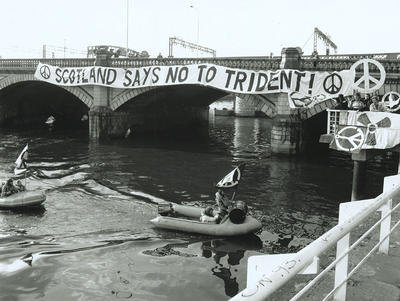

 the wars in Afghanistan and Iraq (where her son, Army Specialist Casey Sheehan, was killed in 2004). President Bush refused to meet with her, so she camped outside by the road on public lands.
 encampments to other targets. Occupy Los Angeles staged an


 Politics Outdoors